Iphigenia indica
(L.) A. Gray ex Kunth
Dhikoli
ColchicaceaeRoots

iNaturalist · cc-by
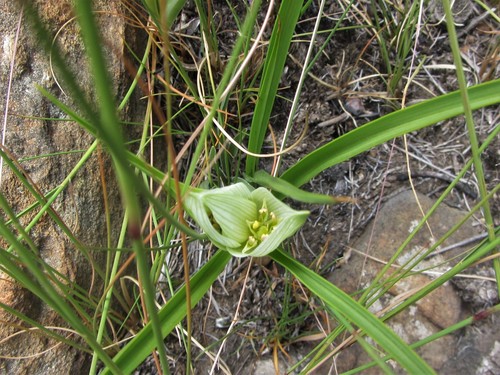
(c) Siddarth Machado, some rights reserved (CC BY), uploaded by Siddarth Machado
(c) Siddarth Machado, some rights reserved (CC BY), uploaded by Siddarth Machado
iNaturalist · cc-by
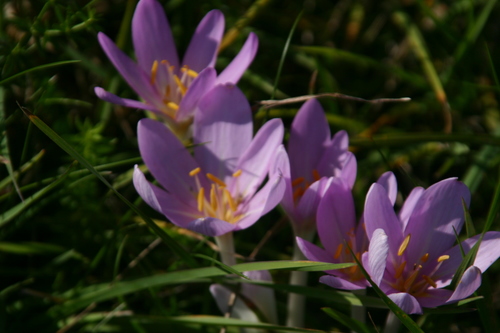
(c) Siddarth Machado, some rights reserved (CC BY), uploaded by Siddarth Machado
(c) Siddarth Machado, some rights reserved (CC BY), uploaded by Siddarth Machado
What to Eat
Edible parts: Bulb
The bulbs are cooked and eaten.
Where to Find It
It is a tropical plant. It grows on open grassy slopes between 1000-1500 m altitude. It grows on sandy soils as well as gravel.
Asia, Australia, Cambodia, China, Himalayas, India, Indochina, Indonesia, Myanmar, Nepal, Philippines, SE Asia, Sri Lanka, Thailand, Vietnam,
Countries: United Arab Emirates, Afghanistan, Armenia, Australia, Azerbaijan, Bangladesh, Bahrain, Brunei, Bhutan, China, Georgia, Indonesia, Israel, India, Iraq, Iran, Jordan, Japan, Kyrgyzstan, Cambodia, North Korea, South Korea, Kuwait, Kazakhstan, Laos, Lebanon, Sri Lanka, Myanmar, Mongolia, Maldives, Malaysia, Nepal, Oman, Philippines, Pakistan, Qatar, Saudi Arabia, Singapore, Syria, Thailand, Tajikistan, Timor-Leste, Turkmenistan, Turkey, Taiwan, Uzbekistan, Vietnam, Yemen
How to Identify
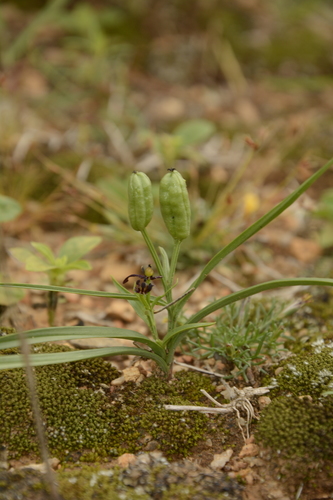
A herb that develops a corm. This is 1-2 cm across. It keeps growing from year to year. It grows 40-70 cm high. The leaves are narrow and 7-15 cm long by 3-9 mm wide. The base has a sheath and clasps the stem. There are 2-10 flowers in a group. The flowers are dark red and brown.
Names & Synonyms
Kadu bellulli
References (4)
- Enum. pl. 4:213. 1843
- Kumar, G.M., & Shiddamallayya, N., 2014, Documentation of Wild Plant Tubers as Food Resources in Hassan District, Karnataka, International Journal of Applied Biology and Pharmaceutical Technology. 5(2) p 91
- Malhotra, C.L.., et al, 1985, Additional Notes on the wild edible plants of India J. Econ. Tax. Bot. Vol 6. No.2 pp 481-482
- Paczkowska, G. & Chapman, A.R., 2000, The Western Australian Flora. A Descriptive Calatogue. Western Australian Herbarium. p 39