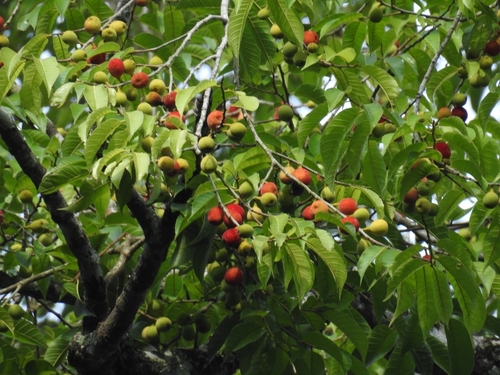
Ficus lamponga
Miq.
MoraceaeLeaves
iNaturalist · cc-by-nc
(c) Aditya Gadkari, some rights reserved (CC BY-NC)
(c) Aditya Gadkari, some rights reserved (CC BY-NC)
iNaturalist · cc-by-nc
(c) Aditya Gadkari, some rights reserved (CC BY-NC)
(c) Aditya Gadkari, some rights reserved (CC BY-NC)

gbif · cc0
President and Fellows of Harvard College
President and Fellows of Harvard College
What to Eat
Edible parts: Leaves
Young leaves are cooked with pork.
Where to Find It
It is a tropical plant. It grows in evergreen forests near Bangalore and Nagaland.
Asia, Bangladesh, Bhutan, Himalayas, India, Indochina, Indonesia, Laos, Myanmar, SE Asia,
Countries: United Arab Emirates, Afghanistan, Armenia, Azerbaijan, Bangladesh, Bahrain, Brunei, Bhutan, China, Georgia, Indonesia, Israel, India, Iraq, Iran, Jordan, Japan, Kyrgyzstan, Cambodia, North Korea, South Korea, Kuwait, Kazakhstan, Laos, Lebanon, Sri Lanka, Myanmar, Mongolia, Maldives, Malaysia, Nepal, Oman, Philippines, Pakistan, Qatar, Saudi Arabia, Singapore, Syria, Thailand, Tajikistan, Timor-Leste, Turkmenistan, Turkey, Taiwan, Uzbekistan, Vietnam, Yemen
How to Identify
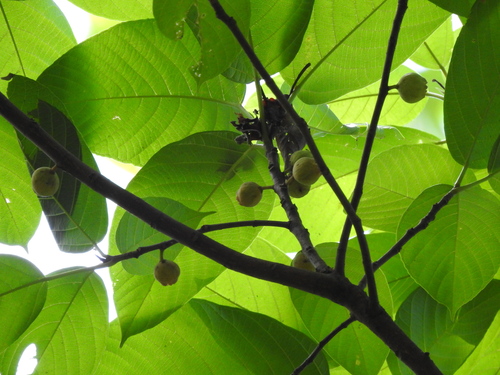
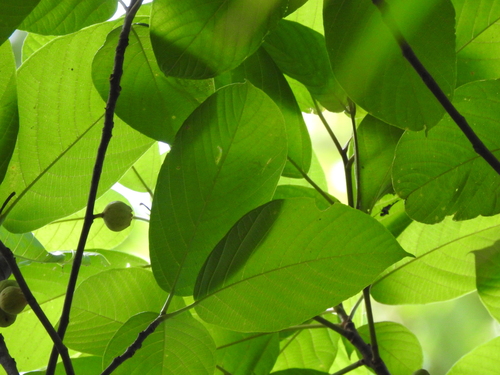
A fig. It is a tree. The bark is brownish-grey and slightly cracked. The leaves are oval and 10-24 cm long by 4-12 cm wide. They are slightly hairy underneath. The fruit are figs in the axils of leaves. They can occur singly or in pairs.
Notes
There are about 800-1000 Ficus species. They are mostly in the tropics. There are 120 Ficus species in tropical America.
Names & Synonyms
Dieng-kajapo, Dieng-thalliang, Dimoru, Dumru-jola, Mumukichok
Ficus lepidosa Wall. ex King
References (1)
- Kumar, Y J. et al, 1987, Further Contribution to the Ethnobotany of Meghalaya: Plants used by "War jaintia" of Jaintia Hill District. Econ. Tax. Bot. Vol 11 No. 1 pp 65-