Boeica fulva
C. B. Clarke
Jaku
GesneriaceaeLeaves

iNaturalist · cc-by-nc
(c) Vijay Anand Ismavel, some rights reserved (CC BY-NC)
(c) Vijay Anand Ismavel, some rights reserved (CC BY-NC)

iNaturalist · cc-by-nc
(c) Vijay Anand Ismavel, some rights reserved (CC BY-NC)
(c) Vijay Anand Ismavel, some rights reserved (CC BY-NC)
What to Eat
Edible parts: Leaves
The leaves are boiled and eaten as a vegetable, or cooked and eaten with meat.
Where to Find It
It is a temperate plant. It grows in mountain regions between 1,300-1,400 m above sea level.
Asia, Bhutan, China, Himalayas, India, Northeastern India, Tibet,
Countries: United Arab Emirates, Afghanistan, Armenia, Azerbaijan, Bangladesh, Bahrain, Brunei, Bhutan, China, Georgia, Indonesia, Israel, India, Iraq, Iran, Jordan, Japan, Kyrgyzstan, Cambodia, North Korea, South Korea, Kuwait, Kazakhstan, Laos, Lebanon, Sri Lanka, Myanmar, Mongolia, Maldives, Malaysia, Nepal, Oman, Philippines, Pakistan, Qatar, Saudi Arabia, Singapore, Syria, Thailand, Tajikistan, Timor-Leste, Turkmenistan, Turkey, Taiwan, Uzbekistan, Vietnam, Yemen
How to Identify
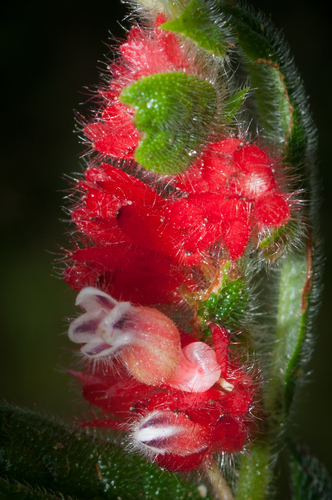
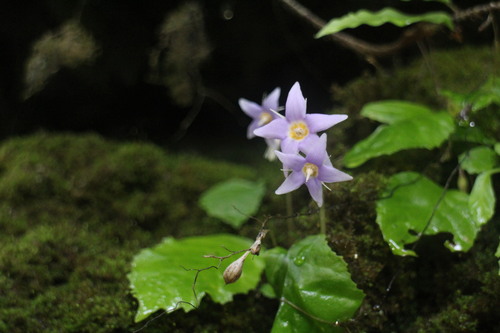
A herb or small shrub. The stems are 15 cm long. The leaves are narrowly oval and 10-17 cm long by 5-7 cm wide. They are very woolly underneath. There are irregular shallow teeth along the edge. There are many flowers in a group. They are purple.
Names & Synonyms
Joke ao, Jongku
References (2)
- Murtem, G. & Chaudhrey, P., 2016, An ethnobotanical note on wild edible plants of Upper Eastern Himalaya, India. Brazilian Journal of Biological Sciences, 2016, v. 3, no. 5, p. 63-81
- Taram, M., et al, 2018, Wild Food Plant Resources of Komkar Adi Tribe of Upper Siang District in Arunachal Pradesh, India. Bulletin of Arunachal Forest Research, Vol. 33(2), 27-35