Conandron ramondioides
Siebold. & Zucc.
Ku ju tai
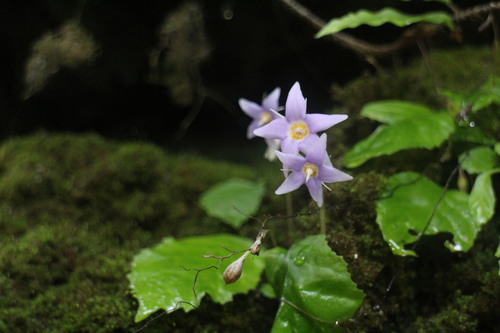
(c) 羅元甫, some rights reserved (CC BY-NC), uploaded by 羅元甫
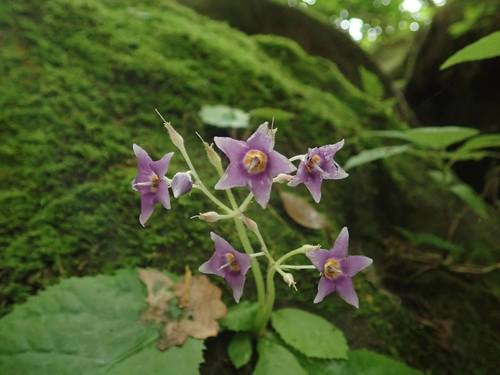
(c) Mizuki Shimoda, some rights reserved (CC BY-NC)
What to Eat
Edible parts: Leaves
The leaves are edible when cooked but are considered a famine food, used only when other options are unavailable.
Where to Find It
It is a warm temperate plant. It grows near stream side rocks and on rocky cliffs in forests between 600-1300 m altitude in the eastern China provinces.
Asia, China, Japan, Taiwan,
How to Identify
A herb which grows in water. It has rhizomes but no stem. It keeps growing from year to year. There are only a few leaves at the base. The leaf stalk is 4-19 cm long. The leaf blade is narrowly oval or rounded. It is 18-24 cm long by 4.5-14.5 cm wide. The leaf base is wedge shaped or heart shaped. There can be some glandular hairs near the base. The leaf has irregular teeth. The leaf tapers to the tip. There are 8-11 side veins on each side of the midrib. The flowers are in a loose flower arrangement. There are 3-23 flowers. The flower stalk is 9-15 cm long. The fruit is a capsule 7-10 mm across.
How to Grow
Succeeds in a shady crevice of a cool rock garden in a humus-rich well-drained acidic soil. This species is not quite hardy when grown outdoors in Britain and is best grown in the alpine house or with some protection when grown outdoors. A pane of glass to cover the plant is probably sufficient.
Propagation: Surface sow seed as soon as it is ripe in a greenhouse, keeping pots consistently moist and providing artificial light through winter. Seed can also be surface sown in spring. Prick seedlings into individual pots once large enough to handle and grow on in the greenhouse for at least their first winter before planting out in late spring or early summer after the last expected frosts. Can also be propagated by division in spring.
Medicinal Uses
None known
Other Uses
None known
Wikipedia
Source ↗This perennial grows 0.3 m (1 ft) tall and 0.2 m (8 in) wide. Hardy to UK zone 9, it flowers July through August and is hermaphroditic. The plant adapts to light sandy, medium loamy, and heavy clay well-drained soils, preferring mildly acidic to neutral conditions and tolerating very acidic soils. It grows in semi-shade and prefers moist soil.
Notes
There is one Conandron species.