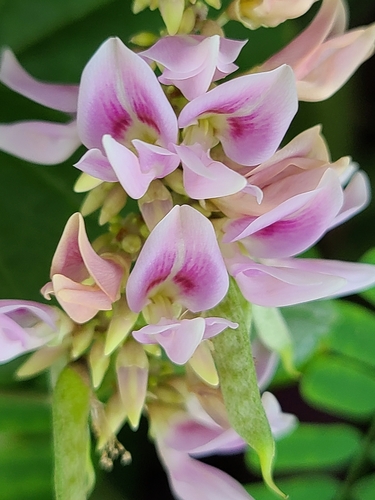
Thermopsis barbata
Benth.
Bearded thermopsis
iNaturalist · cc-by
(c) Siddarth Machado, some rights reserved (CC BY), uploaded by Siddarth Machado
(c) Siddarth Machado, some rights reserved (CC BY), uploaded by Siddarth Machado
iNaturalist · cc-by
(c) Siddarth Machado, some rights reserved (CC BY), uploaded by Siddarth Machado
(c) Siddarth Machado, some rights reserved (CC BY), uploaded by Siddarth Machado
iNaturalist · cc-by-nc
(c) Jasmine Star Outdoor Photography, some rights reserved (CC BY-NC), uploaded by Jasmine Star Outdoor Photography
(c) Jasmine Star Outdoor Photography, some rights reserved (CC BY-NC), uploaded by Jasmine Star Outdoor Photography
What to Eat
Edible parts: Branches, Rootstocks
The branches and young rootstocks are cooked as a vegetable.
Known Hazards
Where to Find It
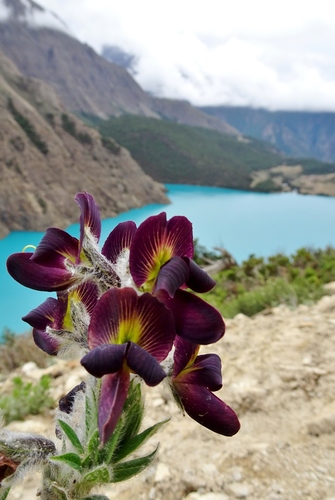
It is a temperate plant. It grows between 3500-4500 m altitude in Uttar Pradesh in India. In Sichuan.
Asia, Bhutan, China, Himalayas, India, Nepal, Pakistan, Tibet,
Countries: United Arab Emirates, Afghanistan, Armenia, Azerbaijan, Bangladesh, Bahrain, Brunei, Bhutan, China, Georgia, Indonesia, Israel, India, Iraq, Iran, Jordan, Japan, Kyrgyzstan, Cambodia, North Korea, South Korea, Kuwait, Kazakhstan, Laos, Lebanon, Sri Lanka, Myanmar, Mongolia, Maldives, Malaysia, Nepal, Oman, Philippines, Pakistan, Qatar, Saudi Arabia, Singapore, Syria, Thailand, Tajikistan, Timor-Leste, Turkmenistan, Turkey, Taiwan, Uzbekistan, Vietnam, Yemen
How to Identify
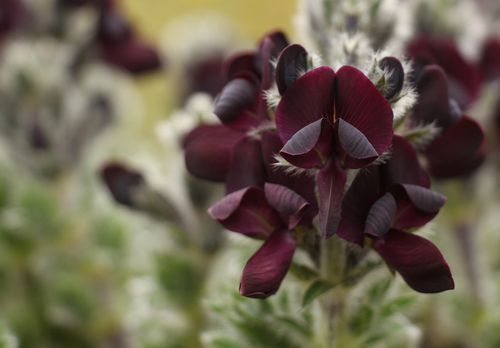
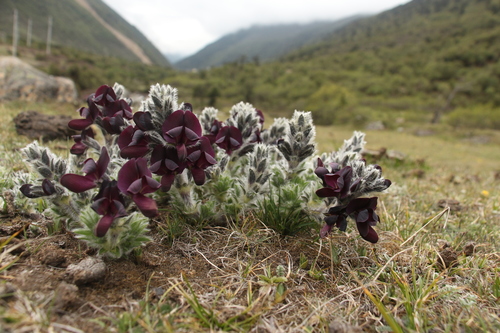
A tufted herb. It keeps growing from year to year. The root is woody. The stem is 30-50 cm tall. The leaf has 3 leaflets. These are 1.5-3.8 cm long by 0.5-1.5 cm wide. They are sword shaped. The flower arrangement has 1-3 flower at each node. The flowers are dark violet-purple. The fruit is 3-3.5 cm long by 10 mm wide. There are 1-6 seeds.
Notes
There are 23 Thermopsis species.
Names & Synonyms
Kailashi Chunchuni
References (4)
- Ambasta, S.P. (Ed.), 2000, The Useful Plants of India. CSIR India. p 635
- Flora of Pakistan. www.eFloras.org
- Negi, K.S., 1988, Some little known wild edible plants of U.P. Hills. J. Econ. Tax. Bot. Vol. 12 No. 2 pp 345-360
- J. F. Royle, Ill. bot. Himal. Mts. 1(6):196. 1835