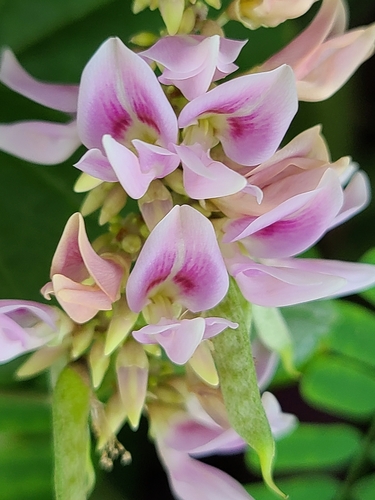
Dialium patens
Baker

Conveyor Belt

Royal Botanic Gardens, Kew

Royal Botanic Gardens, Kew
What to Eat
Edible parts: Fruit
The oval pod-like fruits are eaten.
Where to Find It
A tropical plant. It grows in low swampy areas and peat swamp forests.
Asia, Indochina, Indonesia, Malaysia, SE Asia, Singapore, Thailand,
How to Identify
A tree. It grows 25 m tall. It has buttresses. The leaves are 10-20 cm long. There are 5-9 leaflets that are opposite. They are sword shaped and 6-9 cm long by 3-5 cm wide. The flower panicles are 15-22 cm long and 10 cm wide. The flowers are creamy white and have a scent. The fruit are pods that are oval and 15 mm long by 8 mm wide. They are slightly flattened.
Notes
There are about 40 Dialium species. They grow in tropical SE Asia. They probably all have edible fruit. Also as Caesalpinaceae.
Names & Synonyms
Keranji beledu, Keranji burong, Keranji mawa, Sepau, Sepan
References (3)
- Burkill, I.H., 1966, A Dictionary of the Economic Products of the Malay Peninsula. Ministry of Agriculture and Cooperatives, Kuala Lumpur, Malaysia. Vol 1 (A-H) p 812
- Chai, P. P. K. (Ed), et al, 2000, A checklist of Flora, Fauna, Food and Medicinal Plants. Lanjak Entimau Wildlife Sanctuary, Sarawak. Forestry Malaysia & ITTO. p 168
- Larsen, K., 1989, Dialium patens Bak. New to Thailand. Thai For. Bull. 18:82-83