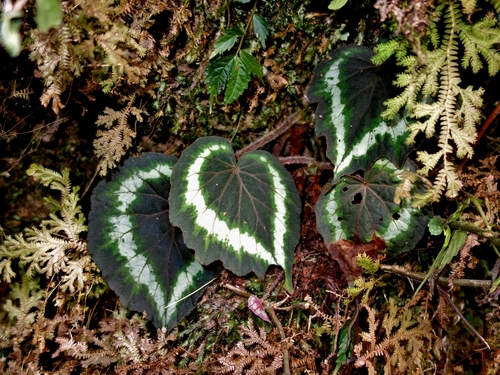
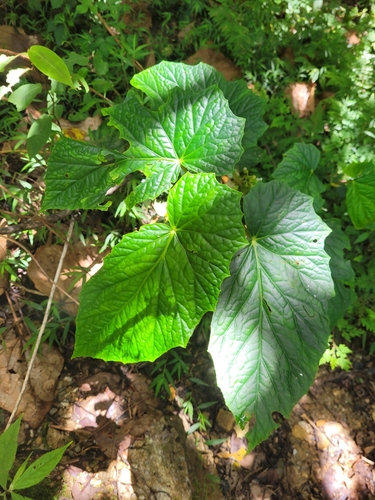
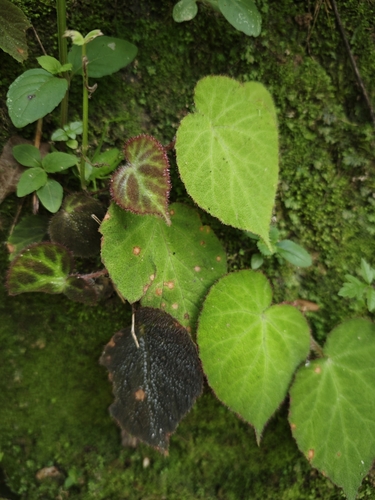
Begonia tuberosa
Lam.
Tuberous Begonia

iNaturalist · cc-by-nc-sa
(c) Alejandro Gómez Nísino, some rights reserved (CC BY-NC-SA)
(c) Alejandro Gómez Nísino, some rights reserved (CC BY-NC-SA)

iNaturalist · cc-by-nc
(c) Mark Fishbein, some rights reserved (CC BY-NC)
(c) Mark Fishbein, some rights reserved (CC BY-NC)
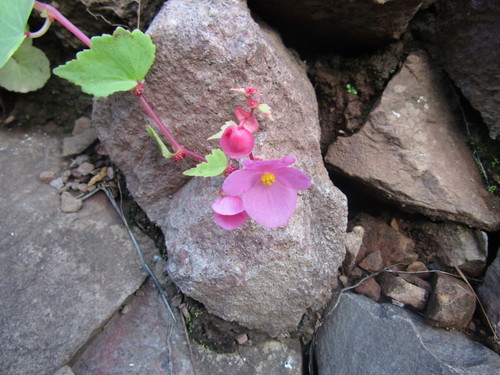
iNaturalist · cc-by-nc-sa
(c) Alejandro Gómez Nísino, some rights reserved (CC BY-NC-SA)
(c) Alejandro Gómez Nísino, some rights reserved (CC BY-NC-SA)
What to Eat
Edible parts: Leaves as condiment, Spice, Flowers
The leaves are cooked with fish or boiled into a sauce. The flowers have a lemon flavour and can be eaten in salads, used in desserts, or made into sauces. The leaf stalks can be used as a rhubarb substitute in pies.
Known Hazards
Where to Find It
A tropical plant.
Asia, Indonesia, SE Asia,
Countries: United Arab Emirates, Afghanistan, Armenia, Azerbaijan, Bangladesh, Bahrain, Brunei, Bhutan, China, Georgia, Indonesia, Israel, India, Iraq, Iran, Jordan, Japan, Kyrgyzstan, Cambodia, North Korea, South Korea, Kuwait, Kazakhstan, Laos, Lebanon, Sri Lanka, Myanmar, Mongolia, Maldives, Malaysia, Nepal, Oman, Philippines, Pakistan, Qatar, Saudi Arabia, Singapore, Syria, Thailand, Tajikistan, Timor-Leste, Turkmenistan, Turkey, Taiwan, Uzbekistan, Vietnam, Yemen
How to Identify
A tropical plant in the Begoniaceae family, represented by several hybrid cultivars.
Notes
There are 900-1,000-1,500 Begonia species.
Names & Synonyms
Possibly Begonia x tuberhybridanon B. tuberosa Lam., nom. illeg.? (= B. muricata Blume)
References (7)
- Burkill, I.H., 1966, A Dictionary of the Economic Products of the Malay Peninsula. Ministry of Agriculture and Cooperatives, Kuala Lumpur, Malaysia. Vol 1 (A-H) p 316
- Burnie, G.(Ed.), 2003, Annuals and Bulbs. The Gardener's Handbooks. Fog City Press. p 247
- Facciola, S., 1998, Cornucopia 2: a Source Book of Edible Plants. Kampong Publications, p 48
- Martin, F.W. & Ruberte, R.M., 1979, Edible Leaves of the Tropics. Antillian College Press, Mayaguez, Puerto Rico. p 98, 178
- Seidemann J., 2005, World Spice Plants. Economic Usage, Botany, Taxonomy. Springer. p 64
- Terra, G.J.A., 1973, Tropical Vegetables. Communication 54e Royal Tropical Institute, Amsterdam, p 29
- Uphof, 1968,