Palaquium macrocarpum
Burck
SapotaceaeFruit

gbif · cc-by
Royal Botanic Gardens, Kew
Royal Botanic Gardens, Kew
What to Eat
Edible parts: Fruit
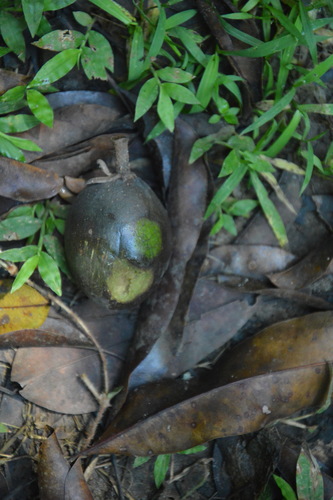
The fruit is edible.
Where to Find It
A tropical plant. It grows in forests often in freshwater swamps. It grows up to 1,000 m above sea level.
Asia, Indonesia, Malaysia, SE Asia,
Countries: United Arab Emirates, Afghanistan, Armenia, Azerbaijan, Bangladesh, Bahrain, Brunei, Bhutan, China, Georgia, Indonesia, Israel, India, Iraq, Iran, Jordan, Japan, Kyrgyzstan, Cambodia, North Korea, South Korea, Kuwait, Kazakhstan, Laos, Lebanon, Sri Lanka, Myanmar, Mongolia, Maldives, Malaysia, Nepal, Oman, Philippines, Pakistan, Qatar, Saudi Arabia, Singapore, Syria, Thailand, Tajikistan, Timor-Leste, Turkmenistan, Turkey, Taiwan, Uzbekistan, Vietnam, Yemen
How to Identify
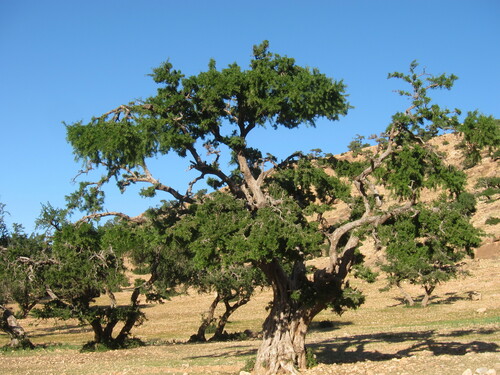
A tree. It grows 45 m tall. The trunk is straight and 90 cm across. The leaves are clustered at the ends of twigs. They are oval to oblong. There are 5-9 flowers in a group. The fruit is oval and 5-11 cm long.
Other Uses
The dark brown wood is heavy, hard, elastic and durable. It is used for the construction of houses.
Names & Synonyms
Balam pintek kayu, Epung mayang, Nyatoh hitam, Punti kayu
Palaquium ridleyi Ridl.
References (5)
- Burkill, I.H., 1966, A Dictionary of the Economic Products of the Malay Peninsula. Ministry of Agriculture and Cooperatives, Kuala Lumpur, Malaysia. Vol 2 (I-Z) p 1667
- Milow, P., et al, 2013, Malaysian species of plants with edible fruits or seeds and their evaluation. International Journal of Fruit Science. 14:1, 1-27
- Moon, H. K., et al, 2010, Tropical Tree of Indonesia. Korea Forest Research Institute. p 257
- Soerianegara, I. & Lemmens, R. H. M. L., (Eds.) 1993, Timber trees: Major commercial timbers. Plant Resources of South-East Asia. Wageningen. No. 5(1). p 304
- World Checklist of Useful Plant Species 2020. Royal Botanic Gardens, Kew