Phaleria capitata
Jack
Wild gora tree
(c) Smithsonian Institution, National Museum of Natural History, Department of Botany, some rights reserved (CC BY-NC-SA)
(c) Forest Botial-Jarvis, some rights reserved (CC BY)
What to Eat
Edible parts: Fruit
The sweet fruit are eaten.
Known Hazards
Where to Find It
A tropical plant. It grows in mixed forests up to 1,200 m above sea level.
Asia, Hawaii, Indonesia, Malaysia, Pacific, Papua New Guinea, Philippines, PNG, SE Asia, Sri Lanka, USA,
How to Identify
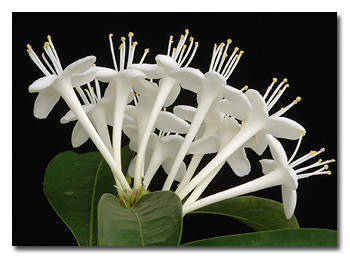
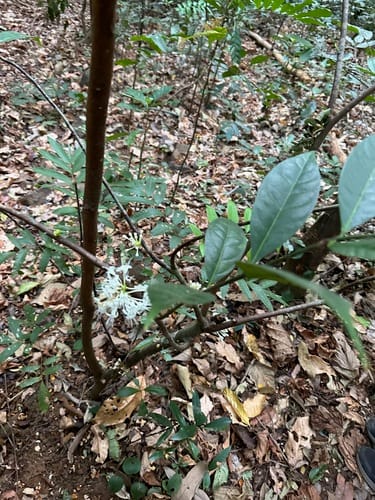
A scrambling shrub. It can grow 2-10 m tall. The stems are black. The leaves are almost opposite and the leaf stalks small. The leaves are broadly oval and 14-18 cm long by 5-10 cm wide. The flowers can be at the ends of branches or in the axils of leaves. There are 8 or more flowers in a group. They are white and a narrow funnel shape. They are 3-4 cm long. The fruit is red and round and about 1 cm across. There are 1 or 2 seeds.
How to Grow
Plants can be grown from seeds.
Medicinal Uses
The seeds are used to treat scurfy eruptions in children.
Other Uses
A tough fibre obtained from the inner bark is used for cordage and as a tying material.
Wikipedia
Source ↗Phaleria capitata is a species of flowering plant in the family Thymelaeaceae. It grows as a shrub or small tree up to 10 metres (30 ft) tall, with a stem diameter of up to 15 centimetres (6 in). Twigs are reddish brown. Inflorescences usually bear five flowers. The fruits are roundish, up to 1.5 cm (1 in) long. Habitat is forest from sea-level to 1,200 metres (3,900 ft) altitude. P. capitata grows naturally in Sri Lanka, Peninsular Malaysia, Sumatra, Borneo, Sulawesi, Maluku, the Philippines, New Guinea, the Caroline Islands and Tonga. It is a shade tolerant, tropical species. Common/English names include Ongael, Phaleria Jack.
Notes
There are about 20 Phaleria species. They occur in Malesia.
Names & Synonyms
Kakapasan, Kekapasan, Lawe, Lawean, Lawe-lawe, Pohon gora hutan, Pohon lawe
References (6)
- Burkill, I.H., 1966, A Dictionary of the Economic Products of the Malay Peninsula. Ministry of Agriculture and Cooperatives, Kuala Lumpur, Malaysia. Vol 2 (I-Z) p 1732
- Ding Hou, 1960, Thymelaeaceae, Flora Malesiana, Ser. 1 Vol. 6(1) p 20
- Milow, P., et al, 2013, Malaysian species of plants with edible fruits or seeds and their evaluation. International Journal of Fruit Science. 14:1, 1-2
- Nurfadilah, S., et al, 2017, Species richness, conservation status, and potential uses of plants in Segara Anakan Area of Sempu Island, East Java, Indonesia. BIODIVERSITAS. Volume 18, Number 4
- Staples, G.W. and Herbst, D.R., 2005, A tropical Garden Flora. Bishop Museum Press, Honolulu, Hawaii. p 547
- Sukarya, D. G., (Ed.) 2013, 3,500 Plant Species of the Botanic Gardens of Indonesia. LIPI p 441