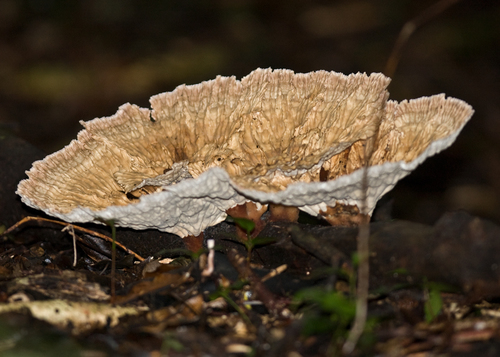
Polyporus arcularius
Fries
Supa kinchir
PolyporaceaeMushrooms
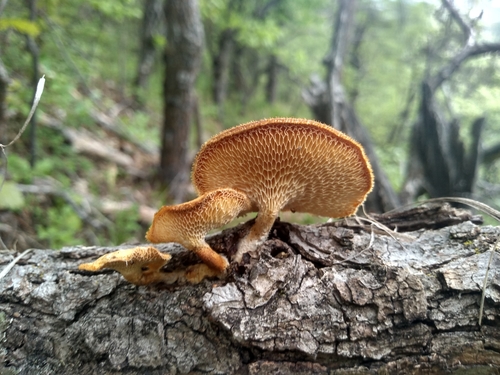
iNaturalist · cc-by-nc
(c) Colin Schindler, some rights reserved (CC BY-NC)
(c) Colin Schindler, some rights reserved (CC BY-NC)
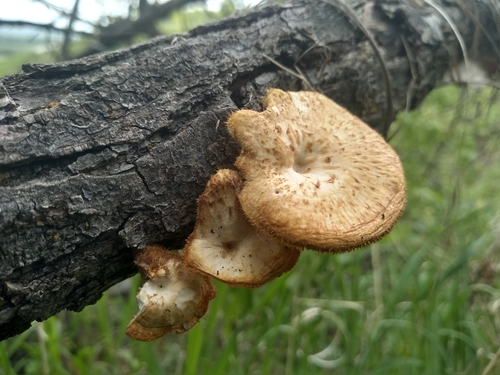
iNaturalist · cc-by-nc
(c) Colin Schindler, some rights reserved (CC BY-NC)
(c) Colin Schindler, some rights reserved (CC BY-NC)
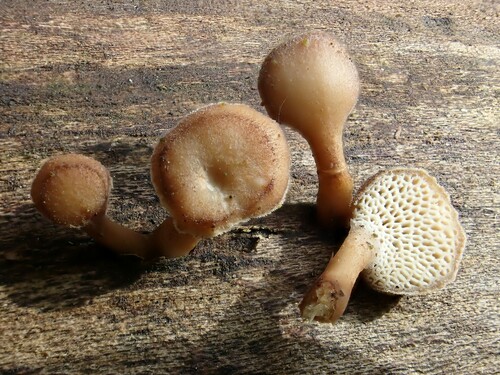
iNaturalist · cc-by-nc
(c) lindernia-w, some rights reserved (CC BY-NC)
(c) lindernia-w, some rights reserved (CC BY-NC)
What to Eat
Edible parts: Fungus, Mushroom
The fruiting body is sometimes eaten.
Where to Find It
A tropical plant. It grows on rotten wood. It grows in moist places in forest.
Asia, Australia, China, Europe, Himalayas, Hong Kong, Indonesia, Italy, Malaysia, Mediterranean, Nepal, Papua New Guinea, PNG, Peru, SE Asia, Sicily, South America, West Papua,
Countries: Andorra, United Arab Emirates, Afghanistan, Albania, Armenia, Argentina, Austria, Australia, Azerbaijan, Bosnia & Herzegovina, Bangladesh, Belgium, Bulgaria, Bahrain, Brunei, Bolivia, Brazil, Bhutan, Belarus, Switzerland, Chile, China, Colombia, Cyprus, Czechia, Germany, Denmark, Algeria, Ecuador, Estonia, Egypt, Spain, Finland, France, United Kingdom, Georgia, French Guiana, Greece, Guyana, Croatia, Hungary, Indonesia, Ireland, Israel, India, Iraq, Iran, Iceland, Italy, Jordan, Japan, Kyrgyzstan, Cambodia, North Korea, South Korea, Kuwait, Kazakhstan, Laos, Lebanon, Liechtenstein, Sri Lanka, Lithuania, Luxembourg, Latvia, Libya, Morocco, Monaco, Moldova, Montenegro, North Macedonia, Myanmar, Mongolia, Malta, Maldives, Malaysia, Netherlands, Norway, Nepal, Oman, Peru, Papua New Guinea, Philippines, Pakistan, Poland, Portugal, Paraguay, Qatar, Romania, Serbia, Russia, Saudi Arabia, Sweden, Singapore, Slovenia, Slovakia, San Marino, Suriname, Syria, Thailand, Tajikistan, Timor-Leste, Turkmenistan, Tunisia, Turkey, Taiwan, Ukraine, Uruguay, Uzbekistan, Venezuela, Vietnam, Yemen
How to Identify
A tropical mushroom of the Polyporaceae family that grows on rotten wood in moist forest areas. It is sold in local markets in Nepal.
Other Information
It is sold in local markets in Nepal.
Names & Synonyms
Mondowshuwt
References (8)
- Boa, E. R., 2004, Wild edible fungi and their importance to people. FAO Non Wood Forest Products Booklet 17
- Burkill, I.H., 1966, A Dictionary of the Economic Products of the Malay Peninsula. Ministry of Agriculture and Cooperatives, Kuala Lumpur, Malaysia. Vol 2 (I-Z) p 1825
- Fuhrer, B., 2005, A field guide to Australian Fungi. Bloomings Books. p 268
- Heyne, K., 1927, p 58
- Joshi, K. and Joshi, A. R., 2008, Ethnobotanical Studies on Some Lower Plants of the Central Development Region, Nepal. Ethnobotanical Leaflets 12:832-40
- Lentini, F. and Venza, F., 2007, Wild food plants of popular use in Sicily. J Ethnobiol Ethnomedicine. 3: 15
- Milliken, W., 2000, Ethnobotany of the Yali of West Papua. Royal Botanical Garden, Edinburgh. p 10 (near Baliem)
- Sillitoe, P. 1995, An Ethnobotanical Account of the Plant Resources of the Wola Region, Southern Highlands Province, Papua New Guinea. J. Ethnobiol. 15(2): 201-235