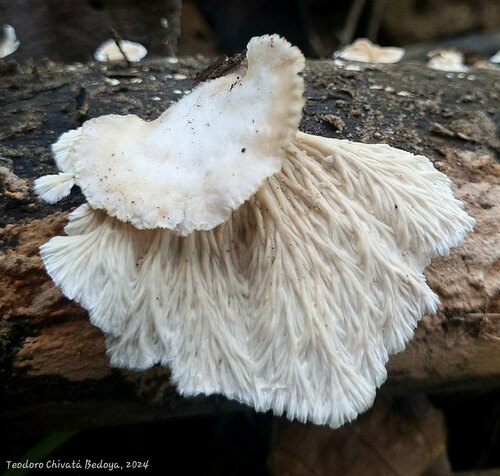
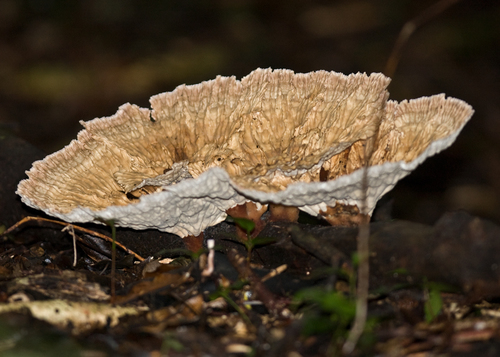
Polyporus grammocephalus
Berkel.
PolyporaceaeMushrooms

gbif · cc-by-nc-sa
Barrett, M.D.; Bonito, G.M.; Lebel, T.; Barrett, C.N.
Barrett, M.D.; Bonito, G.M.; Lebel, T.; Barrett, C.N.

gbif · cc-by-nc-sa
Barrett, M.D.; Bonito, G.M.; Lebel, T.; Barrett, C.N.
Barrett, M.D.; Bonito, G.M.; Lebel, T.; Barrett, C.N.

gbif · cc-by-nc-sa
Barrett, M.D.; Bonito, G.M.; Lebel, T.; Barrett, C.N.
Barrett, M.D.; Bonito, G.M.; Lebel, T.; Barrett, C.N.
What to Eat
Edible parts: Fungus, Mushroom
The fungus/mushroom is eaten.
Where to Find It
A tropical plant. It grows on dead logs.
Asia, India, Indonesia, Malaysia, SE Asia,
Countries: United Arab Emirates, Afghanistan, Armenia, Azerbaijan, Bangladesh, Bahrain, Brunei, Bhutan, China, Georgia, Indonesia, Israel, India, Iraq, Iran, Jordan, Japan, Kyrgyzstan, Cambodia, North Korea, South Korea, Kuwait, Kazakhstan, Laos, Lebanon, Sri Lanka, Myanmar, Mongolia, Maldives, Malaysia, Nepal, Oman, Philippines, Pakistan, Qatar, Saudi Arabia, Singapore, Syria, Thailand, Tajikistan, Timor-Leste, Turkmenistan, Turkey, Taiwan, Uzbekistan, Vietnam, Yemen
How to Identify
A mushroom in the family Polyporaceae found in tropical regions, growing on dead logs.
References (4)
- Ambasta, S.P. (Ed.), 2000, The Useful Plants of India. CSIR India. p 482
- Boa, E. R., 2004, Wild edible fungi and their importance to people. FAO Non Wood Forest Products Booklet 17
- Burkill, I.H., 1966, A Dictionary of the Economic Products of the Malay Peninsula. Ministry of Agriculture and Cooperatives, Kuala Lumpur, Malaysia. Vol 2 (I-Z) p 1825
- Heyne, K., 1927, p 60