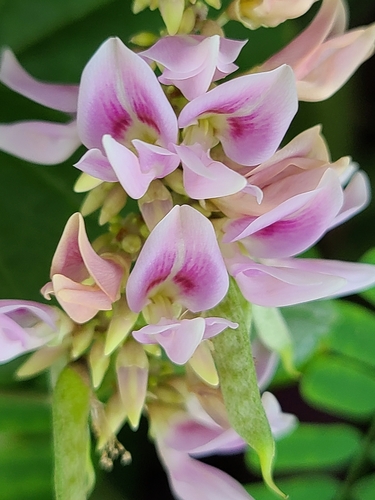
Saraca bijuga
Prain
Sok nam, Dado litaw, Ashok

iNaturalist · cc-by-nc
(c) mihailovujic, some rights reserved (CC BY-NC)
(c) mihailovujic, some rights reserved (CC BY-NC)
iNaturalist · cc-by-nc
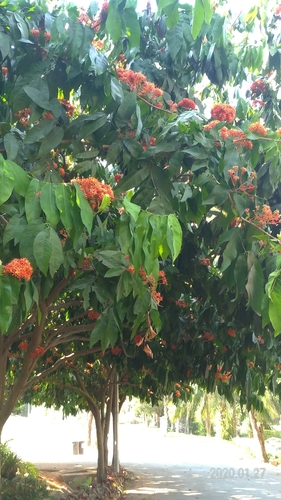
(c) sandy-huiping, some rights reserved (CC BY-NC)
(c) sandy-huiping, some rights reserved (CC BY-NC)
iNaturalist · cc-by-nc
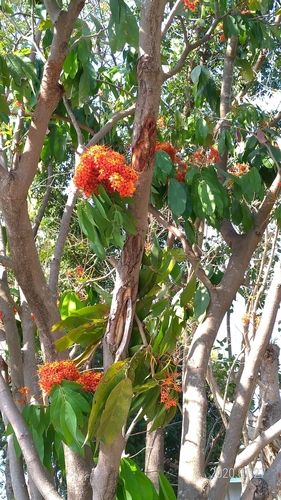
(c) sandy-huiping, some rights reserved (CC BY-NC)
(c) sandy-huiping, some rights reserved (CC BY-NC)
What to Eat
Edible parts: Flowers, Leaves, Nuts - masticatory
The flowers and young leaves are eaten fresh. The fruits are chewed as a masticatory, similar to areca nuts.
Where to Find It
A tropical plant.
Asia, Indochina, Malaysia, Myanmar, SE Asia, Thailand,
Countries: United Arab Emirates, Afghanistan, Armenia, Azerbaijan, Bangladesh, Bahrain, Brunei, Bhutan, China, Georgia, Indonesia, Israel, India, Iraq, Iran, Jordan, Japan, Kyrgyzstan, Cambodia, North Korea, South Korea, Kuwait, Kazakhstan, Laos, Lebanon, Sri Lanka, Myanmar, Mongolia, Maldives, Malaysia, Nepal, Oman, Philippines, Pakistan, Qatar, Saudi Arabia, Singapore, Syria, Thailand, Tajikistan, Timor-Leste, Turkmenistan, Turkey, Taiwan, Uzbekistan, Vietnam, Yemen
How to Identify
A tropical tree from Asia in the Fabaceae family, Saraca bijuga produces flowers and young leaves that are commonly eaten, while its fruit are chewed as a substitute for betel nuts.
Notes
There are 11-70 Saraca species. They are trees from Asia. Also as Caesalpinaceae.
Names & Synonyms
Pan-sayeik
Saraca indica Linn.
References (3)
- Burkill, I.H., 1966, A Dictionary of the Economic Products of the Malay Peninsula. Ministry of Agriculture and Cooperatives, Kuala Lumpur, Malaysia. Vol 2 (I-Z) p 1999
- Facciola, S., 1998, Cornucopia 2: a Source Book of Edible Plants. Kampong Publications, p 68
- Tanaka,