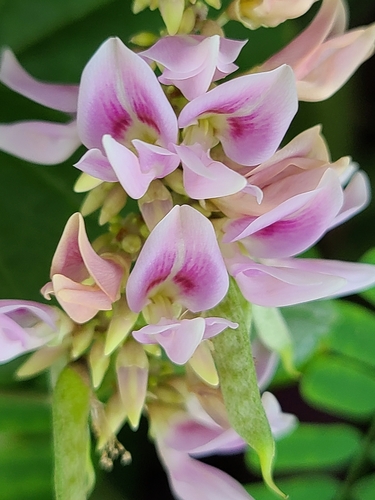
Alysicarpus longifolius
(Rottler ex Spreng.) Wight & Arn.
(c) Ramesh Shenai Jr., some rights reserved (CC BY), uploaded by Ramesh Shenai Jr.
(c) Ramesh Shenai Jr., some rights reserved (CC BY), uploaded by Ramesh Shenai Jr.
(c) Ramesh Shenai Jr., some rights reserved (CC BY), uploaded by Ramesh Shenai Jr.
What to Eat
Edible parts: Roots - flavouring
The roots are sweet and used as a liquorice substitute for flavoring.
Where to Find It
A tropical plant.
Asia, India, Pakistan,
How to Identify
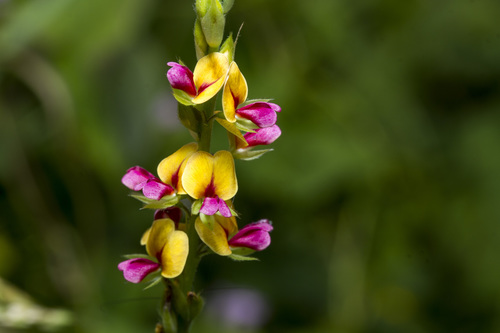
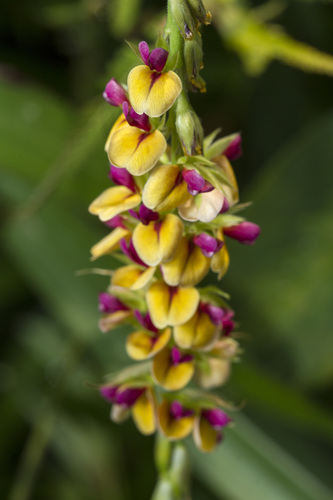
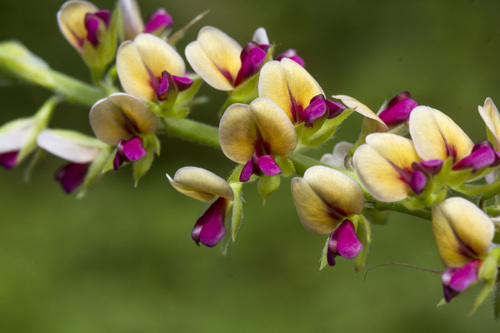
A herb. It grows 1.5 m tall. The leaves have leaflets 5-15 cm long by 1-2 cm wide. They are sword shaped. The flowers are in dense groups. These are 15-30 cm long. The fruit are pods 1-1.3 cm long by 2 mm wide.
How to Grow
This species has a symbiotic relationship with certain soil bacteria; these bacteria form nodules on the roots and fix atmospheric nitrogen. Some of this nitrogen is utilized by the growing plant but some can also be used by other plants growing nearby.
Propagation: Like many species within the family Fabaceae, once they have been dried for storage the seeds of this species may benefit from scarification before sowing in order to speed up and improve germination. This can usually be done by pouring a small amount of nearly boiling water on the seeds (being careful not to cook them!) and then soaking them for 12 - 24 hours in warm water. By this time they should have imbibed moisture and swollen - if they have not, then carefully make a nick in the seedcoat (being careful not to damage the embryo) and soak for a further 12 hours before sowing.
Medicinal Uses
The roots are traditionally used as a substitute for liquorice.
Names & Synonyms
References (3)
- Ambasta S.P. (Ed.), 2000, The Useful Plants of India. CSIR India. p 33
- Flora of Pakistan. www.eFloras.org
- Prodr. fl. Ind. orient. 233. 1834