Toxicodendron griffithii
(Hook.f.) Kuntze

gbif · cc0
President and Fellows of Harvard College
President and Fellows of Harvard College

gbif · cc0
President and Fellows of Harvard College
President and Fellows of Harvard College
What to Eat
Edible parts: Leaves
Young leaves are eaten as a vegetable.
Known Hazards
Where to Find It
It is a subtropical plant. It grows in hill and mountain forests between 1,400-2,500 m above sea level in south China. In Yunnan.
Asia, China, India, Northeastern India,
Countries: United Arab Emirates, Afghanistan, Armenia, Azerbaijan, Bangladesh, Bahrain, Brunei, Bhutan, China, Georgia, Indonesia, Israel, India, Iraq, Iran, Jordan, Japan, Kyrgyzstan, Cambodia, North Korea, South Korea, Kuwait, Kazakhstan, Laos, Lebanon, Sri Lanka, Myanmar, Mongolia, Maldives, Malaysia, Nepal, Oman, Philippines, Pakistan, Qatar, Saudi Arabia, Singapore, Syria, Thailand, Tajikistan, Timor-Leste, Turkmenistan, Turkey, Taiwan, Uzbekistan, Vietnam, Yemen
How to Identify
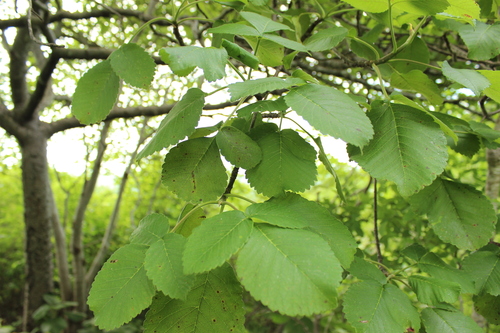
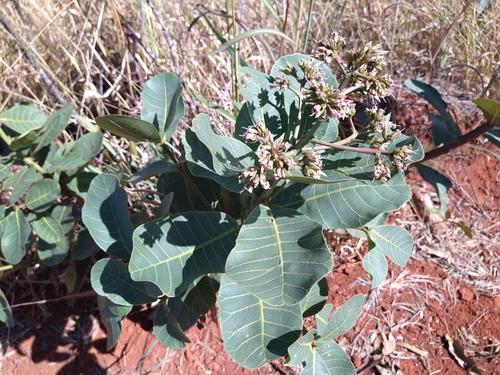
A small tree. The leaf stalk is 6-9 cm long. The leaves are compound. They are about 25-50 cm long. They have leaflets along the stalk and one at the end. There are 7-11 leaflets that are opposite and 9-25 cm long by 4-8 cm wide. They have rusty hairs underneath. The flower panicles are 13-22 cm long. The fruit is small and fleshy. It is 8-10 mm across.
Names & Synonyms
Bhalayo, Darmi-asing
Rhus griffithii Hook.f.
References (2)
- Ambasta S.P. (Ed.), 2000, The Useful Plants of India. CSIR India. p 523 (As Rhus griffithii)
- Patiri, B. & Borah, A., 2007, Wild Edible Plants of Assam. Geethaki Publishers. p 34 (As Rhus griffithii)