Salacia macrophylla
Blume
Kaciput
Wikimedia Commons - Aken, J. van
What to Eat
Edible parts: Fruit
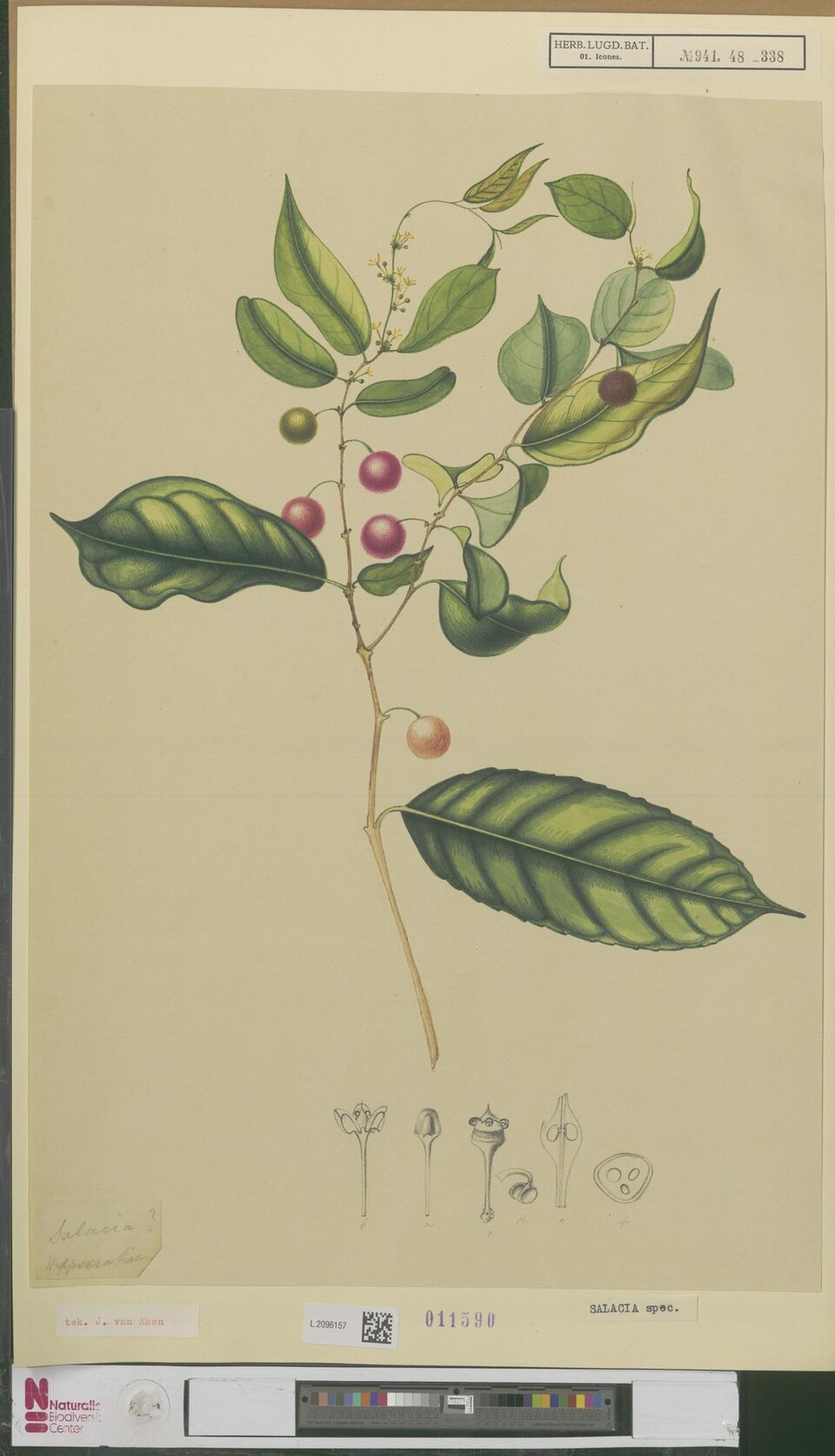
Fruit - raw. The sweetish flesh surrounding the seeds is eaten.The fruit is a subglobose drupe resembling a small citrus, it is usually 5 - 6cm in diameter, occasionally to 8cm.
Where to Find It
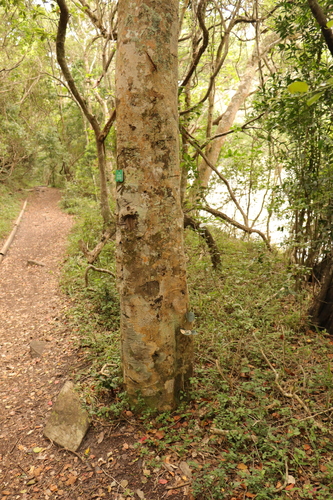
It is a tropical plant. It grows in lowland rainforest near the coast. It can occasionally be in freshwater swamps and on limestone rocks. It can be up to 1,200 m altitude.
Asia, Cambodia, China, India, Indochina, Indonesia, Malaysia, Myanmar, Papua New Guinea, PNG, SE Asia, Singapore, Thailand,
How to Identify
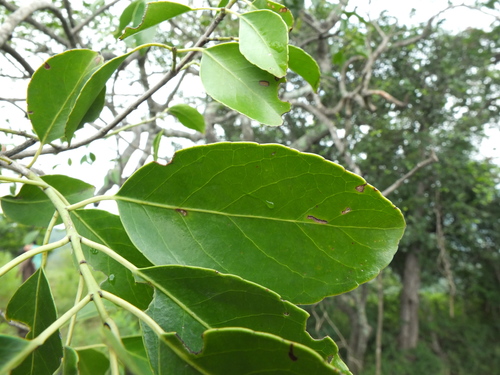
A woody creeper. The leave are somewhat leathery. They can be shiny. They vary between narrowly and broadly oval. They are 8-34 cm long by 17-20 cm wide. They are wedge shaped at the base. There can be rounded teeth towards the tip. The fruit are a flattened round shape and 6 cm long by 5 cm wide. They are orange or red. There are 3 or more seeds in each fruit. These are 2-3 cm long by 1-2 cm wide.
Medicinal Uses
A decoction of the roots is used after childbirth. The pounded leaves are applied on the skin as a treatment against bellyache and eczema.
Other Uses
The twigs are used as twine.
Names & Synonyms
Areuy ki gangarangan, Areuy mata poljang, Hempedal itek, Khop naang, Krado hot, Nasi sejuk
References (7)
- Ambasta, S.P. (Ed.), 2000, The Useful Plants of India. CSIR India. p 540
- Burkill, I. H., 1966,
- Ding Hou, 1964, Celastraceae 2, Flora Malesiana, Ser. 1. Vol 6 (3) p 412
- Milow, P., et al, 2013, Malaysian species of plants with edible fruits or seeds and their evaluation. International Journal of Fruit Science. 14:1, 1-2
- PROSEA No. 2
- Uphof,
- World Checklist of Useful Plant Species 2020. Royal Botanic Gardens, Kew