Berberis chingii
Cheng
BerberidaceaeFruit

gbif · cc-by-nc-sa
MBG
MBG

gbif · cc-by-nc-sa
MBG
MBG

gbif · cc-by-nc-sa
MBG
MBG
What to Eat
Edible parts: Fruit
The fruits are edible.
Where to Find It
It is a warm temperate plant. In China it grows in mixed forests and on limestone slopes between 200-2,000 m above sea level. It suits hardiness zones 7-10.
Asia, Australia, China,
Countries: United Arab Emirates, Afghanistan, Armenia, Australia, Azerbaijan, Bangladesh, Bahrain, Brunei, Bhutan, China, Georgia, Indonesia, Israel, India, Iraq, Iran, Jordan, Japan, Kyrgyzstan, Cambodia, North Korea, South Korea, Kuwait, Kazakhstan, Laos, Lebanon, Sri Lanka, Myanmar, Mongolia, Maldives, Malaysia, Nepal, Oman, Philippines, Pakistan, Qatar, Saudi Arabia, Singapore, Syria, Thailand, Tajikistan, Timor-Leste, Turkmenistan, Turkey, Taiwan, Uzbekistan, Vietnam, Yemen
How to Identify
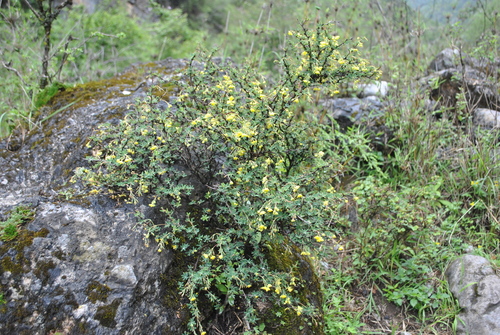
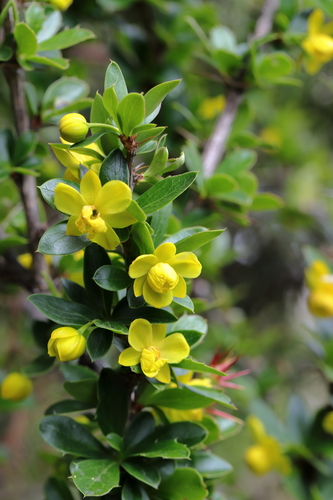
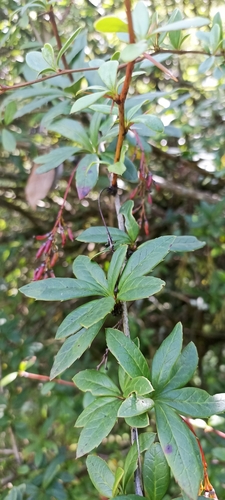
An evergreen shrub. It grows 3 m high and spreads 3 m wide. It has spines. The leaves are 2-8 cm long by 1-3 cm wide. They have a white powdery coating underneath. The flowers are in groups of 4-14. It has clusters of small, white berries.
Notes
There are about 450-500 Berberis species.
References (2)
- Cundall, P., (ed.), 2004, Gardening Australia: flora: the gardener's bible. ABC Books. p 229
- Plants for a Future database, The Field, Penpol, Lostwithiel, Cornwall, PL22 0NG, UK. http://www.scs.leeds.ac.uk/pfaf/