Acioa edulis
Prance
Cutia nut, Edible acioa

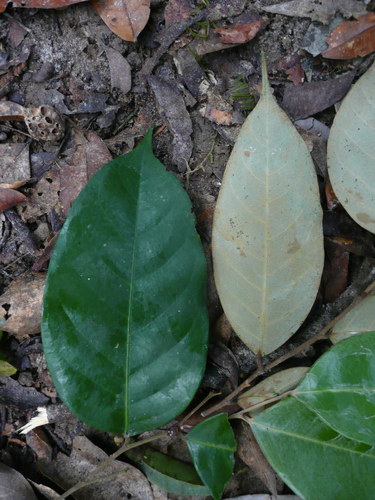
fir0002 flagstaffotos [at] gmail.com Canon 20D + Tamron 28-75mm f/2.8 (via Wikimedia Commons)

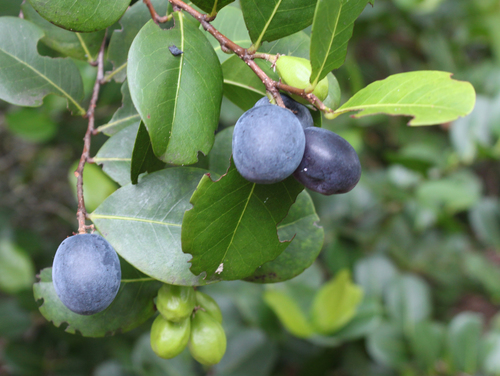
Forest & Kim Starr (via Wikimedia Commons)

Field Museum of Natural History - Botany Department | GDI 2013-2015

Rapid Reference Collection (RRC) | Field Museum of Natural History - Keller Science Action Center

Field Museum of Natural History - Botany Department | GDI 2013-2015
What to Eat
Edible parts: Oil, Kernels, Fruit, Nuts
Oil is extracted from the seed leaves (cotyledons) and used in cooking. The kernel and seeds are edible, eaten raw or cooked, and the seeds are also crushed and added to tapioca cakes.
Where to Find It
It is a tropical plant. It grows on non-flooded land in the Amazon.
Amazon, Brazil*, Central America, South America,
How to Identify
A shrub or small tree. It grows 5 m tall. There are prickles along the stem. The leaves are twice divided and there are 8-18 pairs of pinnae. There are up to 50 pairs of pinnules on each pinnae. The flowers are yellow. They are in large clusters at the ends of branches. The pods are flattened.
Other Uses
An oil obtained from the fruit is used in making soap .
Wikipedia
Source ↗Acioa edulis, syn. Couepia edulis (Prance) Prance, is a fruit and timber tree in the family Chrysobalanaceae, which is native to the Amazon rainforest in Brazil. The tree's Portuguese common name is Castanha-de-cutia. The tree grows naturally only within a small area of Brazil; however, they proliferate widely within this area. The tree is around 25 m (82 ft) tall, with entire leaves that are oval or round, measuring 8–10 cm (3.1–3.9 in) diameter, with a petiole up to 2.5 cm (0.98 in) long. Its fruit ranges from 8–9 cm (3.1–3.5 in) long and 4–5 cm (1.6–2.0 in) diameter. and contain a single nut. Later these nuts float on the waters and have been collected for centuries as the source of a valuable oil, but their source was unknown until 1978 when botanical explorer Ghillean Prance discovered the species of tree which produces them.
Names & Synonyms
Castanha de cotia, Castanha de cutia
References (13)
- Acta Amazon. 2:12. 1971
- Acta Amazon. 4:143. 1975
- Ferns, Useful Tropical Plants
- Grandtner, M. M. & Chevrette, J.,2013, Dictionary of Trees, Volume 2: South America: Nomenclature, Taxonomy and Ecology. Academic Press p 10
- Kermath, B. M., et al, 2014, Food Plants in the Americas: A survey of the domesticated, cultivated and wild plants used for Human food in North, Central and South America and the Caribbean. On line draft. p 268 (As Acioa edulis)
- NYBG Herbarium "edible" (As Couepia edulis)
- Paz, F. S., et al, 2021, Edible Fruit Plant Species in the Amazon Forest Rely Mostly on Bees and Beetles as Pollinators. Journal of Economic Entomology, XX(XX), 2021, 1–13 (As Couepia edulis)
- Prance, G. T., 1989 , Chrysobalanaceae: Flora Neotropica, Vol. 9, Chrysobalanaceae (Supplement) (Mar. 8, 1989), pp. 97
- Prance, G. T. & C. A. Sothers. 2003. Chrysobalanaceae 2, Acioa to Magnistipula. In: Orchard, A. E., ed., Species Plantarum: Flora of the World. Canberra. (Species Plant) 10:2.
- Reis, S. V. and Lipp, F. L., 1982, New Plant Sources for Drugs and Foods from the New York Botanical Garden herbarium. Harvard. p 106 (Also as Couepia edulis)
- Smith, N., Mori, S.A., et al, 2004, Flowering Plants of the Neotropics. Princeton. p 100
- Wickens, G.E., 1995, Edible Nuts. FAO Non-wood forest products. FAO, Rome. p 115
- World Checklist of Useful Plant Species 2020. Royal Botanic Gardens, Kew