Berberis heterophylla
Juss. ex Poir.
Michay, Michai

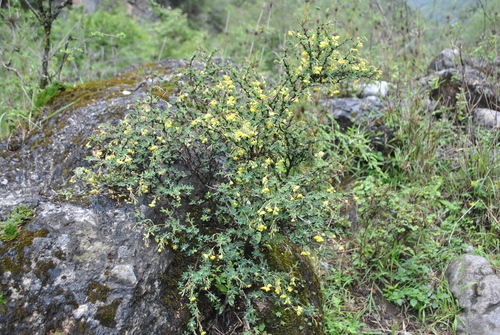
(c) delsatat, some rights reserved (CC BY-NC)
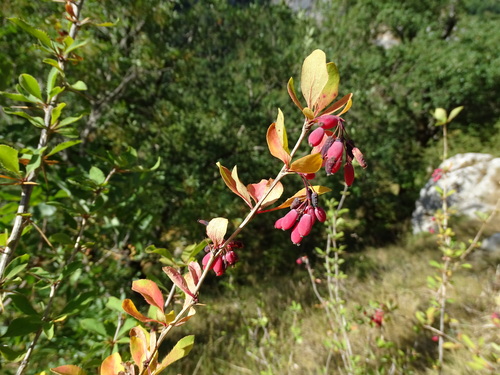
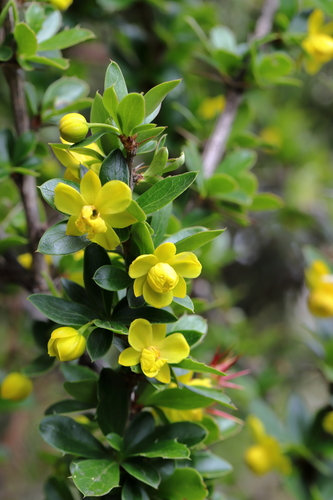
(c) Alfonso Garmendia, some rights reserved (CC BY-NC)
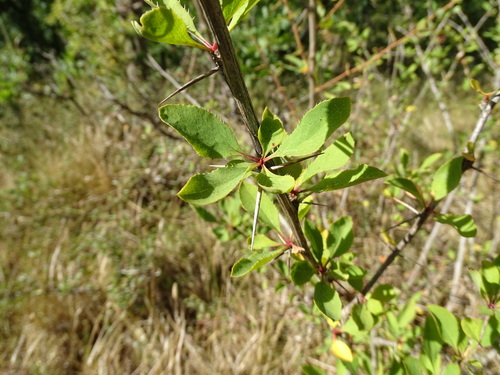
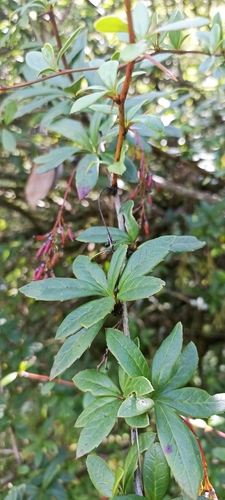
(c) Alfonso Garmendia, some rights reserved (CC BY-NC)
What to Eat
Edible parts: Fruit
Edible Parts: Fruit Edible Uses: Fruit - raw or cooked. The fruits are about 6mm long.
Known Hazards
Where to Find It
It is a temperate plant. It grows on the Patagonian steppe in Argentina.
Argentina*, Chile, South America,
How to Identify
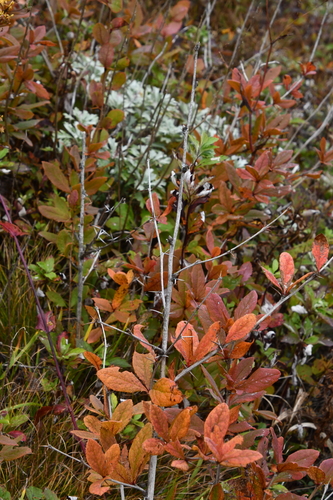
An evergreen shrub reaching 1.5 m tall. Hardy to UK zone 8. Maintains foliage year-round. Hermaphrodite and self-fertile, pollinated by insects. Tolerates light sandy, medium loamy, and heavy clay soils, including nutritionally poor soils. Grows in mildly acid, neutral, or basic pH; adapts to semi-shade or full sun; prefers dry or moist conditions.
How to Grow
Prefers a warm moist loamy soil and light shade but it is by no means fastidious, succeeding in thin, dry and shallow soils. Grows well in heavy clay soils. Plants are possibly hardy to about -15°c. Plants can be pruned back quite severely, they resprout well from the base. Hybridizes freely with other members of this genus. Plants produce suckers.
Propagation: Seed - best sown as soon as it is ripe in a cold frame, when it should germinate in late winter or early spring. Seed from over-ripe fruit will take longer to germinate, whilst stored seed may require cold stratification and should be sown in a cold frame as early in the year as possible. The seedlings are subject to damping off, so should be kept well ventilated. When the seedlings are large enough to handle, prick them out into individual pots and grow them on in a cold frame. If growth is sufficient, it can be possible to plant them out into their permanent positions in the autumn, but generally it is best to leave them in the cold frame for the winter and plant them out in late spring or early summer of the following year. Cuttings of half-ripe wood, July/August in a frame. Cuttings of mature wood of the current season's growth, preferably with a heel, October/November in a frame. Suckers, removed in late autumn/early winter and planted out in situ or potted up and planted out in late spring.
Medicinal Uses
Antibacterial Cancer Dysentery Berberine, universally present in rhizomes of Berberis species, has marked antibacterial effects. Since it is not appreciably absorbed by the body, it is used orally in the treatment of various enteric infections, especially bacterial dysentery. It should not be used with Glycyrrhiza species (Liquorice) because this nullifies the effects of the berberine. Berberine has also shown antitumour activity.
Other Uses
Dye A yellow dye is obtained from the root. Special Uses
Wikipedia
An evergreen shrub reaching 1.5 m tall. Hardy to UK zone 8. Maintains foliage year-round. Hermaphrodite and self-fertile, pollinated by insects. Tolerates light sandy, medium loamy, and heavy clay soils, including nutritionally poor soils. Grows in mildly acid, neutral, or basic pH; adapts to semi-shade or full sun; prefers dry or moist conditions.
Notes
There are about 450-500 Berberis species.
Names & Synonyms
Michay
References (8)
- Altschul, S.V.R., 1973, Drugs and Foods from Little-known Plants. Notes in Harvard University Herbaria. Harvard Univ. Press. Massachusetts. no. 983
- Encycl. 8:622. 1808
- Ladio, A. H. & Lozada, M., 2000, Edible Plant Use in a Mapuche Community of North-western Patagonia, Human Ecology. Vol. 28, No. 1. pp. 53-71
- Ladio, A. H., 2001, The Maintenance of Wild Edible Plant Gatherings in a Mapuche Community of Patagonia. Economic Botany, Vol. 55, No. 2, pp. 243-254
- Ladio, A. H. and Lozada, M., 2003, Comparison of wild edible plant diversity and foraging strategies in two aboriginal communities of northwestern Patagonia. Biodiversity and Conservation 12: 937–951
- Ladio, A. H. and Lozada, M., 2004, Patterns of use and knowledge of wild edible plants in distinct ecological environments: a case study of a Mapuche community from northwestern Patagonia. Biodiversity and Conservation 13:1153-1173
- Ladio, A., Lozada, M. & M. Weigandt, 2007, Comparison of traditional wild plant knowledge between aboriginal communities inhabiting arid and forest environments in Patagonia, Argentina. Journal of Arid Environments 69 (2007) 695–715
- Plants for a Future database, The Field, Penpol, Lostwithiel, Cornwall, PL22 0NG, UK. http://www.scs.leeds.ac.uk/pfaf/