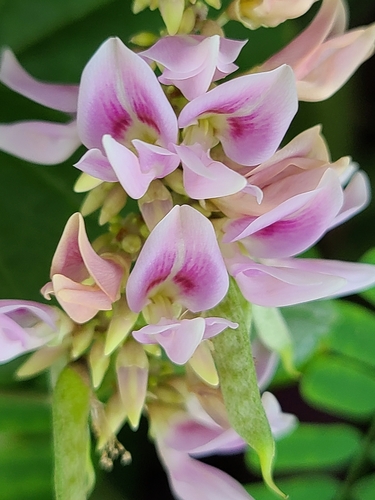
Astragalus creticus
Lam.

(c) Stefan Neuwirth, some rights reserved (CC BY-NC), uploaded by Stefan Neuwirth

(c) Nicholas Turland, some rights reserved (CC BY-NC-ND)
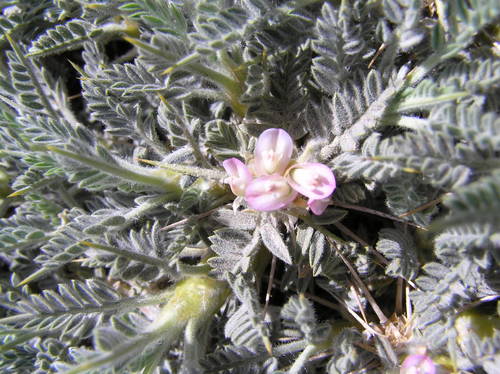
(c) Martin A. Prinz, some rights reserved (CC BY-NC)
What to Eat
Edible parts: Gum
Edible Parts: Edible Uses: Gum Gum A source of gum tragacanth - used as a thickener in confections. Some exudes naturally, more can be obtained by incision of the stem about 5cm below ground level.
Known Hazards
Where to Find It
It is a temperate or Mediterranean climate plant. It grows in the mountain in the Balkans. It is best in well-drained soil. It needs a sunny position.
Balkans, Europe, Greece, Kuwait, Mediterranean, Middle East,
How to Identify
A deciduous shrub with hermaphroditic flowers pollinated by bees and butterflies. Fixes nitrogen. Suited to light sandy and medium loamy, well-drained soils across mildly acidic to mildly alkaline pH ranges. Requires full sun and prefers dry conditions.
How to Grow
We have very little information on this species and do not know if it will be hardy in Britain, though judging by its native range it should succeed outdoors in many parts of this country. The following notes are based on the general needs of the genus. Requires a dry well-drained soil in a sunny position. Plants are intolerant of root disturbance and are best planted in their final positions whilst still small. This species has a symbiotic relationship with certain soil bacteria, these bacteria form nodules on the roots and fix atmospheric nitrogen. Some of this nitrogen is utilized by the growing plant but some can also be used by other plants growing nearby. Many members of this genus can be difficult to grow, this may be due partly to a lack of their specific bacterial associations in the soil.
Propagation: Seed - best sown as soon as it is ripe in a cold frame. A period of cold stratification may help stored seed to germinate. Stored seed, and perhaps also fresh seed, should be pre-soaked for 24 hours in hot water before sowing - but make sure that you do not cook the seed. Any seed that does not swell should be carefully pricked with a needle, taking care not to damage the embryo, and re-soaked for a further 24 hours. Germination can be slow and erratic but is usually within 4 - 9 weeks or more at 13°c if the seed is treated or sown fresh. As soon as it is large enough to handle, prick the seedlings out into individual pots and grow them on in the greenhouse for their first winter, planting them out into their permanent positions in late spring or early summer, after the last expected frosts.
Medicinal Uses
None known
Other Uses
Gum Gum Gum tragacanth is obtained from the stem (see above). It has a wide range of uses including:- a thickening agent in preparing dyes for calico printing, textile dyes and for dressing fabrics, it is also a thickener in making glues, water colours, ink (where it supplies a gloss), it is a binding agent in paper making, a culture medium in laboratories etc. Special Uses Nitrogen Fixer
Wikipedia
Source ↗A deciduous shrub with hermaphroditic flowers pollinated by bees and butterflies. Fixes nitrogen. Suited to light sandy and medium loamy, well-drained soils across mildly acidic to mildly alkaline pH ranges. Requires full sun and prefers dry conditions.
Other Information
It is cultivated.
Notes
This plant yields tragacanth. There are 2,000 Astragalus species.
References (2)
- Hedrick, U.P., 1919, (Ed.), Sturtevant's edible plants of the world. p 83
- Middleditch, B. S., 1991, Kuwaiti Plants: Distribution, Traditional Medicine, Phytochemistry, Pharmacology and Economic Value. Studies in Plant Science, 2. Elsevier p 13