Aspalathus cordata
(L.) R. Dahlgren

iNaturalist · cc-by-nc
(c) Felix Riegel, some rights reserved (CC BY-NC), uploaded by Felix Riegel
(c) Felix Riegel, some rights reserved (CC BY-NC), uploaded by Felix Riegel
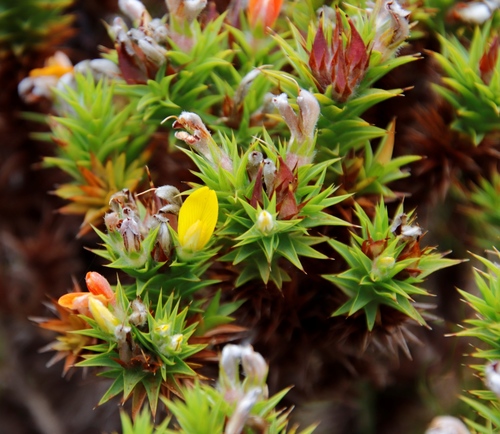
iNaturalist · cc-by-sa
(c) Tony Rebelo, some rights reserved (CC BY-SA), uploaded by Tony Rebelo
(c) Tony Rebelo, some rights reserved (CC BY-SA), uploaded by Tony Rebelo
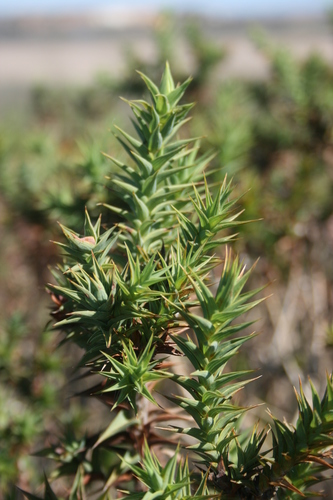
iNaturalist · cc-by-sa
(c) Jacques van der Merwe, some rights reserved (CC BY-SA), uploaded by Jacques van der Merwe
(c) Jacques van der Merwe, some rights reserved (CC BY-SA), uploaded by Jacques van der Merwe
What to Eat
Edible parts: Leaves - tea
The leaves are used to make tea drinks.
Where to Find It
It is a Mediterranean climate or subtropical. It grows on sandy slopes.
Africa, South Africa, Southern Africa,
Countries: Angola, Burkina Faso, Burundi, Benin, Botswana, Congo (DRC), Central African Republic, Congo (Republic), Cote d'Ivoire, Cameroon, Cape Verde, Djibouti, Algeria, Egypt, Eritrea, Ethiopia, Gabon, Ghana, Gambia, Guinea, Equatorial Guinea, Guinea-Bissau, Kenya, Comoros, Liberia, Lesotho, Libya, Morocco, Madagascar, Mali, Mauritania, Mauritius, Malawi, Mozambique, Namibia, Niger, Nigeria, Rwanda, Seychelles, Sudan, Sierra Leone, Senegal, Somalia, South Sudan, Sao Tome & Principe, Eswatini, Chad, Togo, Tunisia, Tanzania, Uganda, South Africa, Zambia, Zimbabwe
How to Identify
A low shrub. It grows 40-80 cm tall. It is a rigid plant and branches freely. The leaves are simple and sword shaped. The flowers are in groups of 4-8 at the ends of branches.
Production
In South Africa plants flower August to December.
Names & Synonyms
Borbonia cordata Linn.
References (5)
- Hedrick, U.P., 1919, (Ed.), Sturtevant's edible plants of the world. p 111
- Opera Bot. 9(1):275. 1963
- Ruiters-Welcome, A. K., 2019, Food plants of southern Africa. Ph.D. thesis. Univ. of Johannesburg p 55
- van Wyk, Ben-Erik, 2019, The diversity and multiple uses of southern African legumes. Australian Systematic Botany, 2019, 32, 519–546
- Welcome, A. K. & Van Wyk, B.-E., 2019, An inventory and analysis of the food plants of southern Africa. South African Journal of Botany 122 (2019) 136–179




