Ferocactus hamatacanthus
(Muehlenpf.) Britton & Rose
Mexican fruit cactus

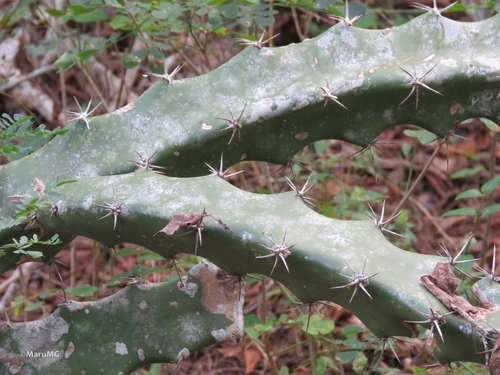
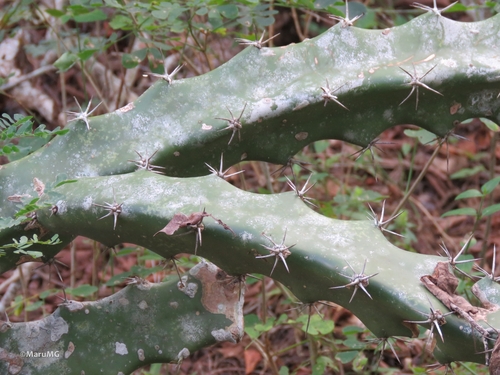
(c) Ad Konings, some rights reserved (CC BY-NC)

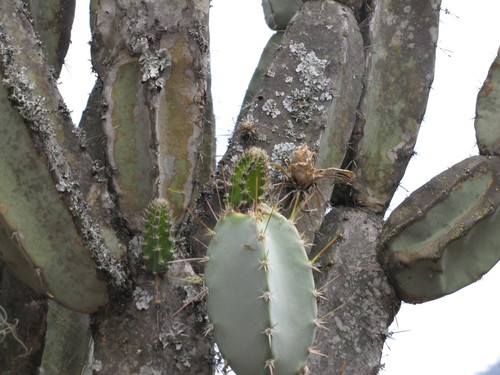
(c) RainbowHummingbird, some rights reserved (CC BY-NC)
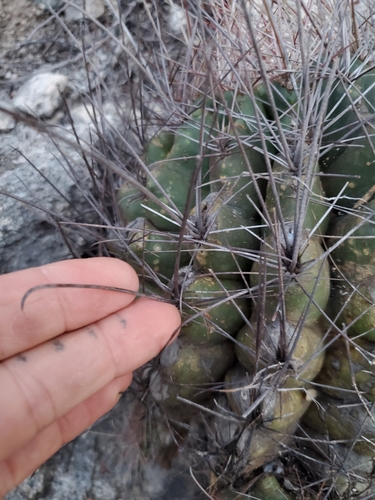
(c) Joey Santore, some rights reserved (CC BY-NC)
What to Eat
Edible parts: Fruit, Flower buds
The fruit serves as a lemon substitute for acid flavoring and is also dried and eaten as a sweetmeat. Unopened flower buds are soaked overnight then boiled or fried, and are harvested and canned commercially.
Where to Find It
It is a tropical plant. It grows in dry and open areas.
Central America, Mexico*, North America, USA,
How to Identify
A cactus. Plants are usually single. They are round or cylinder shaped and 60 cm high by 30 cm across. There are 12-17 ribs. There are 4-8 central spines that are curved backwards and hooked at the tip. They can be twisted and are 8 cm long. There are 8-20 spines around these and they are straight and 1.5-8 cm long. The flowers are funnel shaped and yellow. They are 6-10 cm long. The fruit are oval and green to red. They are 2.5-5 cm long.
How to Grow
Plants can be grown from seeds.
Wikipedia
Source ↗Ferocactus hamatacanthus, commonly named Turk's head, is a barrel cactus in the tribe Cacteae.
Other Information
The buds are harvested and canned.
Names & Synonyms
Anzuela, Biznaga de tuna, Huecomitl, Kaktus tong texas, Lemon cactus, Metzollin, Texas barrel cactus, Turk's-head barrel cactus, Turk's-head cactus, Viznaga, Viznaga barrel cactus
References (11)
- Anderson, E.F., 2001, The Cactus Family, Timber Press. p 331
- Astrada, E., et al, 2007, Ethnobotany in the Cumbres de Monterrey National Park, Nuevo Leon, Mexico. Journal of Ethnobiology and Ethnomedicine 3:8
- Facciola, S., 1998, Cornucopia 2: a Source Book of Edible Plants. Kampong Publications, p 64 (As Hamatocactus hamatacanthus)
- Fouqué, A. 1972. Espèces fruitières d'Amérique tropicale. Institut français de recherches fruitierès outre-mer
- Hedrick, U.P., 1919, (Ed.), Sturtevant's edible plants of the world. p 284 (As Echinocactus hamatocanthus)
- Kermath, B. M., et al, 2014, Food Plants in the Americas: A survey of the domesticated, cultivated and wild plants used for Human food in North, Central and South America and the Caribbean. On line draft. p 366
- Loughmiller, C & L., 1985, Texas Wildflowers. A Field Guide. University of Texas, Austin. p 28
- Piedra-Malagón, E. M. et al, 2022, Edible native plants of the Gulf of Mexico Province. Biodiversity Data Journal 10: e80565 p 15
- Segura, S. et al, 2018, The edible fruit species in Mexico. Genet Resour Crop Evol (2018) 65:1767–1793
- Sukarya, D. G., (Ed.) 2013, 3,500 Plant Species of the Botanic Gardens of Indonesia. LIPI p 1018
- World Checklist of Useful Plant Species 2020. Royal Botanic Gardens, Kew