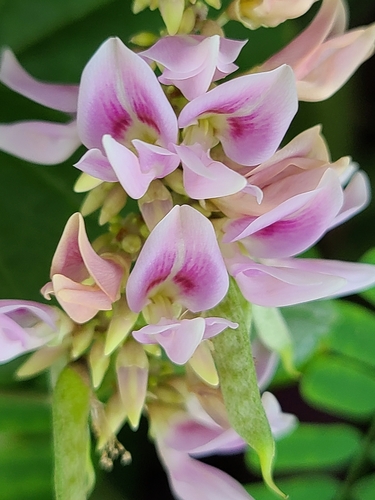
Inga bourgoni
(Aubl.) DC.
Warakosa
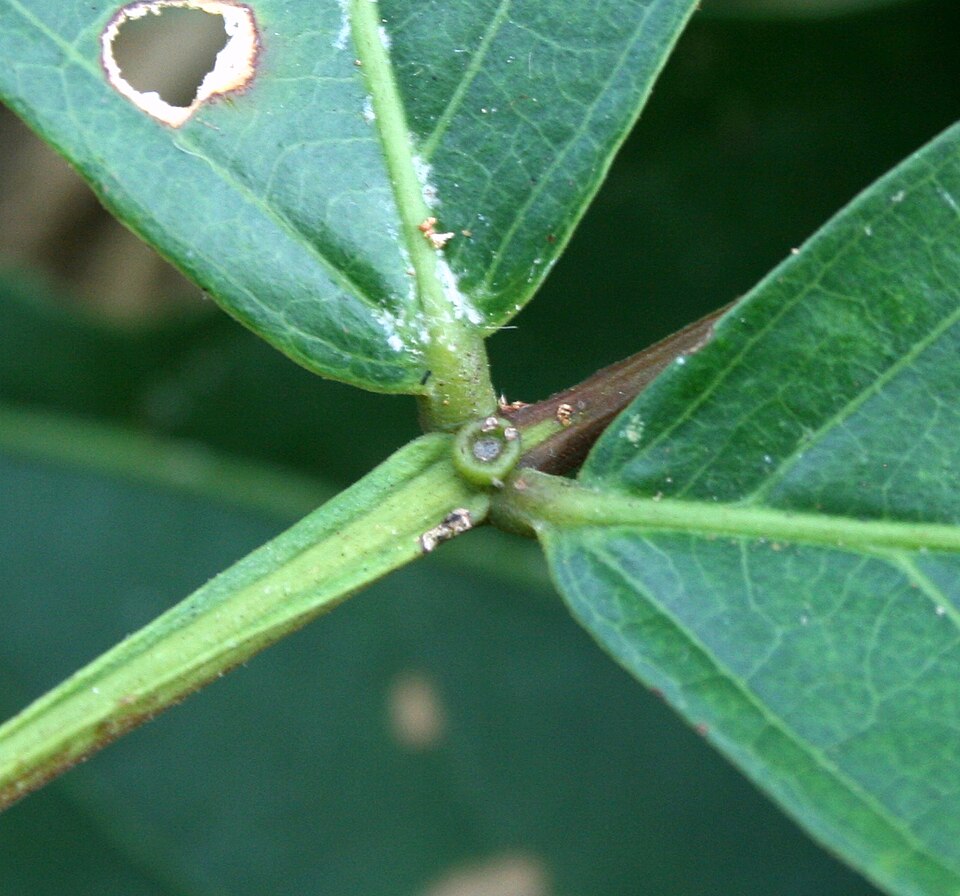
Wikimedia Commons - Vojtěch Zavadil

Wikimedia Commons - Jean-Baptiste-Christophe FUSÉE-AUBLET (1720-1778)
What to Eat
Edible parts: Pod pulp, Fruit
The sweet pulp inside the pods is eaten and is popular as a food.
Where to Find It
A tropical plant. It grows in tropical America. It grows on the floodplains and occasionally in uplands.
Amazon, Andes, Bolivia, Brazil, Central America, Colombia, Ecuador, French Guiana, Guianas, Guyana, Peru, South America, Suriname, Venezuela,
How to Identify
A tree. It grows 20-40 m tall. The twigs are dark reddish-brown. The leaves are compound. The leaflets are leathery. The flowers are in clustered spikes in the axils of leaves. These are 5 cm long. The fruit are pods 10-17 cm long by 0.6 cm wide. They are green to black. They are slightly swollen over the seeds. There are about 12 seeds. The pulp is sweet.
How to Grow
Plants grow easily from seeds. Seeds germinate in 1-2 weeks given moisture and shade.
Other Information
The fruit are popular.
Notes
Also as Mimosaceae.
Names & Synonyms
Abonkini, Adai-weko, Bewetempoye, Buguiahue, Burzquillo, Ebenbawe, Guamo, Lebioueko, Maporokon, Pacay, Prokonie, Sacha pacai, Shimbillo, Swit'bonki, Warakosa, Yana cara pacai
References (12)
- Ferns, Useful Tropical plants
- Fouqué, A., 1972, Espèces fruitières d'Amérique tropicale. Institut français de recherches fruitierès outre-mer
- Grandtner, M. M. & Chevrette, J., 2013, Dictionary of Trees, Volume 2: South America: Nomenclature, Taxonomy and Ecology. Academic Press p 319
- Hedrick, U.P., 1919, (Ed.), Sturtevant's edible plants of the world. p 355
- Kermath, B. M., et al, 2014, Food Plants in the Americas: A survey of the domesticated, cultivated and wild plants used for Human food in North, Central and South America and the Caribbean. On line draft. p 436
- Kew Plants of the World On line
- Philips, O., 1992, The potential for harvesting fruits in tropical rainforests: new data from Amazonian Peru. Biodiversity and Conservation 2, 18-38
- Roa, J. A. G. & Boada, D. S. G., 2018, Fundación para el Fortalecimiento de la Fruticultura y Plantas Alimenticias no Convencionales en Colombia.
- Smith, N., et al, 2007, Amazon River Fruits. Flavors for Conservation. Missouri Botanical Gardens Press. p 116
- Torre, de la, L., et al, 2008, Enciclopedia de las Plantas Útiles del Ecuador. Herbario QCA. Pontificia Universidad Católica del Ecuador. p 343
- van Roosmalen, M.G.M., 1985, Fruits of the Guianan Flora. Utrecht Univ. & Wageningen Univ. p 234
- Villachica, H, 1996, Frutales y hortalizas promisorios de la Amazonía. Tratado de Cooperación Amazónica.