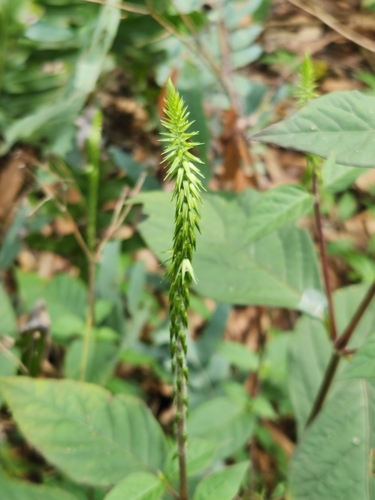
Beta lomatogona
Fisch. & C. A. Mey.

GBIF
What to Eat
Edible parts: Root
Edible Parts: Root Edible Uses: Sweetener Root- cooked. The root is quite woody but it contains up to 30% sugar.
Where to Find It
It is a Mediterranean climate plant. It can tolerate salt.
Armenia, Azerbaijan, Caucasus, Europe, Georgia, Mediterranean, Turkey, Türkiye,
How to Identify
Beta lomatogona is a perennial reaching 0.5 m tall with hermaphroditic wind-pollinated flowers. It grows in light sandy, medium loamy, or heavy clay soils with good drainage, tolerating mildly acidic to mildly alkaline and saline soils. The plant requires full sun and prefers moist soil.
How to Grow
We have very little information on this species and do not know if it will be hardy in Britain, though judging by its native range it could succeed outdoors in many parts of this country. The following notes are based on the general needs of the genus. Succeeds in most soils but prefers a light neutral to alkaline soil.
Propagation: Seed - sow spring in a cold frame. Germination usually takes place within 2 - 3 weeks at 15°c. When they are large enough to handle, prick the seedlings out into individual pots and plant them out into their permanent positions in the summer. If you have sufficient seed, it can be sown outdoors in situ in mid to late spring.
Medicinal Uses
None known
Other Uses
None known Special Uses
Wikipedia
Source ↗Beta lomatogona is a species of wild beet in the family Amaranthaceae, native to Cyprus, Turkey, the Transcaucasus, and Iran. A diploid, it is being studied for its cold and drought resistance in an effort to improve the sugar beet.
Other Information
It is cultivated.
Notes
Probably all Beta are one species and 2 main forms - Cicla - for leaves, and Contiva - for roots. Also put in the family Chenopodiaceae.
Names & Synonyms
References (5)
- Ertug, F, Yenen Bitkiler. Resimli Türkiye Florası -I- Flora of Turkey - Ethnobotany supplement
- R. F. Hohenacker, Bull. Soc. Imp. Naturalistes Moscou 11(4):360. 1838 (Enum. pl. Talysch 124.)
- Plants for a Future database, The Field, Penpol, Lostwithiel, Cornwall, PL22 0NG, UK. http://www.scs.leeds.ac.uk/pfaf/
- Rivera, D. et al, 2006, Gathered Mediterranean Food Plants - Ethnobotanical Investigations and Historical Development, in Heinrich M, Müller WE, Galli C (eds): Local Mediterranean Food Plants and Nutraceuticals. Forum Nutr. Basel, Karger, 2006, vol 59, pp 18–74
- Zeven, A. C. & de West, J. M. J., 1982, Dictionary of cultivated plants and their regions of diversity. Wageningen. p 88