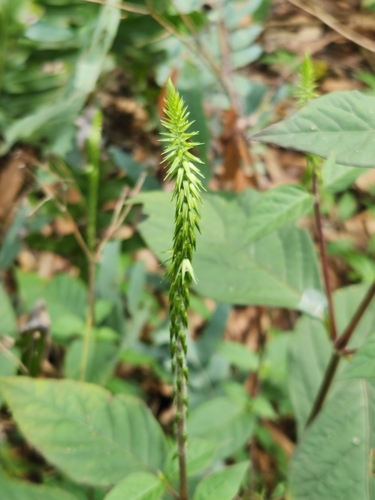
Beta macrocarpa
Guss.
Wild swiss chard
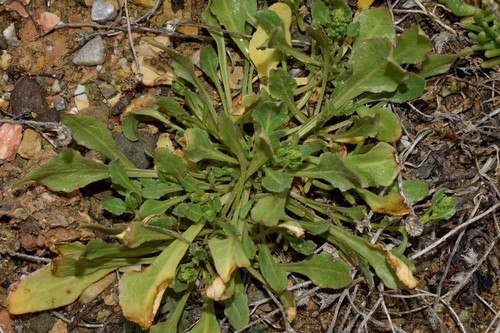
(c) Σάββας Ζαφειρίου (Savvas Zafeiriou), some rights reserved (CC BY-NC), uploaded by Σάββας Ζαφειρίου (Savvas Zafeiriou)
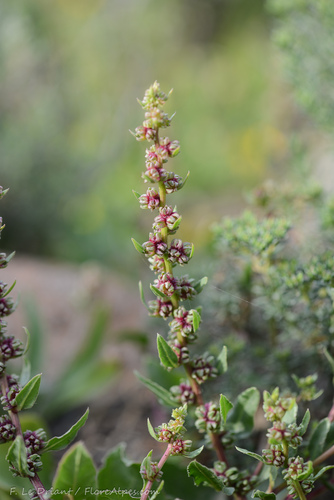
(c) Franck Le Driant, some rights reserved (CC BY-NC)
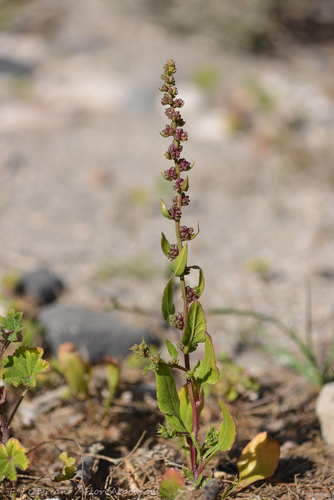
(c) Franck Le Driant, some rights reserved (CC BY-NC)
What to Eat
Edible parts: Root, Leaves
The leaves are cooked in soups and stews. The root is used in soup, and can also be dried, crushed, sifted, and mixed with barley or wheat flour.
Where to Find It
It is a Mediterranean climate plant. It grows in slightly salty or sandy areas.
Africa, Europe, Greece, Italy, Mediterranean, Morocco, North Africa, Portugal, Spain, Tunisia,
How to Identify
It is like Sea beet (Beta vulgaris subsp. maritima) except the flower spikes have bracts up to the top.
Wikipedia
Source ↗Beta macrocarpa, the large-fruited beet, is a species of flowering plant in the family Amaranthaceae, native to the Canary Islands and the shores of the Mediterranean. It is widely used to study beet necrotic yellow vein virus in an effort to improve the sugar beet.
Notes
Probably all Beta are one species and 2 main forms - Cicla - for leaves, and Contiva - for roots. Also put in the family Chenopodiaceae.
Names & Synonyms
Aitiace, Barba, Bendjar, Boumseli, Chaouender, Hatrab, Hezab, Left m 'ta el-baqar, Selg, Selg arbi, Selk, Sellak, Semlakh, Serj, Sildj, Silk el belebcha, Silk, Tibidas
References (6)
- BOUQUET
- Blamey, M and Grey-Wilson, C., 2005, Wild flowers of the Mediterranean. A & C Black London. p 39
- Dop, M. C., et al, 2019, Identification and frequency of consumption of wild edible plants over a year in central Tunisia: a mixed-methods approach. Public Health Nutrition: 23(5), 782–794
- Fl. sicul. prodr. 1:302. 1827
- Nassif, F., & Tanji, A., 2013, Gathered food plants in Morocco: The long forgotten species in Ethnobotanical Research. Life Science Leaflets 3:17-54
- Tbatou, M, et al, 2016, Wild Edible Plants traditionally used in the countryside of El Jadida, Coastal Area in the Center of Morocco. Life Sciences Leaflets 75:28-48