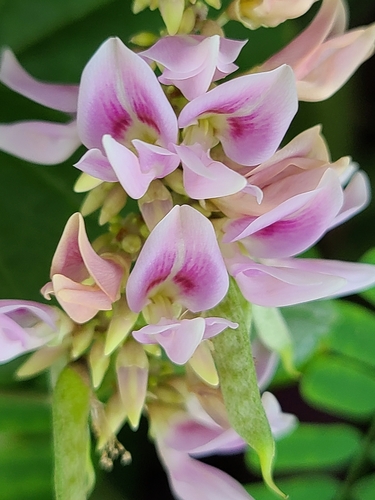
Vigna caracalla
(L.) Verdc.
Caracol, Corkscrew-flower, Snail-flower, Snail bean, Bertoni bean
no rights reserved
no rights reserved
no rights reserved
What to Eat
Edible parts: Seeds, Root
The seeds are eaten and the root is used to assist fermentation of traditional drinks in Mexico.
Where to Find It
A subtropical plant. It grows in the tropics. It needs regular moisture in hot places. It will grow in most well-drained soils. In Argentina it grows from sea level to 1,500 m above sea level. It suits hardiness zones 10-11.
Argentina, Australia, Brazil, Dominican Republic, Europe, India, North America, Paraguay, Slovenia, South America, Uruguay, West Indies,
How to Identify
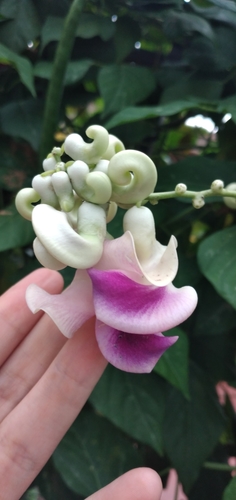
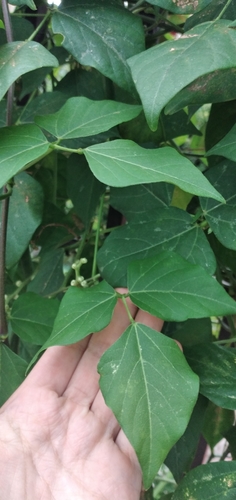
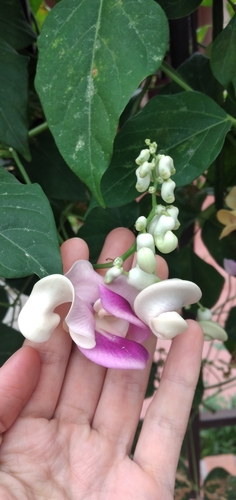
It is a short lived climber. It grows 3-6 m long. It spreads 3 m wide. The stems are twining. The leaves have 3 leaflets. The leaflets are oval and dull green. The flowers have a sweet smell. The flowers are coiled and shell shape. They are violet to pink. The pods also have a sweet smell and are coiled. The seeds are of several colours.
Names & Synonyms
References (7)
- Cundall, P., (ed.), 2004, Gardening Australia: flora: the gardener's bible. ABC Books. p 1471
- Facciola, S., 1998, Cornucopia 2: a Source Book of Edible Plants. Kampong Publications, p 112
- Hedrick, U.P., 1919, (Ed.), Sturtevant's edible plants of the world. p 476 (As Phaseolus caracalla)
- Hibbert, M., 2002, The Aussie Plant Finder 2002, Florilegium. p 306
- http://www.botanic-gardens-ljubljana.com/en/plants
- Kew Bull. 24:552. 1970
- Llamas, K.A., 2003, Tropical Flowering Plants. Timber Press. p 223