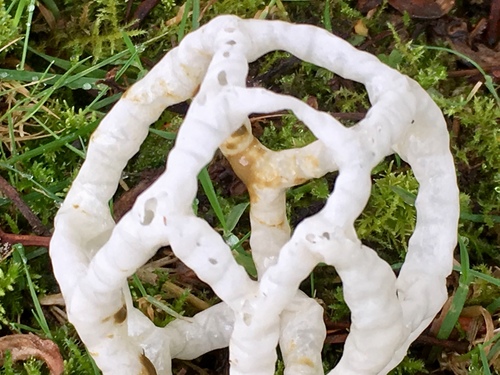
Phallus impudicus
L.
Stinkhorn

(c) Chris Moody, some rights reserved (CC BY-NC)
(c) bigjohnbooth, some rights reserved (CC BY-NC)

(c) Dr. Hans-Günter Wagner, some rights reserved (CC BY-SA)
What to Eat
Edible parts: Mushroom, Fungus
At the egg stage, pieces of the inner layer (the receptaculum) can be cut out with a knife and eaten raw. They are crisp and crunchy with an attractive radishy taste. Some sources differ as to its palatability. The fungus is enjoyed and eaten in France and parts of Germany, where it may be sold fresh or pickled and used in sausages. Similar species are consumed in China.
Where to Find It
It is a temperate plant.
Asia, China, Hong Kong, Russia,
How to Identify
A mushroom.
Medicinal Uses
Venous thrombosis, the formation of a blood clot in a vein, is a common cause of death in breast cancer patients; patients with recurrent disease are typically maintained on anticoagulants for their lifetimes. A research study has suggested that extracts from P. impudicus can reduce the risk of this condition by reducing the incidence of platelet aggregation, and may have potential as a supportive preventive nutrition. It was used in medieval times as a cure for gout and as a love potion.
Wikipedia
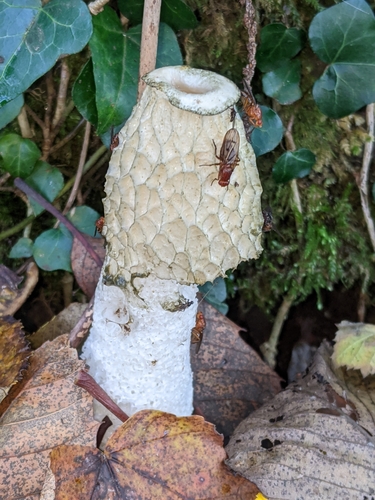
Source ↗Phallus impudicus, known colloquially as the common stinkhorn, is a widespread species of fungus in the Phallaceae (stinkhorn) family. It is recognizable for its foul odor and its phallic shape when mature, the latter feature giving rise to several names in 17th-century England. It is a common mushroom in Europe and North America, where it occurs in habitats rich in wood debris, such as forests and mulched gardens. It appears from summer to late autumn. The fruiting structure is tall and white with a slimy, dark olive colored conical head. Known as the gleba, this material contains the spores, and is transported by insects which are attracted by the odor—described as resembling carrion. Despite its foul smell, it is not usually poisonous and immature mushrooms are consumed cooked on their own or feature as an ingredient in cuisines of parts of the Czech Republic, France and Germany.
Names & Synonyms
Guibi
References (4)
- Boa, E. R., 2004, Wild edible fungi and their importance to people. FAO Non Wood Forest Products Booklet 17
- Hall, I. R., et al, 2003, Edible and Poisonous Mushrooms of the World. Timber Press. p 307
- Kaufmann, B. et al, 1999, The Great Encyclopedia of Mushrooms. Konemann. p 190
- Li, H., et al, 2020, Reviewing the world’s edible mushroom species: A new evidence-based classification system. Compr Rev Food Sci Food Saf. 2021;20:1982–2014.