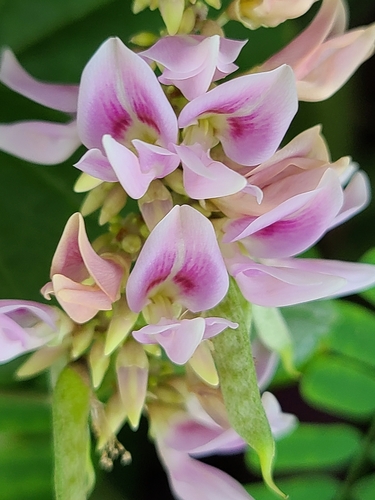
Astragalus americanus
(Hook.) M. E. Jones
American milkvetch

iNaturalist · cc-by-nc
(c) Matthias Buck, some rights reserved (CC BY-NC), uploaded by Matthias Buck
(c) Matthias Buck, some rights reserved (CC BY-NC), uploaded by Matthias Buck
iNaturalist · cc-by-nc
(c) Matthias Buck, some rights reserved (CC BY-NC), uploaded by Matthias Buck
(c) Matthias Buck, some rights reserved (CC BY-NC), uploaded by Matthias Buck
iNaturalist · cc-by-nc
(c) Matthias Buck, some rights reserved (CC BY-NC), uploaded by Matthias Buck
(c) Matthias Buck, some rights reserved (CC BY-NC), uploaded by Matthias Buck
What to Eat
Edible parts: Roots
The roots are edible.
Known Hazards
Where to Find It
It is a temperate plant. It grows in moist meadows between 800-1,600 m above sea level.
Alaska, Canada, North America, USA,
Countries: Antigua & Barbuda, Barbados, Bahamas, Belize, Canada, Costa Rica, Cuba, Dominica, Dominican Republic, Grenada, Guatemala, Honduras, Haiti, Jamaica, St Kitts & Nevis, St Lucia, Mexico, Nicaragua, Panama, Puerto Rico, El Salvador, Trinidad & Tobago, United States, St Vincent
How to Identify
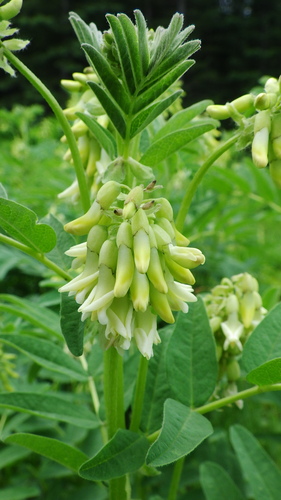
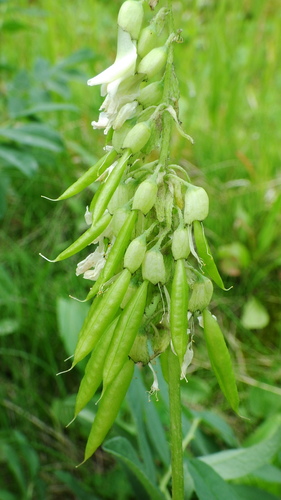
A herb. It grows 30-100 cm tall. The stems are thick at the base and do not have hairs. The leaves are alternate and divided into 9-17 leaflets. These are 2-5 cm long by 7-15 mm wide. The flowers are in groups of 15-40 in loose groups in the axils of leaves. The fruit is a slender pod 2-3 cm long.
Notes
There are 2,000 Astragalus species.
Names & Synonyms
Astragalus frigidus var. americanus (Hook.) S. Watson
References (2)
- Contr. W. Bot. 8:8. 1898
- Etkin, N.L. (Ed.), 1994, Eating on the Wild Side, Univ. of Arizona. p 69