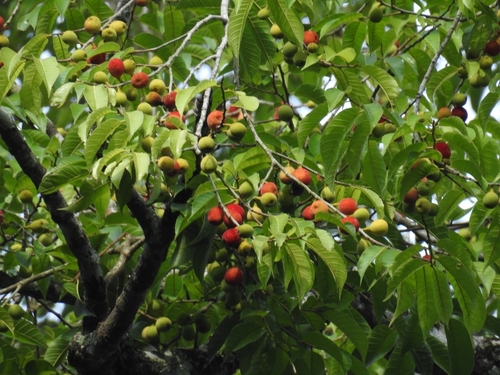
Ficus adenosperma
Miquel
Riverine fig

(c) Aaron Bean, some rights reserved (CC BY-NC), uploaded by Aaron Bean
(c) coenobita, some rights reserved (CC BY)
(c) coenobita, some rights reserved (CC BY)
What to Eat
Edible parts: Leaves, Fruit
The leaves and fruit are eaten, though leaves are traditionally consumed only during food shortages.
Where to Find It
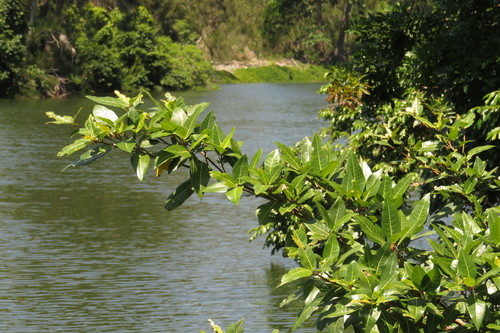
A tropical plant. It grows in rainforest near watercourses. In tropical Queensland it grows from sea level to 600 m altitude. In Indonesia it grows up to 2,500 m above sea level.
Asia, Australia*, Bougainville, Indonesia, Malaysia, Pacific, Papua New Guinea, PNG, Rotuma, SE Asia, Solomon Islands, Vanuatu,
How to Identify
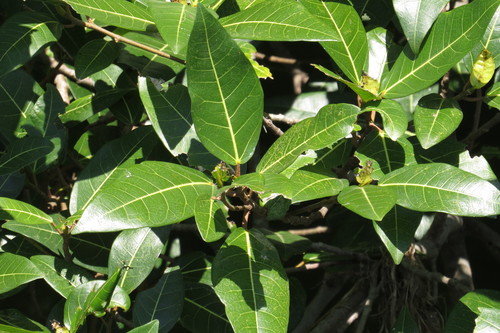
A fig. It is a shrub or small tree. It grows to 10 m tall. The sap from broken twigs is yellow or cream. The leaves are simple and alternate or opposite. They are 6-12 cm long and 2-7 cm wide. There are oil dots visible with a lens. There are 2 flat glands at the base underneath. The leaf stalks are 1-4 cm long. They are hairy. The figs are in the axils of the leaves. They can be yellow or green. They are 1 cm long by 1 cm wide. They are rough. The fig stalk is 1 cm long.
How to Grow
Plants can be grown by seeds.
Medicinal Uses
The latex, combined with an equal amount of the latex from Artocarpus altilis, is drunk as a treatment for menorrhagia. The latex from the leaves is applied topically to sores and scabies. The fresh roots are chewed to treat malaria.
Other Uses
The timber, which is of poor quality, has been used for house building.
Other Information
The leaves are only eaten when food is short.
Names & Synonyms
Butsu kaanom, Nunumui, Pohon ara kali, Pohon pangkis
References (8)
- Cabalion, P. and Morat, P., 1983, Introduction le vegetation, la flore et aux noms vernaculaires de l'ile de Pentcoste (Vanuatu), In: Journal d'agriculture traditionnelle et de botanique appliquee JATBA Vol. 30, 3-4
- Cooper, W. and Cooper, W., 2004, Fruits of the Australian Tropical Rainforest. Nokomis Editions, Victoria, Australia. p 322
- French, B.R., 2010, Food Plants of Solomon Islands. A Compendium. Food Plants International Inc. p 74
- Lebot, V. & Sam, C., Green desert or ‘all you can eat’? How diverse and edible was the flora of Vanuatu before human introductions?. Terra australis 52
- Sukarya, D. G., (Ed.) 2013, 3,500 Plant Species of the Botanic Gardens of Indonesia. LIPI p 279
- Walter, A. & Sam C., 2002, Fruits of Oceania. ACIAR Monograph No. 85. Canberra. p 169, 279
- Wheatley, J.I., A Guide to the Common Trees of Vanuatu
- World Checklist of Useful Plant Species 2020. Royal Botanic Gardens, Kew