Myrtillocactus cochal
(Orcutt) Britton & Rose
Cochal
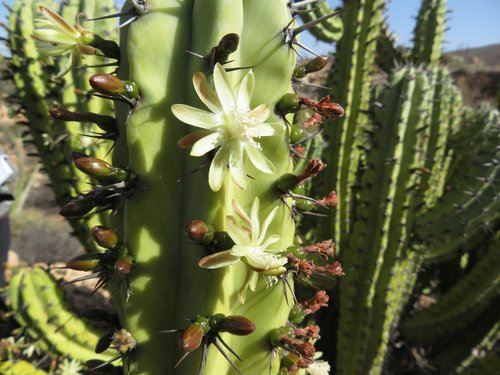
(c) Jim Apriletti, some rights reserved (CC BY-NC), uploaded by Jim Apriletti

(c) als93, some rights reserved (CC BY)

(c) Erik Meling, some rights reserved (CC BY-NC)
What to Eat
Edible parts: Fruit
The round red fruit are eaten fresh.
Where to Find It
A tropical plant. It suits hardiness zones 10-12.
Australia, Central America, Mexico, North America,
How to Identify
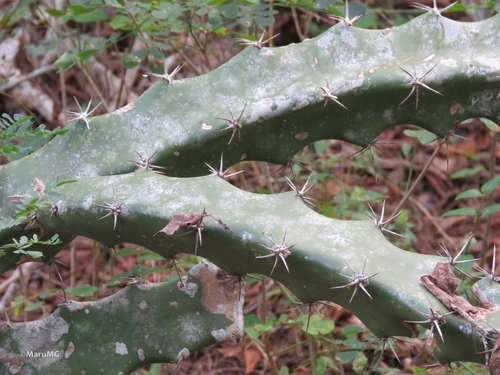
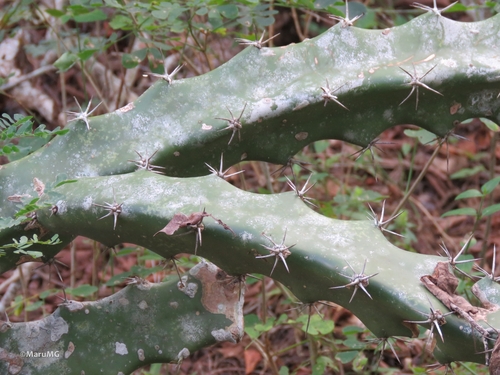
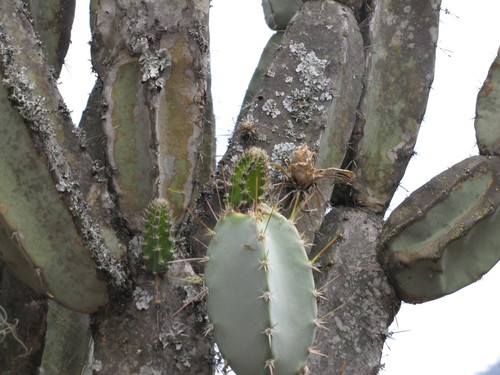
A tree like cactus. It has dense branches. The trunk is usually short. The plant grows 1-3 m high. The stems are blue-green with 5 to 6 ribs. They may or may not have a central spine. There are 5-6 black spines in a ring. The flowers are pale green to white. They open during the day and night. They are 2.5 cm long and 2.5 cm wide. The fruit are round and red. They are 1.2-1.8 cm across. They are edible.
Wikipedia
Source ↗Myrtillocactus cochal, the cochal or candelabra cactus (a name it shares with other plants), is a species of flowering plant in the family Cactaceae, native to the Baja California peninsula. Individuals can reach 3 m (10 ft), and are hardy to USDA zone 9b.
Other Information
It is a cultivated food plant.
Names & Synonyms
Cochol
References (7)
- Anderson, E.F., 2001, The Cactus Family, Timber Press. p 473
- Cundall, P., (ed.), 2004, Gardening Australia: flora: the gardener's bible. ABC Books. p 909
- Fouqué, A. 1972. Espèces fruitières d'Amérique tropicale. Institut français de recherches fruitierès outre-mer
- Hernandez-Lopez, D., et al, 2008, Myrtillocactus (cactaceae): botanical, agronomic, physicochemical and chemical charasteristics of fruits. Fruits, Vol. 63, p. 269-276
- Kermath, B. M., et al, 2014, Food Plants in the Americas: A survey of the domesticated, cultivated and wild plants used for Human food in North, Central and South America and the Caribbean. On line draft. p 566
- Moerman, D. F., 2010, Native American Ethnobotany. Timber Press. p 352
- Segura, S. et al, 2018, The edible fruit species in Mexico. Genet Resour Crop Evol (2018) 65:1767–1793