Ferocactus histrix
(A. P. de Candolle) G. E. Lindsay
Mexican barrel cactus
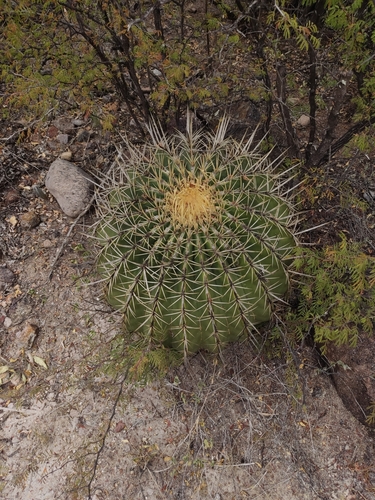
(c) Jose Antonio Aranda Pineda, some rights reserved (CC BY-NC-SA), uploaded by Jose Antonio Aranda Pineda
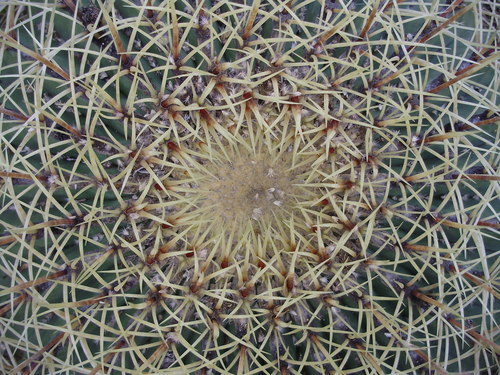
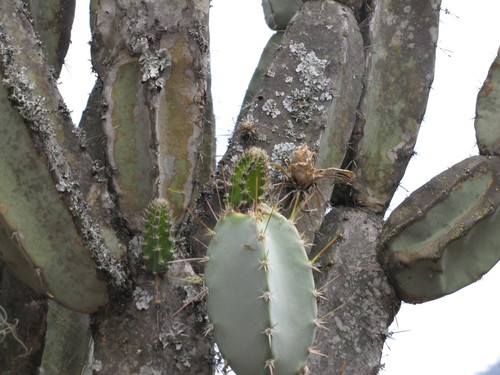
(c) Jose Antonio Aranda Pineda, some rights reserved (CC BY), uploaded by Jose Antonio Aranda Pineda
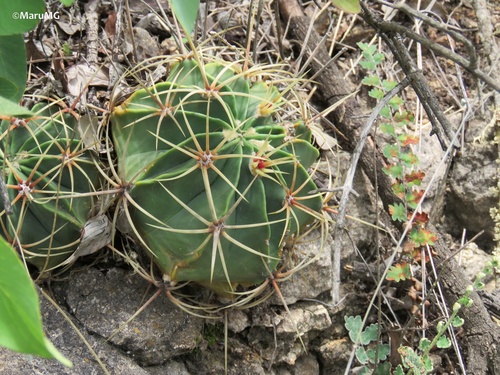
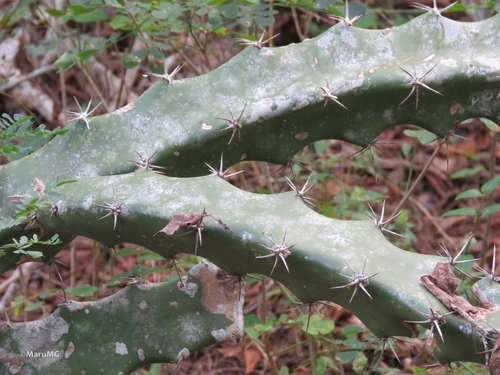
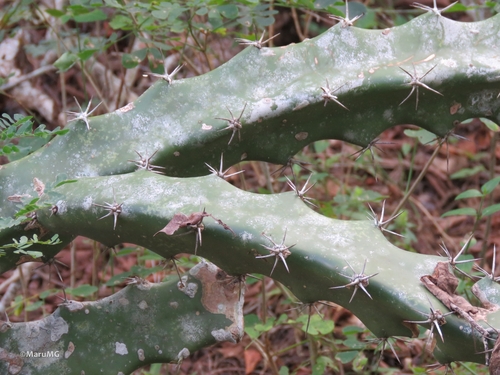
(c) María Eugenia Mendiola González, some rights reserved (CC BY-NC-SA), uploaded by María Eugenia Mendiola González
What to Eat
Edible parts: Flower buds, Stem, Fruit
The flower buds are fried or boiled. The inner stem is removed, cut into pieces, boiled for 2–3 hours, mixed with sugar, and boiled to a thick candy. The fruits are eaten raw, and juice extracted from them is used in marmalade and wines. Fruits are sold in markets.
Where to Find It
In Hobart Botanical Gardens.
Australia, Central America, Mexico, North America, Slovenia, Tasmania,
How to Identify
A cactus. The plants usually occur singly. They are a flattened round shape. They can be 1.1 m high and 80 cm wide. The stem tips are woolly. There are 20-40 ribs. The spine buds join each other. The spines are stout and yellow turning brown. There are 1-4 central spines that are up to 9 cm long and 3-9 spines around these which are 8 cm long. The flowers are bell shaped and yellow. They are 2-3.5 cm long and 2.5-3.5 cm wide. The fruit are fleshy. They are 2-3 cm long and burst open to release their seeds.
How to Grow
Ferocactus histrix is a plant of arid and semi-arid regions of central Mexico, where it is known to tolerate short periods with temperatures dipping a little below 0°c. However, it requires hot summers and a dry climate if it is to flourish. The Mexican Authorities have taken steps to reduce the impacts of over-collection on the wild population. The species is protected by law, and the candy made from the stems may only be sold commercially if it is from certified cultivated plants. There is also a commercial substitute available for making similar candy and this may help to reduce the pressure on the wild population. This was one of the most abundant barrel cactus species, however, the population is suspected to be in serious decline due to over-exploitation and the current population size is unknown. In addition to the direct exploitation, goats and cattle degrade the restricted microhabitats reducing the germination and establishment of plants. This has resulted in a significant decrease in the population size, in particular in overgrazed areas. The density of the plant is also reduced up to one-third in disturbed sites compared to more pristine-adjacent sites. The development of an adult plant from seed takes decades, but a much faster growth can be achieved with stems produced by branching when the apical meristem is disturbed.
Medicinal Uses
The plant is used medicinally.
Other Uses
We have no specific information for this species, but members of this genus are a valuable resource in the dry regions where they are native, and they are often utilised by native peoples. These uses are likely to include:- The plants have been used as cooking vessels. The interior is scooped out and mashed, and the liquid thus obtained replaced in the cavity and heated with hot stones, after which food is placed in the liquid and cooked. Several species develop tough spines and, after straightening out the tips and reducing the thicker part, these can be used as toothpicks and needles for knitting stockings etc.
Wikipedia
Source ↗Ferocactus histrix, also known as Acitrón barrel cactus (Biznaga barril de acitrón) is a species of Ferocactus native to central Mexico. It is a large barrel cactus that can be commonly found throughout all the Central Mexican matorral. It produces an edible fruit appreciated for its sour taste.
Other Information
Fruit are sold in markets.
Names & Synonyms
Barrel cactus, Biznaguita, Ferokakt
References (8)
- Anderson, E.F., 2001, The Cactus Family, Timber Press. p 56, 331
- Castillo, del R. F. & Trujillo, S., 1991, Ethnobotany of Ferocactus histrix and Echinocactus playacanthus (Cactaceae) in the Semiarid Central Mexico: Past, Present and Future. Economic Botany, Vol. 45, No. 4, pp. 495-502
- Cact. Succ. J. (Los Angeles) 27:171. 1955
- Facciola, S., 1998, Cornucopia 2: a Source Book of Edible Plants. Kampong Publications, p 64
- Fouqué, A. 1972. Espèces fruitières d'Amérique tropicale. Institut français de recherches fruitierès outre-mer (As Ferocactus melocactiformis)
- Segura, S. et al, 2018, The edible fruit species in Mexico. Genet Resour Crop Evol (2018) 65:1767–1793
- Wiersema, J. H. & Leon, B., 2013, World Economic Plants. A Standard Reference CRC Press. 2nd Ed. p 301
- World Checklist of Useful Plant Species 2020. Royal Botanic Gardens, Kew