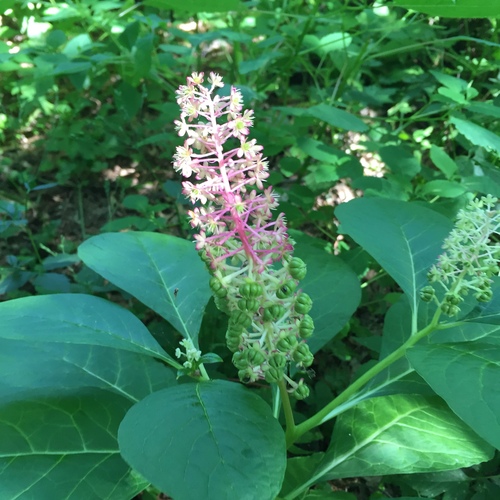
Phytolacca icosandra
L.
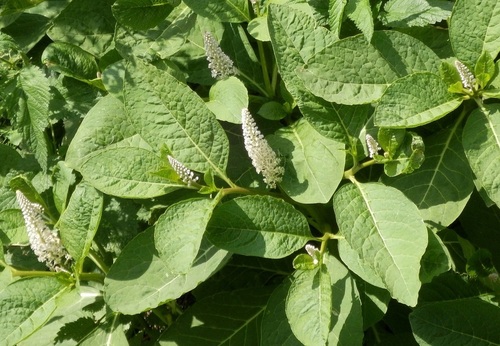
(c) mvz-juangonzalezromero, some rights reserved (CC BY-NC), uploaded by mvz-juangonzalezromero

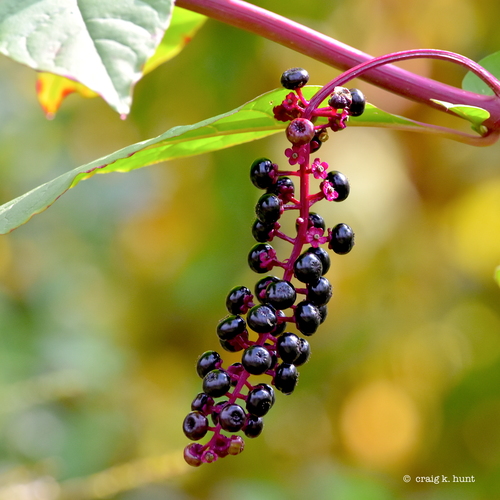
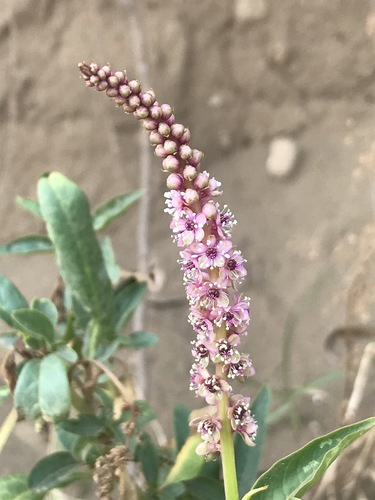
(c) jrebman, some rights reserved (CC BY-NC), uploaded by jrebman

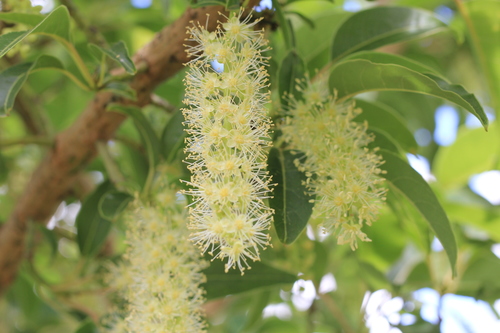
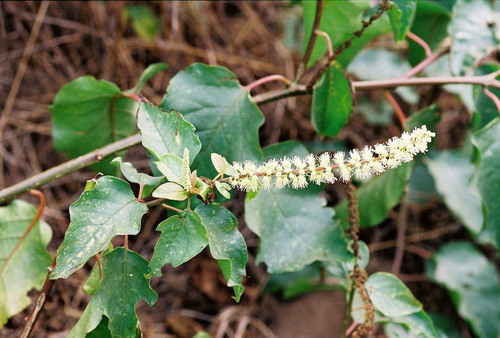
(c) Natalie Lemanski, some rights reserved (CC BY-SA), uploaded by Natalie Lemanski
What to Eat
Edible parts: Leaves, Stems
The leaves and stems are eaten.
Where to Find It
A tropical plant. In Guatemala it grows up to 2,900 m above sea level.
Amazon, Bahamas, Central America, Cuba*, Dominican Republic, Guatemala, Haiti, Jamaica*, Mexico, North America, Puerto Rico, South America, West Indies*,
How to Identify
A herb. It grows 1.5 m tall. The leaves are large and narrowly oval. They are alternate. The flowers are white or red. They occur in a large group in the axils of leaves near the ends of stalks. The fruit are black.
Wikipedia
Source ↗Phytolacca icosandra, sometimes known as button pokeweed or tropical pokeweed, is a species of flowering plant found in the neotropics and introduced into the warmer areas of the western USA. It reaches up to 3 m in height, with leaves of 10–20 cm by 9–14 cm. The flowers are produced in racemes 10–15 cm long, each flower 5–10 mm diameter, with 8-20 stamens (icosandra means "twenty stamens"). The fruit is a black berry, 5–8 mm diameter. Raphides occur profusely in at least the leaves, red petioles and midribs.
Names & Synonyms
Cangara, Congora, Cuan besh, Jabonera, Jabonero, Jorha, Moco de chompipe, Quelite, Quelite de amor, Tonga
References (13)
- Arellanes, Y., et al, 2013, Influence of traditional markets on plant management in the Tehuacan Valley. Journal of Ethnobiology and Ethnomedicine 9:38
- Casas, A., et al, 1996, Plant Management Among the Nahua and the Mixtec in the Balsas River Basin, Mexico: An Ethnobotanical Approach to the Study of Plant Domestication. Human Ecology, Vol. 24, No. 4 pp. 455-478
- Casas, A., et al, 2016, Evolutionary Ethnobotanical Studies of Incipient Domestication of Plants in Mesoamerica. In Lira, R., et al, (eds.) Ethnobotany of Mexico, Ethnobiology. Springer p 258
- de Polle, E., Plantas Silvestres Comestible de Guatemala. 1(1) Universidad de San Carlos de Guatemala.
- Etkin, N. L. (Ed.), 1994, Eating on the Wild Side, Univ. of Arizona. p 140
- Farfan, B., et al, 2007, Mazahua Ethnobotany and Subsistence in the Monarch Butterfly Biosphere Reserve, Mexico. Economic Botany 61(2) 2007, pp 173-191
- Kermath, B. M., et al, 2014, Food Plants in the Americas: A survey of the domesticated, cultivated and wild plants used for Human food in North, Central and South America and the Caribbean. On line draft. p 654
- Pascual-Mendoza, S. et al, 2021, Traditional knowledge of edible plants in an indigenous community in the Sierra Norte of Oaxaca, Mexico. Plant Biosystems - An International Journal Dealing with all Aspects of Plant Biology
- Pena, F. B., et al, 1998, Los quelites de la Sierra Norte de Puebla, Mexico: Inventory Y Formas de Preparacion. Bol. Soc. Bot. Mexico 62:49-62 (Also as Phytolacca purpurascens)
- Piedra-Malagón, E. M., et al, 2022, Edible native plants of the Gulf of Mexico Province. Biodiversity Data Journal 10: e80565 p 27
- Plants of Haiti Smithsonian Institute http://botany.si.edu/antilles/West Indies
- Syst. nat. ed. 10, 2:1040. 1759
- Turreira-Garcia, N., et al, 2015, Wild edible plant knowledge, distribution and transmission: a case study of the Achi Mayans of Guatemala. Journal of Ethnobiology and Ethnomedicine. 11:52