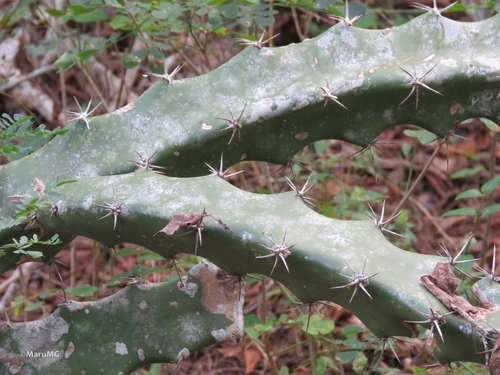
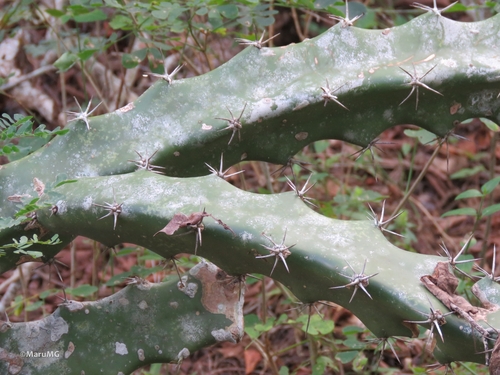
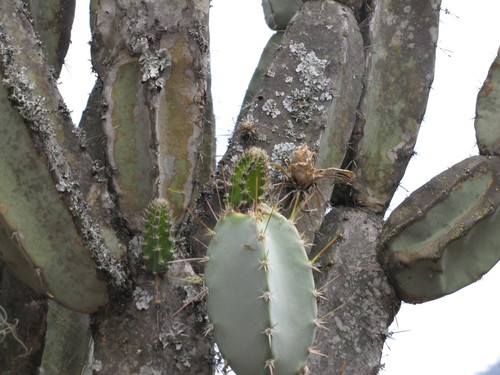
Pachycereus weberi
(J. M. Coulter) Backeberg
Candelabro, Cardon, Chico
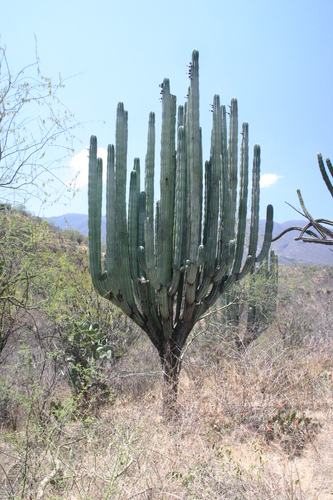
(c) cgrosete, some rights reserved (CC BY-NC)

(c) Leticia Soriano Flores, some rights reserved (CC BY-NC), uploaded by Leticia Soriano Flores

(c) Leticia Soriano Flores, some rights reserved (CC BY-NC), uploaded by Leticia Soriano Flores
What to Eat
Edible parts: Fruit, Seeds
Fruit - raw or cooked. The fruits are mashed and added to water to make a fresh fruit drink. A red pulp. The purple-red, globose-ellipsoid fruits are 41 - 63mm long, 34 - 54mm in diameter. The seeds are ground into a powder and added to corn to make tortillas, or to make the sauce known as mole.
Where to Find It
A subtropical plant. They need an overwintering temperature above 15°C.
Mexico, North America,
How to Identify
A tree-like cactus in the Cactaceae family with spiny fruits 6-7 cm long, native to subtropical regions where temperatures should remain above 15°C.
How to Grow
Requires a sunny position in a well-drained, circumneutral soil.
Other Uses
The trunks are sometimes used as table bases The wood is used in the construction of traditional houses. The wood is used for fuel.
Wikipedia
Source ↗Pachycereus weberi is a columnar cactus plant native to Mexico.
Production
Plants take about 5 years before harvesting. They often do not flower in cultivation.
Other Information
Over 500 tons of fruit are harvested in Mexico.
Names & Synonyms
Semilla de cardon
References (13)
- Anderson, E.F., 2001, The Cactus Family, Timber Press. p 537
- Andersohn, G., 1983, Cacti and Succulents. EP Publishing. p 69, 218 (As Lemaireocereus weberi)
- Arellanes, Y., et al, 2013, Influence of traditional markets on plant management in the Tehuacan Valley. Journal of Ethnobiology and Ethnomedicine 9:38
- Casas, A., et al, 2016, Ethnobotany for Sustainable Ecosystem Management: A Regional Perspective in the Tehuacán Valley. In Lira, R.,et al (eds.) Ethnobotany of Mexico. Springer Chp. 8 p 199
- Fouqué, A. 1972. Espèces fruitières d'Amérique tropicale. Institut français de recherches fruitierès outre-mer (As Lemaireocereus weberi)
- Gonzalez-Insuasti, M. S. and Caballero, J., 2007, Managing Plants Resources: How Intensive Can it be? Human Ecology, 35:303-314
- Gonzalez-Insuasti, M. S., et al, 2011, Intra-cultural Differences in the Importance of Plant Resources and Their Impact on Management Intensificaton in the Tehuacan Vallet, Mexico. Human Ecology 39:191-202
- Kermath, B. M., et al, 2014, Food Plants in the Americas: A survey of the domesticated, cultivated and wild plants used for Human food in North, Central and South America and the Caribbean. On line draft. p 478 (As Lemaireocereus weberi)
- Martin, F. W., et al, 1987, Perennial Edible Fruits of the Tropics. USDA Handbook 642 p 88 (As Lemaireocereus weberi)
- Perez-Negron, E., et al, 2014, Use of columnar cacti in the Tehuacan Valley, Mexico: perspectives for sustainable management of non-timber forest products. Journal of Ethnobotany and Ethnomedicine, 10:79
- Segura, S. et al, 2018, The edible fruit species in Mexico. Genet Resour Crop Evol (2018) 65:1767–1793
- World Checklist of Useful Plant Species 2020. Royal Botanic Gardens, Kew
- www.desert-tropicals.com