Polaskia chende
(Roland-Gosselin) A.C. Gibson & K.E. Horak
Chende
(c) Whaleeha Abril Gudiño Gonzalez, some rights reserved (CC BY-NC), uploaded by Whaleeha Abril Gudiño Gonzalez
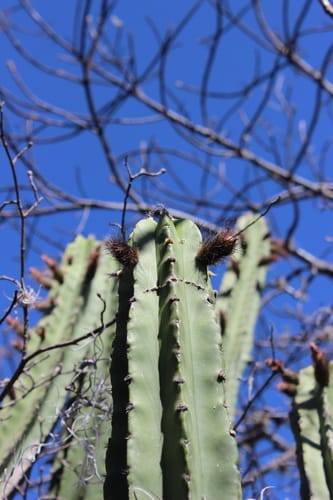
(c) Luis Alberto, some rights reserved (CC BY-NC)
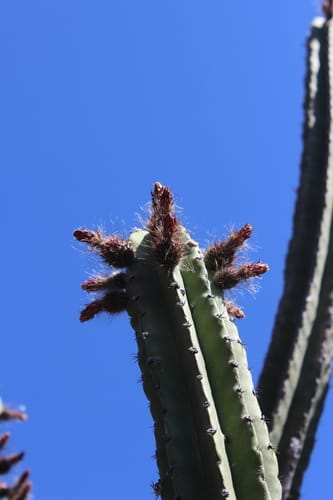
(c) Luis Alberto, some rights reserved (CC BY-NC)
What to Eat
Edible parts: Fruit
The fruit are edible.
Where to Find It
It is a tropical plant.
Xerophyllous scrub and riparian vegetation; at elevations from 1,500 - 2,000 metres.
How to Identify
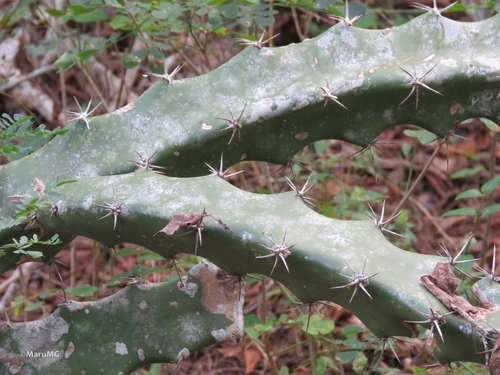
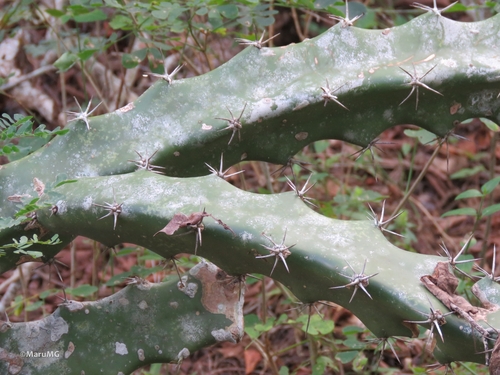
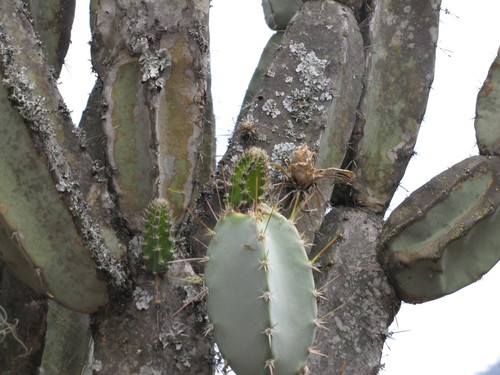
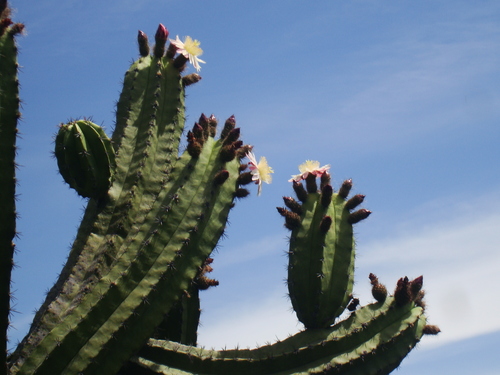
A cactus. It is a treelike plant. It branches near the ends. It grows 4 m tall. There is a distinct trunk 80 cm high and 25-30 cm wide. The stems may be slightly curved and are yellowish-green. They are 40-50 cm long and 5-7 cm wide. The flowers open in the morning. Flowers occur singly and have a scent. They are white and 6.5 cm across. The fruit are round and 3.5-4 cm wide. They have clusters of short thin spines.
How to Grow
Requires a sunny position in a well-drained soil. Prefers a pH in the range 6 - 7.5. The flowers open in the morning, they are delicately scented.
Wikipedia
Source ↗Polaskia chende is a succulent cactus native to a small area of mountains of northern Oaxaca and southern Puebla, Mexico. It grows in xerophytic shrubland between 1,500 and 2,000 meters above sea level.
Names & Synonyms
References (5)
- Anderson, E.F., 2001, The Cactus Family, Timber Press. p 589
- Fouqué, A. 1972. Espèces fruitières d'Amérique tropicale. Institut français de recherches fruitierès outre-me (As Lemaireocereus chichipe)
- Lira, R., et al, 2009, Traditional Knowledge and Useful Plant Richness in the Tehuacan-Cuicatlan Valley, Mexico. Economic Botany XX(X): 1-17
- Segura, S. et al, 2018, The edible fruit species in Mexico. Genet Resour Crop Evol (2018) 65:1767–1793
- World Checklist of Useful Plant Species 2020. Royal Botanic Gardens, Kew