Khadia acutipetala
(N. E. Br.) N. E. Br.
Khadi root

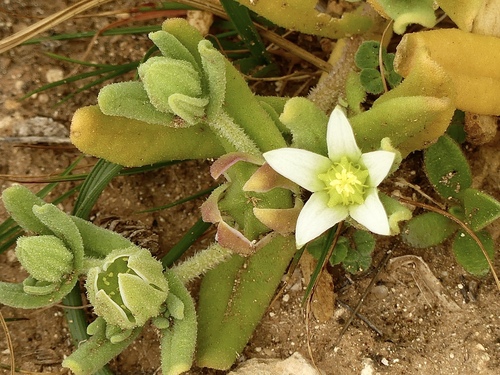
iNaturalist · cc-by-nc
(c) Stephen Cousins, some rights reserved (CC BY-NC), uploaded by Stephen Cousins
(c) Stephen Cousins, some rights reserved (CC BY-NC), uploaded by Stephen Cousins

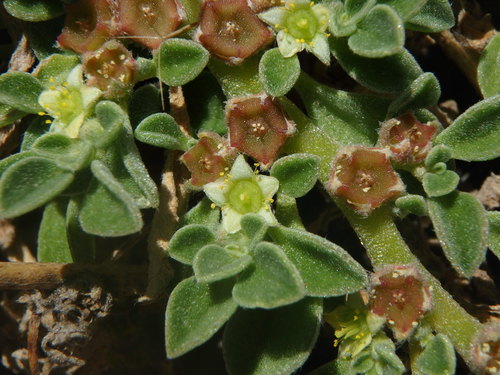
iNaturalist · cc-by-nc
(c) georgfritz, some rights reserved (CC BY-NC)
(c) georgfritz, some rights reserved (CC BY-NC)

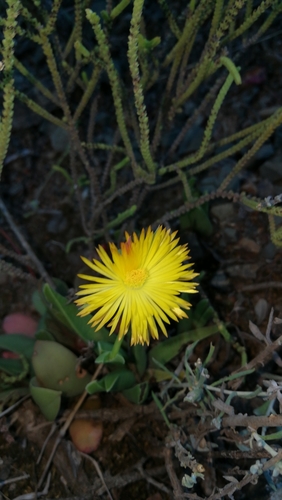
iNaturalist · cc-by-nc
(c) juddkirkel, some rights reserved (CC BY-NC)
(c) juddkirkel, some rights reserved (CC BY-NC)
What to Eat
Edible parts: Roots - drink
The roots are used to make a fermented drink, where they act as a natural yeast.
Where to Find It
It is a subtropical plant.
Africa, South Africa, Southern Africa,
Countries: Angola, Burkina Faso, Burundi, Benin, Botswana, Congo (DRC), Central African Republic, Congo (Republic), Cote d'Ivoire, Cameroon, Cape Verde, Djibouti, Algeria, Egypt, Eritrea, Ethiopia, Gabon, Ghana, Gambia, Guinea, Equatorial Guinea, Guinea-Bissau, Kenya, Comoros, Liberia, Lesotho, Libya, Morocco, Madagascar, Mali, Mauritania, Mauritius, Malawi, Mozambique, Namibia, Niger, Nigeria, Rwanda, Seychelles, Sudan, Sierra Leone, Senegal, Somalia, South Sudan, Sao Tome & Principe, Eswatini, Chad, Togo, Tunisia, Tanzania, Uganda, South Africa, Zambia, Zimbabwe
How to Identify
A small succulent plant. It grows 30 cm tall. It has a thickened rootstock and trailing branches develop from this. The leaves are triangle shaped and has sharp points. The flowers are pink to purple. They have cream centres.
Wikipedia
Source ↗Khadia acutipetala is a succulent plant that is part of the Aizoaceae family. The species is endemic to South Africa and occurs in Gauteng and the North West provinces.
Names & Synonyms
Khadi wortel
Mesembryanthemum acutipetalum N. E. Br.
References (8)
- Facciola, S., 1998, Cornucopia 2: a Source Book of Edible Plants. Kampong Publications, p 4
- Fox, F. W. & Young, M. E. N., 1982, Food from the Veld. Delta Books. p 268
- Gard. Chron. ser. 3, 89:279. 1931
- Lim, T. K., 2015, Edible Medicinal and Non Medicinal Plants. Volume 9, Modified Stems, Roots, Bulbs. Springer p 50
- Ruiters-Welcome, A. K., 2019, Food plants of southern Africa. Ph.D. thesis. Univ. of Johannesburg p 8
- van Wyk, Be., & Gericke, N., 2007, People's plants. A Guide to Useful Plants of Southern Africa. Briza. p 108
- Welcome, A. K. & Van Wyk, B.-E., 2019, An inventory and analysis of the food plants of southern Africa. South African Journal of Botany 122 (2019) 136–179
- World Checklist of Useful Plant Species 2020. Royal Botanic Gardens, Kew