Liquidambar orientalis
Mill.
Asian styrax, Oriental sweet gum

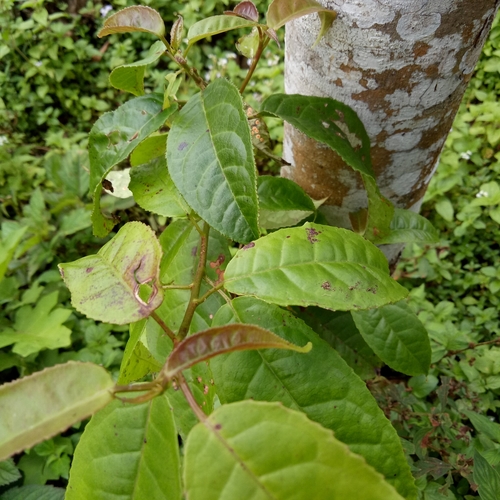
(c) saba, some rights reserved (CC BY-NC-SA)

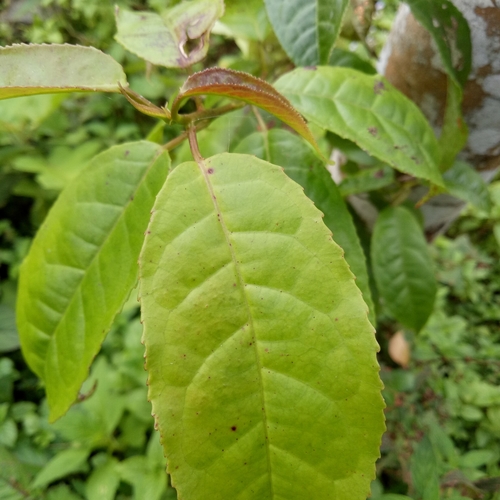
(c) saba, some rights reserved (CC BY-NC-SA)

(c) saba, some rights reserved (CC BY-NC-SA)
What to Eat
The resin yields a chewing gum and acts as a stabilizer in cakes and baked goods. It is also used to flavour baked foods.
Where to Find It
Gum,
How to Identify
Liquidambar orientalis is a deciduous tree growing 10 m tall by 4 m wide at slow rate. Hardy to UK zone 8 and frost tender. Flowers in May with seeds ripening October to November. Monoecious with bee pollination. Grows in light sandy, medium loamy, and heavy clay soils, preferring well-drained conditions. Suitable for mildly acid and neutral soils. Tolerates semi-shade or full sun and requires moist soil.
How to Grow
Prefers a moist but not swampy loam in a sheltered position. Prefers a neutral to acid soil. Grows poorly on shallow soils overlying chalk. Plants can be grown in full sun so long as the soil is not dry hungry and shallow. Young plants are susceptible to damage from late frosts. Mature plants are fully hardy but prefer a hotter climate if they are to do well. Plants rarely, if ever, flower in Britain. They rarely flower in climatic zones colder than zone 7. An aromatic gum exudes from the trunk. The fragrance is also present to some extent in the leaves, especially if they are bruised. This species resents root disturbance, young plants should be pot-grown and be placed in their permanent positions as soon as possible. A slow growing plant.
Propagation: Seed is best sown as soon as it is ripe in autumn in a cold frame. Harvest seed capsules in late October or November, dry in a warm place, and extract seed by shaking the capsule. Stored seed requires 1–3 months of stratification and can sometimes take 2 years to germinate; sow as early in the year as possible. Germination rates are often poor. Prick seedlings into individual pots when large enough and grow on under glass for their first winter. As the plants resent root disturbance, plant out into permanent positions in early summer of their second year and provide frost protection for their first winter outdoors. Cuttings of half-ripe wood in July or August in a frame. Suckers in early spring. Layering in October or November takes approximately 12 months.
Medicinal Uses
Resin obtained from the wood and inner bark acts as both an irritant and an expectorant within the respiratory tract. It is one of the ingredients of Friar's Balsam, an expectorant mixture inhaled to stimulate a productive cough. The resin is antibacterial, anti-inflammatory, antiseptic, expectorant, pectoral, salve, and stimulant. Internally it is used to treat strokes, infantile convulsions, coma, heart disease, pruritis, and cancer. Externally it is mixed with oil to treat scabies, wounds, and ulcers, and combined with Hamamelis virginiana and rose water to make an astringent face lotion. The bark is harvested in autumn and the resin extracted from it. The leaves, fruits, and roots are used similarly and are additionally considered antidote, parasiticide, and vulnerary.
Other Uses
The aromatic resin known as storax forms in cavities of the bark and also exudes naturally from the trunk. It is harvested in autumn; production can be stimulated by beating the trunk in spring. Storax has a wide range of uses including medicinal, incense, perfumery, and soaps, and also serves as a parasiticide. Liquid storax gives greater permanence to flower odours extracted by maceration and is used in the imitation of scents as an alternative to or complement for vanilla, ambergris, and benzoin. The aromatic bark is also burnt as incense.
Wikipedia
Source ↗Liquidambar orientalis, commonly known as oriental sweetgum or Turkish sweetgum, is a deciduous tree in the genus Liquidambar, native to the eastern Mediterranean region, that occurs as pure stands mainly in the floodplains of southwestern Turkey and on the Greek island of Rhodes.
Production
The gum can be extracted by cutting the bark. Banging the tree helps gum flow.
Other Information
Altingiaceae
Notes
A bushy tree that loses its leaves. It grows 10-30 m high and spreads 6-20 m wide. It is often smaller in cultivation. The leaves have 5 lobes and are 7-10 cm across. There are coarse teeth along the edge. The leaves turn yellow and orange in autumn. The flowers are small. The fruit are small and spiny balls.
Names & Synonyms
References (9)
- Brown, D., 2002, The Royal Horticultural Society encyclopedia of Herbs and their uses. DK Books. p 264
- Ertug, F, Yenen Bitkiler. Resimli Türkiye Florası -I- Flora of Turkey - Ethnobotany supplement
- Facciola, S., 1998, Cornucopia 2: a Source Book of Edible Plants. Kampong Publications, p 8
- Gard. dict. ed. 8: Liquidambar no. 2. 1768
- Morton, 1976,
- Ryan, S., 2008, Dicksonia. Rare Plants Manual. Hyland House. p 36
- Tanaka,
- Wiersema, J. H. & Leon, B., 2013, World Economic Plants. A Standard Reference CRC Press. 2nd Ed. p 408
- World Checklist of Useful Plant Species 2020. Royal Botanic Gardens, Kew