Altingia excelsa
Noronha
Rasmala
(c) Ida Parida, some rights reserved (CC BY-NC)
(c) Ida Parida, some rights reserved (CC BY-NC)
(c) Ida Parida, some rights reserved (CC BY-NC)
What to Eat
Edible parts: Leaves, Vegetable
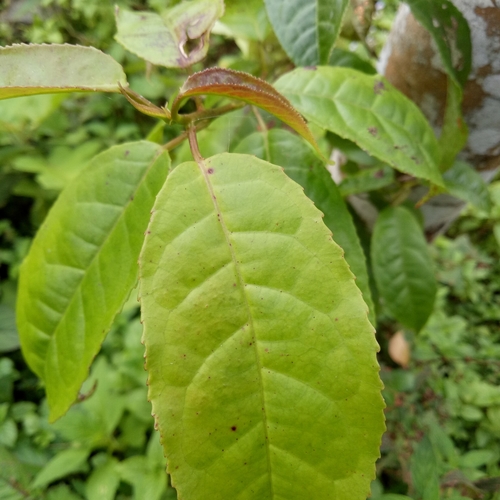
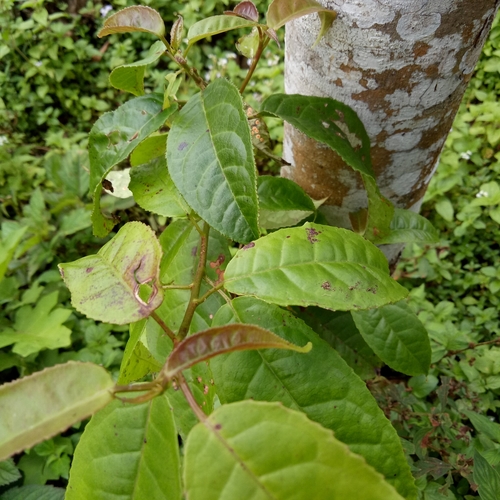
The young reddish-brown leaves are eaten raw or cooked as a vegetable.
Where to Find It
A tropical plant. It grows at about 1600 m altitude in Malaysia. In Java it grows between 200-700 m above sea level. It grows in humid forest.
Asia, Bhutan, China, Himalayas, India, Indochina, Indonesia, Malaysia, Myanmar, Nepal, SE Asia, Sri Lanka, Thailand, Tibet,
How to Identify
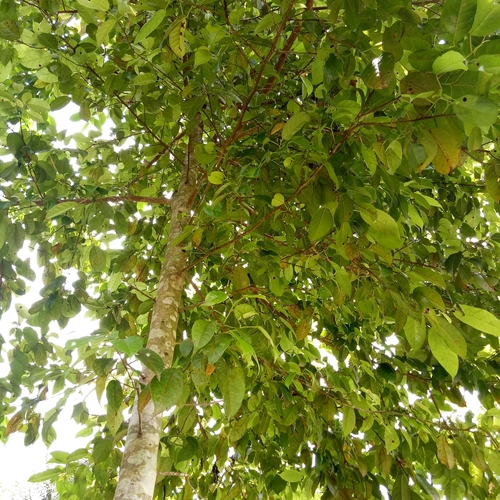
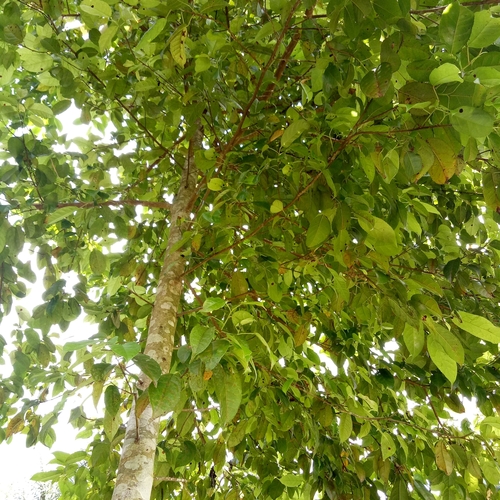
A large tree. It grows 60 m high. It has a large straight trunk. The leaves are alternate and simple. They are narrowly oval and 6-12 cm long by 3-5 cm wide. There are fine teeth around the edge. The flowers are of separate sexes on the same tree. The female flowers are as 4-18 rounded heads produced together. They are 1-2.5 cm across. The fruit are brown and are a capsule made up of four compartments.
How to Grow
Plants can be grown from seeds. Seeds are best sown fresh. They can be grown from stumps.
Propagation: Seed - it has a short period of viability and is best sown as soon as it is ripe. It is best soaked in cold water for 24 hours prior to sowing. The sowing medium is a mix of sand and soil (1 : 1). Germination starts about 10 days after sowing. One month old seedlings can be transplanted to plastic bags, preferably in a growing medium enriched with organic matter and fertilizer.
Medicinal Uses
The leaves are used for medicine.
Other Uses
A yellow, scented resin is obtained from the stems. It is obtained from the wounded bark. A fragrant, honey-like balsam. It is used as a perfume, incense and a medicine. The dried bark is a useful tinder. The red to blackish-brown wood is heavy and fine-grained. The wood is very durable and can be used in direct contact with the soil. Because of its long, branchless boles, it is favoured for frames of bridges, columns and beams for construction, power transmission poles, telephone poles and railway sleepers. It is also used for heavy construction, vehicle bodies, ship and boat building, heavy flooring, rafters, veneer, plywood and pulp. The tree is often interplanted with Leucaena leucocephala in young plantations to suppress weeds and to reduce formation of multiple stems.
Notes
Also put in the family Hamamelidaceae. The leaves are used for medicine.
Names & Synonyms
Chemara abang, Duang, Jutuli, Ki mala, Lamin, Mala, Mandung, Neriyurishippal, Pohon rasmala, Rasamala, Rasmala, Shilaras, Shilarasamu, Silaras
References (10)
- Ambasta S.P. (Ed.), 2000, The Useful Plants of India. CSIR India. p 33
- Burkill, I.H., 1966, A Dictionary of the Economic Products of the Malay Peninsula. Ministry of Agriculture and Cooperatives, Kuala Lumpur, Malaysia. Vol 1 (A-H) p 121
- Flora of China @ efloras.org Volume 10
- Martin, F.W. & Ruberte, R.M., 1979, Edible Leaves of the Tropics. Antillian College Press, Mayaguez, Puerto Rico. p 195
- Ochse, J.J. et al, 1931, Vegetables of the Dutch East Indies. Asher reprint. p 347
- Siemonsma, J. S. & Kasem Piluek, eds. 1993. Vegetables. In: Plant Resources of South-East Asia (PROSEA) 8:312
- Sukarya, D. G., (Ed.) 2013, 3,500 Plant Species of the Botanic Gardens of Indonesia. LIPI p 125
- Verh. Batav. Genootsch. Kunsten. ed. 1,5, art. 2:9. 1790
- Vink, W., 1957, Hamamelidaceae in Flora Malesiana 5(3) p 376
- www.worldagroforestry.org/treedb2/speciesprofile.php?Spid=18119