Bloomeria aurea
Kellogg
Golden stars
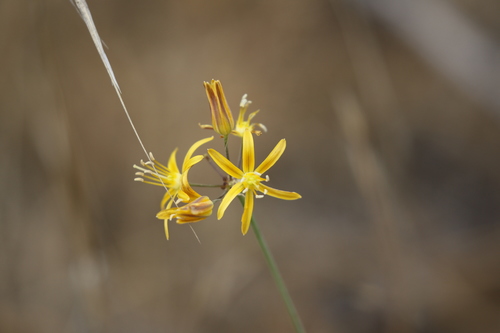
(c) Michael Hawk, some rights reserved (CC BY-NC)

(c) gilbertj, some rights reserved (CC BY-NC)
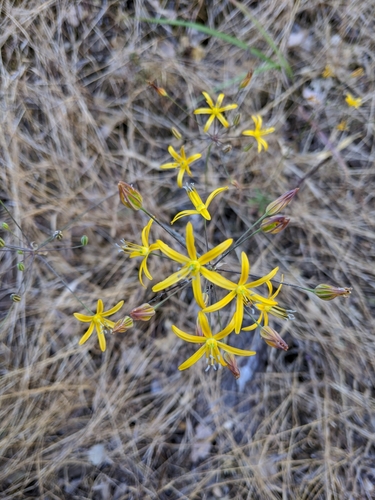
(c) greyseav, some rights reserved (CC BY-NC)
What to Eat
Edible parts: Root, Bulb
Edible Parts: Root Edible Uses: Bulb. No more details are given, but the bulbs of the closely related B. crocea can be eaten raw at any time of the year.
Where to Find It
It is a temperate plant.
North America, USA,
How to Identify
Bulbous plant growing 50cm tall and 10cm wide, hardy to UK zone 8. Flowers in July. Hermaphroditic. Grows in light sandy and medium loamy, well-drained soils with mildly acid to basic pH. Requires full sun and prefers moist soil.
How to Grow
Requires a well-drained rich sandy loam and a warm position. Likes plenty of moisture when in growth, but plants should be kept quite dry from when the foliage dies down until the autumn. This species is not hardy in the colder areas of the country, it tolerates temperatures down to between -5 and -10°c. This species is probably no more than a part of B. crocea.
Propagation: Seed - sow as soon as it is ripe or February/March in a well-drained compost in the greenhouse. Germination usually takes place within 1 - 3 months at 15°c. Sow the seed thinly so that it can be grown on in the pot without disturbance for the first year, but apply an occasional liquid feed to ensure the plants do not become nutrient deficient. Pot up the small bulbs when they are dormant, putting 2 - 3 bulbs in each pot, and grow them on in a cold frame for another 2 years before planting them out in the autumn when they are dormant. Division of flowering size offsets in the autumn. They are freely produced. The larger bulbs can be planted straight out into their permanent positions if required, whilst it is best to pot up the smaller bulbs and grow them on for a year in a cold frame before planting them out in the autumn.
Medicinal Uses
None known
Other Uses
None known Special Uses
Wikipedia
Bulbous plant growing 50cm tall and 10cm wide, hardy to UK zone 8. Flowers in July. Hermaphroditic. Grows in light sandy and medium loamy, well-drained soils with mildly acid to basic pH. Requires full sun and prefers moist soil.