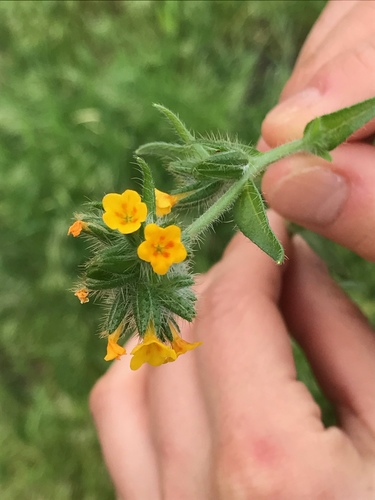
Pentaglottis sempervirens
(L.) Tausch ex L. H. Bailey
Evergreen alkanet
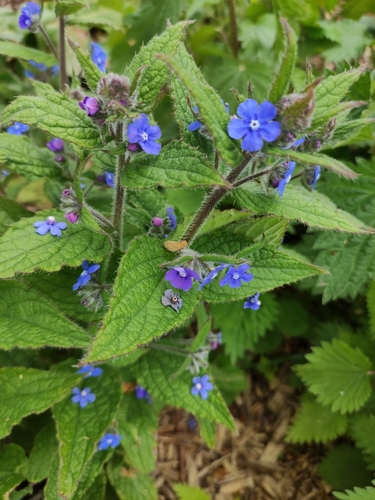
(c) jonnyj, some rights reserved (CC BY-NC), uploaded by jonnyj
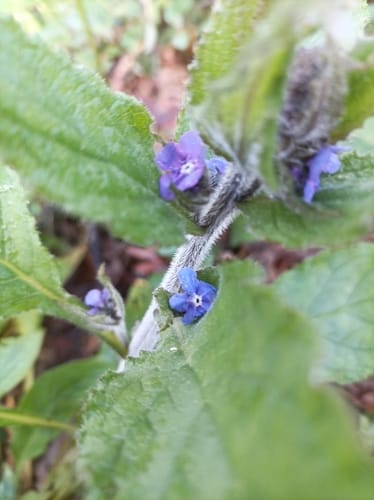
(c) josegabrielie9989, some rights reserved (CC BY-NC)
What to Eat
Edible parts: Flowers, Leaves
The flowers are eaten raw. They have a mild flavour and a mucilaginous texture, and are used mainly as a decorative garnish in fruit drinks and salads.
Known Hazards
Where to Find It
It is a temperate plant. It grows in damp shady places. It can grow in sun or shade. It is best in moist soils.
Australia, Britain, Europe, Tasmania,
How to Identify
A herb. It keeps growing from year to year. It grows 1 m tall. The flowers are blue.
How to Grow
Propagation: Seed is best sown as soon as ripe in a cold frame. Stored seed should be sown in a cold frame as soon as possible. Prick seedlings into individual pots when large enough to handle and plant out in late spring. Where sufficient seed is available, it can be sown directly in situ in spring. The plant can also be propagated by division or root cuttings in spring.
Medicinal Uses
None known
Other Uses
None known Special Uses Food Forest
Wikipedia
Source ↗A perennial herbaceous plant reaching 1 m in height. Hardy to UK zone 7, not frost tender. Flowers appear from May to June. Hermaphroditic and insect-pollinated. Adapts to light sandy, medium loamy, and heavy clay soils across mildly acid, neutral, and basic pH ranges. Grows in full shade (deep woodland), semi-shade (light woodland), or full sun. Prefers consistently moist soil.
Notes
It is an unresolved name in The Plant List.
Names & Synonyms
References (3)
- Facciola, S., 1998, Cornucopia 2: a Source Book of Edible Plants. Kampong Publications, p 51
- Larkcom,
- Man. cult. pl. ed 2, 2:837. 1949