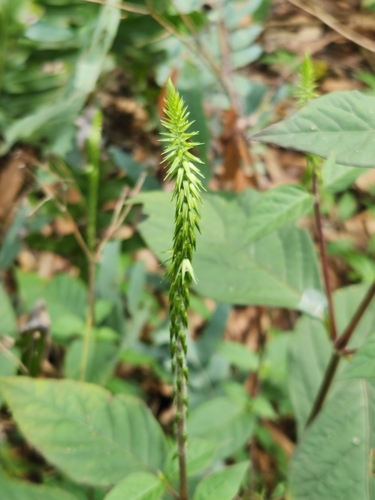
Atriplex semibaccata
R. Br.
Australian saltbush, Creeping saltbush

(c) Ron Greer, some rights reserved (CC BY-NC), uploaded by Ron Greer

(c) Chalon Boesel, some rights reserved (CC BY-NC), uploaded by Chalon Boesel

(c) Tony Rebelo, some rights reserved (CC BY-SA), uploaded by Tony Rebelo
What to Eat
Edible parts: Fruit, Leaves
Edible Parts: Fruit Leaves Edible Uses: Edible Portion: Fruit, Leaves. Edibility (summary & rating). Fleshy fruits eaten fresh by the Cahuilla; leaves not highlighted for food in your notes. Use sparingly due to salts. Edibility rating: 3/5 (novel, snack-like fruits; salty). Parts used & preparation. Fruits (fleshy utricles): Pick red, ripe tissues; eat fresh in small amounts; can be dried lightly and used like a tart, salty nibble. Leaves: If tried, only as a minor boiled potherb (not documented here as a food) [2-3]. Fruit - raw. The fruit are eaten as a snack. They are added to salads. The young leaves are eaten raw or steamed. They are often boiled to remove excess salt. Traditional uses. Cahuilla snacked on the fruits. Harvest tips. Choose vivid red, plump fruits; avoid dusty roadside plants (salt/contaminants).
Where to Find It
It is a temperate plant. It grows best in coastal, light, well-drained soils. It suits an open sunny position. It is resistant to drought and frost. It can grow on salty soils.
Argentina, Australia*, Chile, Hawaii, Mexico, North America, Pacific, South America, St Helena, Tasmania, USA,
How to Identify
A shrub that keeps growing from year to year. It grows 50 cm high and spreads 1 m wide. The stem lies along the ground and the branches are low and spreading. The leaves are sword shaped and silvery green. They are 2 cm long and have teeth around the edge. The flowers are very small. The fruit are flattened red berries.
How to Grow
It can also tolerate warm temperate areas with rain all year round. It is most common in areas where the mean annual rainfall is within the range 250 - 900mm. It grows best in areas where the mean annual temperature is within the range 10 - 23°c, with the mean temperatures in the hottest month ranging from 27 - 36°c and in the coldest month from 0 - 10°c. It can tolerate an absolute minimum of -5°c. Grows best in a sunny position, though able to tolerate some shade in hot, sunny climates. The plant appears to grow in many soil types though preferring light and more acidic soils. However, this includes heavier clay loams and even those than are occasionally waterlogged, but are more generally light to medium clay loams (35-50% clay) or loams, sandy loams, or sandy clay loams. Tolerant of strong, salt-laden winds. A deep-rooted plant, it is a very drought-tolerant species. This species photosynthesizes by a more efficient method than most plants. Called the 'C4 carbon-fixation pathway', this process is particularly efficient at high temperatures, in bright sunlight and under dry conditions. In New South Wales, Australia the plant was found to become dormant in winter whereas other Atriplex species remained green, though all species studied showed good adaptation notwithstanding the low and variable rainfall, wide range in temperature, humidity and evaporation and poor soils. Climate: warm temperate to tropical. Humidity: arid to semi-arid. Carbon Farming - Cultivation: minor global crop. Management: coppice, fodder. Season & phenology. Blooms spring–autumn; fruits available over a long window. Lookalikes & cautions. Distinct due to red fleshy fruits; still an Atriplex—moderate intake due to salts/oxalates.
Propagation: It can be grown by seed or cuttings. Seed - sow mid spring in a cold frame in a compost of peat and sand. The seed usually germinates in 1 - 3 weeks at 13°c. Pot up the seedlings when still small into individual pots, grow on in a greenhouse for the first winter and plant out in late spring or early summer after the last expected frosts. The plant produces large numbers of fruits and seed and like many other species of the genus, does not appear to exhibit any characteristics of dormancy, with high germination rates with no pre-treatment recorded. The seed germinates best at 21°c, while germination ratesmay be improved by soaking the seeds for several hours to dilute and flush chemicals that inhibit germination. Cuttings of half-ripe wood, mid summer in a frame. Very easy. Pot up as soon as they start to root (about 3 weeks) and plant out in their permanent positions late in the following spring. Cuttings of mature wood of the current season's growth, late autumn in a frame. Very easy. Pot up in early spring and plant out in their permanent position in early summer.
Medicinal Uses
None known
Other Uses
Fodder Agroforestry Uses: The plant is used as a groundcover in arid areas and also for erosion control of vulnerable soils. In addition, it has been planted with the aim of restoring mine spoils, e.g. on saline gold mine wastes. High tolerance to salt, with a record of 15 Max dS/m; an excellent coloniser of salt scalds. Evergreen groundcover. In salt land pasture, it can provide supplement feed in summer and winter when other sources of paddock feed are less available. Carbon Farming - Fodder: bank. 1. Nectary - Flowers rich in nectar and pollen: No – Saltbush is wind-pollinated, so it doesn’t produce nectar-rich flowers to attract pollinators. 2. Wildlife - Food (Fruit, Seeds, Leaf litter, Shelter, Nesting, Roosting): Yes – Saltbush provides food for wildlife through its seeds and foliage. It is an important food source for herbivores like birds and small mammals. The dense, bushy form also provides shelter and cover for nesting birds and other small animals. 3. Invertebrate Shelter (Overwintering sites, Leaf litter, Groundcover): Yes – The dense, shrubby growth of Saltbush offers good ground cover for invertebrates, and the fallen leaves can serve as shelter and overwintering sites for beneficial insects. 4. Pest Confuser (Smell): No – Saltbush does not have a strong aromatic smell that repels pests, so it is not typically used as a pest confuser. Special Uses Carbon Farming
Wikipedia
Source ↗Atriplex semibaccata, commonly known as Australian saltbush, berry saltbush, or creeping saltbush, is a species of flowering plant in the family Amaranthaceae and is endemic to Australia. It is a perennial herb native to Western Australia, South Australia, Queensland and New South Wales, but has been introduced into other states and to overseas countries. It flowers and fruits in spring, and propagates from seed when the fruit splits open. This species of saltbush is adapted to inconsistent rainfall, temperature and humidity extremes and to poor soil. It is used for rehabilitation, medicine, as a cover crop and for fodder. Its introduction to other countries has had an environmental and economic impact on them.
Other Information
It is cultivated.
Notes
They have also been put in the family Chenopodiaceae.
Names & Synonyms
Barrinan, Cachiyuyo, Morenita rastrera
References (7)
- Bodkin, F., 1991, Encyclopedia Botanica. Cornstalk publishing, p 119
- Facciola, S., 1998, Cornucopia 2: a Source Book of Edible Plants. Kampong Publications, p 76
- Kermath, B. M., et al, 2014, Food Plants in the Americas: A survey of the domesticated, cultivated and wild plants used for Human food in North, Central and South America and the Caribbean. On line draft. p 104
- Malezas Comestibles del Cono Sur, INTA, 2009, Buernos Aires
- Prodr. 406. 1810
- Williams A. & Sides, T., 2008, Wiradjuri Plant Use in the Murrumbidgee Catchment. Murrumbidgee Catchment Management Authority. Wagga Wagga, p 56
- Zeven, A. C. & de West, J. M. J., 1982, Dictionary of cultivated plants and their regions of diversity. Wageningen. p 65