Eucalyptus dives
Schauer
Native peppermint, Broad-leaved peppermint
(c) Wayne Martin, some rights reserved (CC BY-NC), uploaded by Wayne Martin
(c) Vireya Jacquard, some rights reserved (CC BY-NC), uploaded by Vireya Jacquard
(c) Vireya Jacquard, some rights reserved (CC BY-NC), uploaded by Vireya Jacquard
What to Eat
Edible parts: Leaves, Leaves - tea
The fresh or dried leaves are used for seasoning and as a source of essential oil for flavoring sauces, dressings, desserts, and dairy foods. Dried leaves are used to make tea.
Known Hazards
Where to Find It
It is a temperate plant. It is native to NSW and Victoria in Australia.
Australia*, North America, South Africa, Sri Lanka, USA,
How to Identify
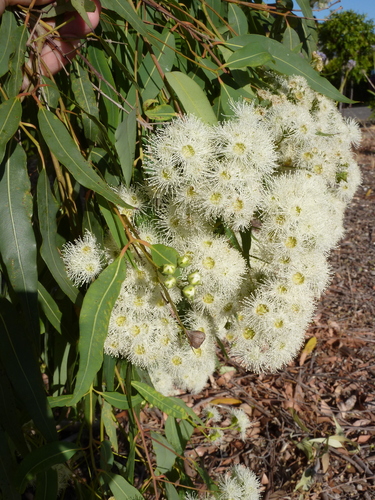
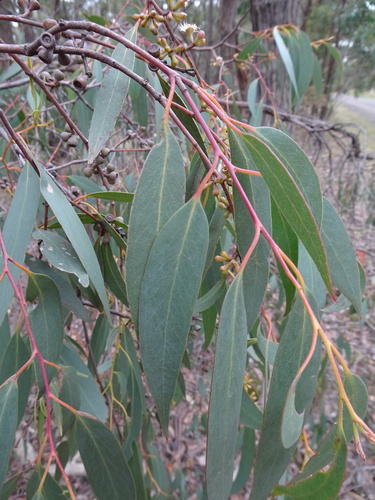
A tree with a short trunk. It grows 25 m tall and spreads 15-20 m wide. The young leaves do not have stalks and are heart shaped. The older leaves are sword shaped and 15 cm long. The flowers are small and white.
Wikipedia
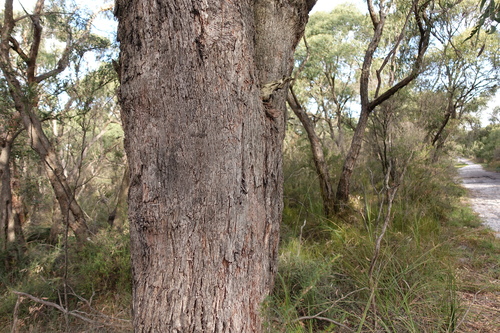
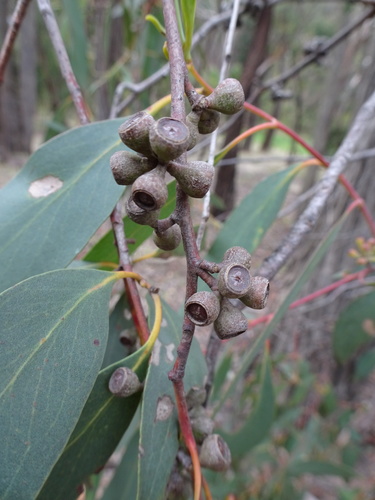
Source ↗Eucalyptus dives, commonly known as the broad-leaved peppermint or blue peppermint, is a species of tree that is endemic to south-eastern Australia. It has rough, finely fibrous bark on the trunk and larger branches, smooth bark above, lance-shaped or curved adult leaves, flower buds in groups of eleven or more, white flowers and cup-shaped, hemispherical or conical fruit.
References (6)
- Alice, L. & O'Quinn, T., Australian Bush Superfoods. Explore Australia p 122
- Brown, D., 2002, The Royal Horticultural Society encyclopedia of Herbs and their uses. DK Books. p 207
- Facciola, S., 1998, Cornucopia 2: a Source Book of Edible Plants. Kampong Publications, p 140
- Robins,
- Seidemann J., 2005, World Spice Plants. Economic Usage, Botany, Taxonomy. Springer. p 150
- Walp., Repert. bot. syst. 2:926. 1843