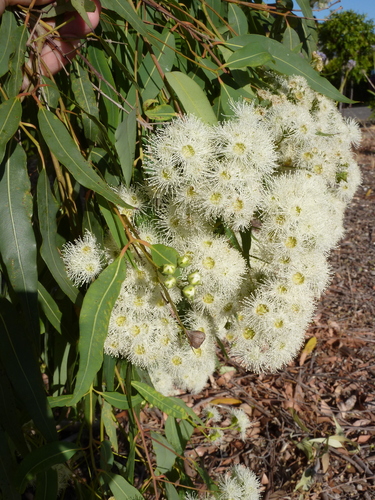
Eucalyptus polybractea
R. T. Baker
Blue mallee
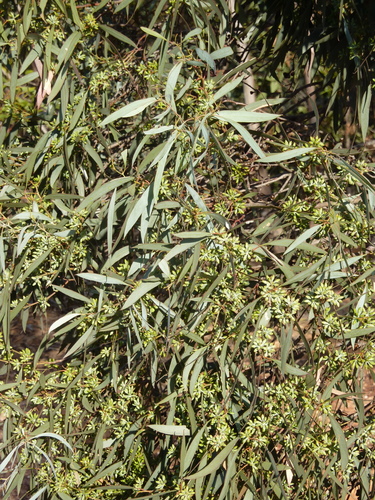
(c) Dean Nicolle, some rights reserved (CC BY-NC), uploaded by Dean Nicolle
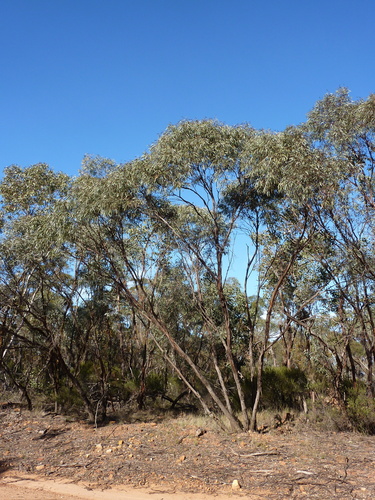
(c) Dean Nicolle, some rights reserved (CC BY-NC), uploaded by Dean Nicolle
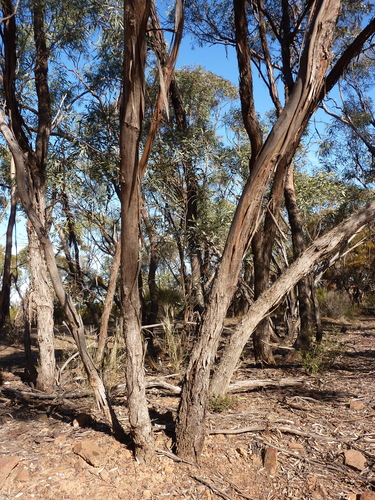
(c) Dean Nicolle, some rights reserved (CC BY-NC), uploaded by Dean Nicolle
What to Eat
Edible parts: Oil
An essential oil from the leaves is used as a food flavouring in baked goods, ice cream and sweets.
Known Hazards
How to Identify
Fast-growing evergreen shrub or small tree reaching 6 m tall. Year-round foliage. Hermaphrodite, bee-pollinated. Tolerates light sandy, medium loamy, and heavy clay soils with good drainage; grows in poor soils. Suitable for mildly acid, neutral, and mildly alkaline pH. Requires full sun. Adapts to dry, moist, or wet conditions and tolerates drought.
How to Grow
Prefers a sunny position in a moderately fertile well-drained moisture retentive circum-neutral soil. Tolerates poor and dry soils, especially those low in mineral elements. Established plants are drought tolerant. This species is cultivated in Australia for its essential oils. It is of very doubtful hardiness in Britain, though it might succeed outdoors in the mildest areas of the country. Eucalyptus species have not adopted a deciduous habit and continue to grow until it is too cold for them to do so. This makes them more susceptible to damage from sudden cold snaps. If temperature fluctuations are more gradual, as in a woodland for example, the plants have the opportunity to stop growing and become dormant, thus making them more cold resistant. A deep mulch around the roots to prevent the soil from freezing also helps the trees to survive cold conditions. The members of this genus are remarkably adaptable however, there can be a dramatic increase in the hardiness of subsequent generations from the seed of survivors growing in temperate zones. Eucalyptus monocultures are an environmental disaster, they are voracious, allelopathic and encourage the worst possible attitudes to land use and conservation. Plants are shallow-rooting and, especially in windy areas, should be planted out into their permanent positions when small to ensure that they do not suffer from wind-rock. They strongly resent root disturbance and should be container grown before planting out into their permanent position. Plants respond well to coppicing. The flowers are rich in nectar and are a good bee crop.
Propagation: Surface sow seed in February or March in a sunny greenhouse position. Species from high altitudes benefit from 6–8 weeks of cold stratification at 2°C. Pot seedlings into individual containers as soon as the second set of true leaves develops — leaving them longer risks poor establishment. Plant out into permanent positions in early summer with some cold protection through the first winter. Alternatively, sow in June and plant into final positions the following late spring. Seed remains viable for a long time.
Medicinal Uses
Eucalyptus leaves are a traditional Aboriginal herbal remedy, and the leaf essential oil is a powerful antiseptic widely used for coughs, colds, sore throats and other infections, appearing in many over-the-counter cold remedies. The essential oil of this species is antirheumatic, antiseptic and expectorant, and this is one of the principal eucalyptus species grown for medicinal oil production — its oil contains up to 85% eucalyptol. Aged essential oil is especially potent as an antiseptic because ozone forms in it upon exposure to air, giving it strong disinfectant action. The oil can be applied externally to cuts and skin infections, inhaled for nasal congestion, gargled for sore throats, or taken internally for various complaints. As with all essential oils, larger doses can have a harmful effect on the body.
Other Uses
The leaves yield up to 1.3% essential oil, used both medicinally and as a food flavouring. The wood is used as fuel.
Wikipedia
Source ↗Eucalyptus polybractea, commonly known as the blue-leaved mallee or simply blue mallee, is a species of mallee that is endemic to south-eastern Australia. It has rough, fibrous or flaky bark on the lower part of the trunk, smooth greyish or brownish bark above, lance-shaped adult leaves, flower buds in groups of between seven and eleven, white flowers and cup-shaped or barrel-shaped fruit.
References (3)
- Facciola, S., 1998, Cornucopia 2: a Source Book of Edible Plants. Kampong Publications, p 141
- Morton,
- Proc. Linn. Soc. New South Wales 25:692. 1901