Eucalyptus smithii
R. T. Baker
timber
iNaturalist · cc-by-nc
(c) Dean Nicolle, some rights reserved (CC BY-NC), uploaded by Dean Nicolle
(c) Dean Nicolle, some rights reserved (CC BY-NC), uploaded by Dean Nicolle

iNaturalist · cc-by-nc
(c) Dean Nicolle, some rights reserved (CC BY-NC), uploaded by Dean Nicolle
(c) Dean Nicolle, some rights reserved (CC BY-NC), uploaded by Dean Nicolle

iNaturalist · cc-by-nc
(c) Dean Nicolle, some rights reserved (CC BY-NC), uploaded by Dean Nicolle
(c) Dean Nicolle, some rights reserved (CC BY-NC), uploaded by Dean Nicolle
What to Eat
Edible parts: Oil
The species is widely grown in southern Africa, and its leaves are used for the production of distilled eucalyptus oil. The oil is high in cineole (75–84%). E. smithii also shows some promise in the pulpwood industry.
How to Identify
A tree.
Wikipedia
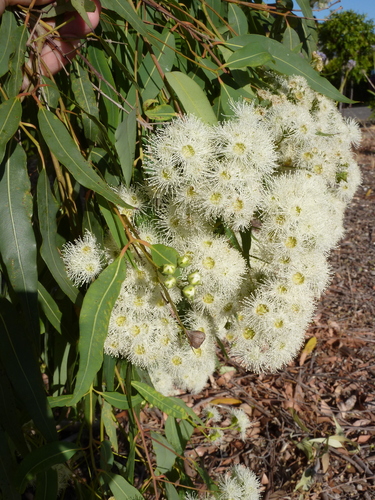
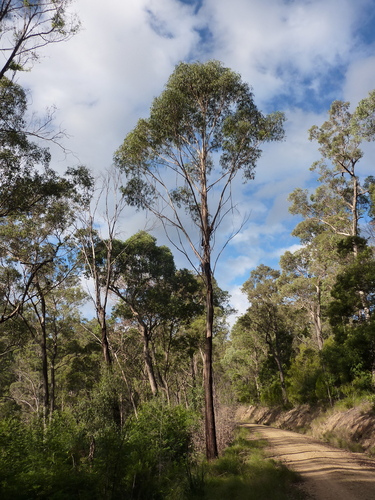
Source ↗Eucalyptus smithii, commonly known as the gully gum, gully peppermint, blackbutt peppermint, or ironbark peppermint, is a species of medium-sized to tall tree, sometimes a mallee, that is endemic to southeastern Australia. It has rough, compact bark on the trunk, smooth ribbony bark above, narrow lance-shaped adult leaves, flower buds in groups of seven, white flowers and cup-shaped, bell-shaped or hemispherical fruit.
References (3)
- Facciola, S., 1998, Cornucopia 2: a Source Book of Edible Plants. Kampong Publications, p 141
- Morton,
- Proc. Linn. Soc. New South Wales 24:292. 1899