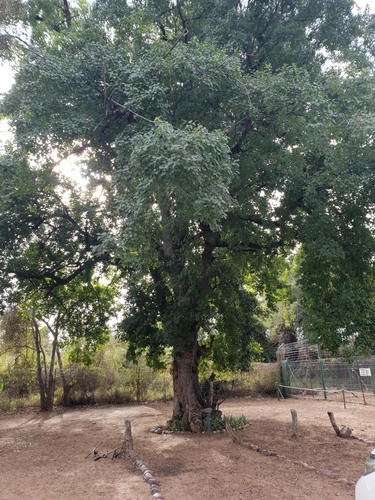
Colubrina arborescens
(Mill.) Sarg.
Coffee colubrina

(c) Karen, some rights reserved (CC BY-NC-SA)
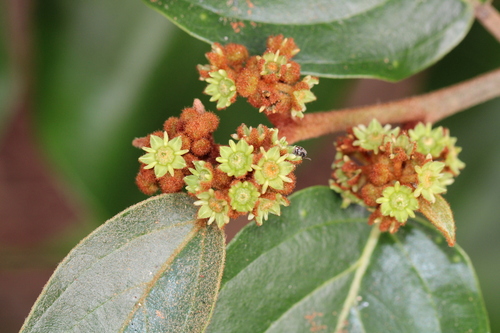
(c) Andres Vila, some rights reserved (CC BY-NC)
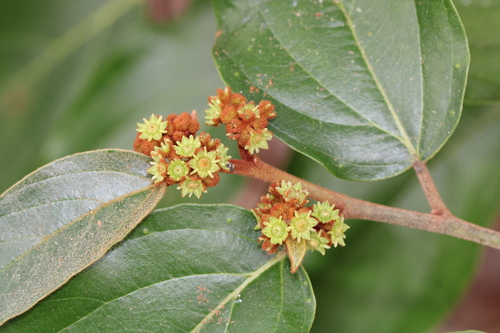
(c) Andres Vila, some rights reserved (CC BY-NC)
What to Eat
Edible parts: Bark - drink
The bark is steeped in water to make a cooling, fermented drink known as 'mabi champan'. Bitter and stimulating. It is considered to be a good tonic.
Where to Find It
It is a tropical plant.
Africa, Anguilla, Antigua, Central America*, Cuba*, Dominican Republic, Haiti, Honduras, Jamaica, Lesser Antilles*, Mexico, North America, Panama, Puerto Rico, USA, West Africa, West Indies*,
How to Identify
A tree. It grows 20 m high. The trunks are 20-30 cm across. The leaves are alternate. They are narrowly oval and tapers to the tip. The leaves are 16 cm long by 8 cm wide.
How to Grow
A plant of drier to moist lowland areas in the tropics and subtropics, where it can be found at elevations up to 600 metres. It grows in areas where the mean annual rainfall can range from 750 - 2,500mm. Grows well in full sun and also in the partial shade of low forest or broken, high forest. Succeeds in a wide range of well-drained soils, including soils of all textures. Tolerates a pH in the range 5 - 8. It is often found in both moist sites and dry areas, especially in excessively drained sites. It can tolerate droughts, but defoliates during prolonged droughts. It is tolerant of salt sprays and moderate amounts of salt in the soil. Growth is slow in the drier areas of its range, becoming moderate in the moister areas. The plant can flower all year round in parts of its range.
Medicinal Uses
A tea made from the leaves and the wood is used as a remedy for rheumatism while the extract is used in antiseptic baths. A decoction made from the boiled wood, mixed with milk, is used to build up the blood, especially after childbirth. A bark tea, combined with anise, nutmeg, mace and sugar, is considered diuretic. The tea is also considered an aphrodisiac.
Other Uses
The shiny seeds of this and related species have been made into necklaces and similar ornaments. The bark contains various tannins, alkaloids and saponins. The heartwood is yellowish brown; the sapwood is whitish or light brown. The wood is hard, heavy, strong, and durable. It is used chiefly for posts, and formerly for piling because of its resistance to decay in water. It is also employed in general carpentry and construction where sufficiently large pieces are available. The wood is an excellent fuel. The plant can be grown as a hedge.
Names & Synonyms
Abejuelo, Abeynelo, Achiotillo, Avelluelo, Bigaguara, Birijagua, Black velvet, Bwa, Bwa kapab, Bwa ple, Carbonero de costa, Cascalata, Chaquira, Chaquiro, Coxte, Fuego, Gri-gri-sovaj, Guacimo cansaboca, Guayabillo, Pimento-che, Pwavye, Roujiol, Woujiol, Yax-puken, Yax-pukim
References (11)
- Burkill, I.H., 1966, A Dictionary of the Economic Products of the Malay Peninsula. Ministry of Agriculture and Cooperatives, Kuala Lumpur, Malaysia. Vol 1 (A-H) p 651 (As Colubrina ferruginosa)
- Ekman Herbarium records Haiti (As Colubrina ferruginosa)
- Facciola, S., 1998, Cornucopia 2: a Source Book of Edible Plants. Kampong Publications, p 190
- Grandtner, M. M. & Chevrette, J., 2013, Dictionary of Trees, Volume 2: South America: Nomenclature, Taxonomy and Ecology. Academic Press p 151
- Kermath, B. M., et al, 2014, Food Plants in the Americas: A survey of the domesticated, cultivated and wild plants used for Human food in North, Central and South America and the Caribbean. On line draft. p 254 (As Colubrina ferruginosa)
- Mem. fam. Rhamnees 62. 1826 (Ann. Sci. Nat. (Paris) 10:369. 1827) (As Colubrina ferruginosa)
- Plants of Haiti Smithsonian Institute http://botany.si.edu/antilles/West Indies
- Timyan, J., 1996, Bwa Yo: Important Trees of Haiti. South-East Consortium for International Development. Washington. p 3
- Trees & shrubs 2:167. 1911
- Woodson, R. E., et al, 1971, Flora of Panama. Part 4. Family 111. Rhamnaceae. Annals of the Missiouri Botanical garden. Vol. 58. No. 3, p 277
- World Checklist of Useful Plant Species 2020. Royal Botanic Gardens, Kew