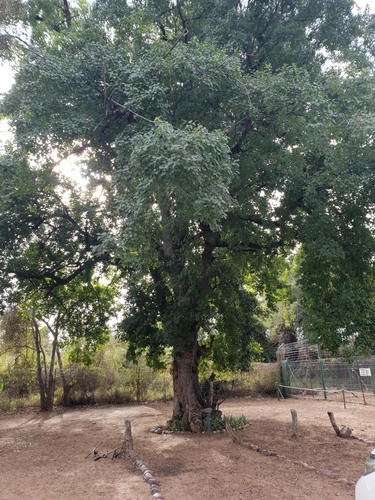
Colubrina texensis
(Torr. & A. Gray) A. Gray
Hog plum, Coma

iNaturalist · cc-by
(c) Sam Kieschnick, some rights reserved (CC BY), uploaded by Sam Kieschnick
(c) Sam Kieschnick, some rights reserved (CC BY), uploaded by Sam Kieschnick

iNaturalist · cc-by-sa
(c) Douglas Goldman, some rights reserved (CC BY-SA), uploaded by Douglas Goldman
(c) Douglas Goldman, some rights reserved (CC BY-SA), uploaded by Douglas Goldman

iNaturalist · cc-by-sa
(c) Douglas Goldman, some rights reserved (CC BY-SA), uploaded by Douglas Goldman
(c) Douglas Goldman, some rights reserved (CC BY-SA), uploaded by Douglas Goldman
What to Eat
Edible parts: Fruit - drink
The fruit are crushed and steeped in water to make a cooling drink.
Where to Find It
It is a subtropical plant.
Mexico, North America, USA,
Countries: Antigua & Barbuda, Barbados, Bahamas, Belize, Canada, Costa Rica, Cuba, Dominica, Dominican Republic, Grenada, Guatemala, Honduras, Haiti, Jamaica, St Kitts & Nevis, St Lucia, Mexico, Nicaragua, Panama, Puerto Rico, El Salvador, Trinidad & Tobago, United States, St Vincent
How to Identify
A subtropical shrub in the Rhamnaceae family with fruit that can be processed into beverages.
Wikipedia
Source ↗Colubrina texensis, the Texas snakewood or Texas hog plum, is a species of flowering plant in the family Rhamnaceae, native to Texas and northeastern Mexico. A 3 to 6 ft (0.9 to 1.8 m) deciduous shrub with zig-zagging branches and patterned bark, it is typically found growing in dry, poor soils.
References (5)
- Boston J. Nat. Hist. 6:169. 1850
- Facciola, S., 1998, Cornucopia 2: a Source Book of Edible Plants. Kampong Publications, p 190
- Kermath, B. M., et al, 2014, Food Plants in the Americas: A survey of the domesticated, cultivated and wild plants used for Human food in North, Central and South America and the Caribbean. On line draft. p 254
- Latorre,
- World Checklist of Useful Plant Species 2020. Royal Botanic Gardens, Kew