Holodiscus discolor
(Pursh) Maxim.
Ocean spray, Cream bush

(c) Mark Gorman, some rights reserved (CC BY-NC), uploaded by Mark Gorman
(c) Gavin Slater, some rights reserved (CC BY)
(c) Gavin Slater, some rights reserved (CC BY)
What to Eat
Edible parts: Fruit
The small, dry fruit can be eaten raw or cooked.
Where to Find It
It is a temperate plant. It grows well in sunny places.
Australia, Britain, Canada, Europe, North America, USA,
How to Identify
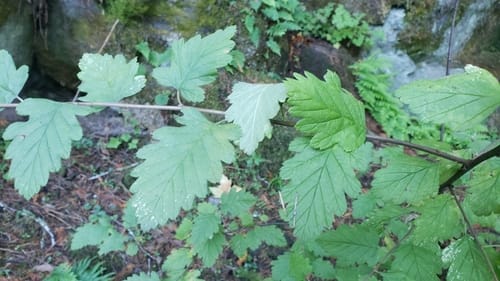
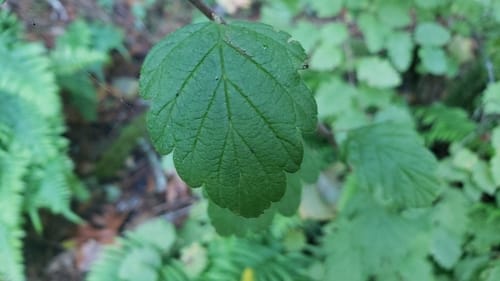
A shrub. It loses its leaves during the year. It grows about 2 m tall. The flowers are in fluffy, creamy white panicles. The flowers are very small. The fruit are small, dry and flattened.
How to Grow
Propagation: Seed requires 4 months stratification at 4°C. Best sown as soon as ripe in a cold frame; stored seed should be sown as early in the year as possible. Prick seedlings into individual pots when large enough to handle and grow on in a greenhouse for at least their first winter. Plant out in late spring or early summer after the last expected frosts. Cuttings of half-ripe wood with a heel can be taken in July/August in a frame, though this can be difficult. Layering in spring is easy.
Medicinal Uses
The seeds act as a blood purifier, and an infusion has been used to treat smallpox, black measles, and chickenpox. The blossoms have been used for diarrhoea. The inner bark is tonic. An infusion of the bark serves as an eyewash, and the bark can also be dried, powdered, and mixed with oil to dress burns. A poultice of the leaves has been applied to sore lips and sore feet, a powder of dried leaves used as a dressing on sores, and a decoction of the leaves used to treat influenza.
Other Uses
The wood is very hard and has been used to make small tools and roasting tongs. It does not burn easily. The plant is noted for its scent.
Wikipedia
Source ↗Holodiscus discolor, commonly known as ocean spray or oceanspray, creambush, or ironwood, is a shrub of western North America.
Names & Synonyms
References (6)
- Beckstrom-Sternberg, Stephen M., and James A. Duke. "The Foodplant Database." http://probe.nalusda.gov:8300/cgi-bin/browse/foodplantdb.(ACEDB version 4.0 - data version July 1994) (As Sericotheca discolor)
- Facciola, S., 1998, Cornucopia 2: a Source Book of Edible Plants. Kampong Publications, p 199
- Kermath, B. M., et al, 2014, Food Plants in the Americas: A survey of the domesticated, cultivated and wild plants used for Human food in North, Central and South America and the Caribbean. On line draft. p 421
- MacKinnon, A., et al, 2009, Edible & Medicinal Plants of Canada. Lone Pine. p 140
- Ryan, S., 2008, Dicksonia. Rare Plants Manual. Hyland House. p 31
- Trudy Imp. S.-Peterburgsk. Bot. Sada 6:254. 1879
More from Rosaceae


