Spiraea chinensis
Maxim.
Tsui-lan-cha
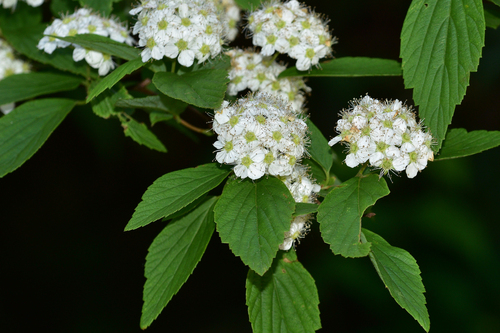
iNaturalist · cc-by-nc-nd
(c) 龙栩川, some rights reserved (CC BY-NC-ND), uploaded by 龙栩川
(c) 龙栩川, some rights reserved (CC BY-NC-ND), uploaded by 龙栩川

iNaturalist · cc-by-nc
(c) MP Zhou, some rights reserved (CC BY-NC), uploaded by MP Zhou
(c) MP Zhou, some rights reserved (CC BY-NC), uploaded by MP Zhou

iNaturalist · cc-by-nc
(c) MP Zhou, some rights reserved (CC BY-NC), uploaded by MP Zhou
(c) MP Zhou, some rights reserved (CC BY-NC), uploaded by MP Zhou
What to Eat
Edible parts: Leaves - tea
The leaves are processed into tea.
Where to Find It
It is a temperate plant. It grows in thickets and open places between 300-2,000 m above sea level. In Sichuan and Yunnan.
Asia, China, Japan, Korea,
Countries: United Arab Emirates, Afghanistan, Armenia, Azerbaijan, Bangladesh, Bahrain, Brunei, Bhutan, China, Georgia, Indonesia, Israel, India, Iraq, Iran, Jordan, Japan, Kyrgyzstan, Cambodia, North Korea, South Korea, Kuwait, Kazakhstan, Laos, Lebanon, Sri Lanka, Myanmar, Mongolia, Maldives, Malaysia, Nepal, Oman, Philippines, Pakistan, Qatar, Saudi Arabia, Singapore, Syria, Thailand, Tajikistan, Timor-Leste, Turkmenistan, Turkey, Taiwan, Uzbekistan, Vietnam, Yemen
How to Identify
A shrub. It grows 2-3 m tall. The leaves are dark green above and yellow underneath. They are 3-6 cm long by 2-3 cm wide. There are 16-25 flowers in a group and the flowers are 3-10 mm across.
Notes
There are 100 Spiraea species.
References (4)
- Facciola, S., 1998, Cornucopia 2: a Source Book of Edible Plants. Kampong Publications, p 211
- Flora of China @ efloras.org Volume 9
- Tanaka,
- Trudy Imp. S.-Peterburgsk. Bot. Sada 6:193. 1879
More from Rosaceae

Acaena anserinifolia
Bidgee widgee, Buzzy, New Zealand Bur
No photo
Acaenia anserinifolia - (J.R.Forst.&G.Forst.)Druce.
Pirri-Pirri Bur

Adenostoma sparsifolium
Red shanks, Ribbonwood

Agrimonia eupatoria
Agrimony, Salt and Pepper

Agrimonia odorata
Adour agrimony, Liver-wort

Agrimonia pilosa
Indian chestnut, Agrimony