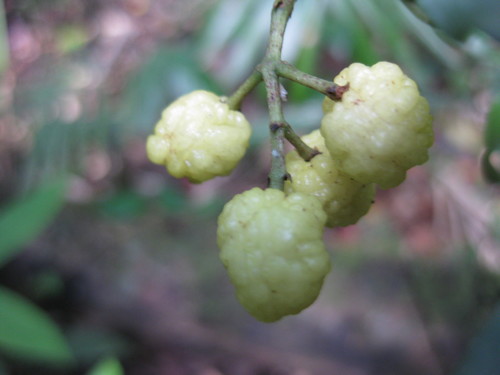
Boronia megastigma
Nees ex Bartl.
Brown boronia, Sweet boronia

(c) Loxley Fedec, some rights reserved (CC BY-NC), uploaded by Loxley Fedec
(c) Brett Coulstock, some rights reserved (CC BY), uploaded by Brett Coulstock

(c) Loxley Fedec, some rights reserved (CC BY-NC), uploaded by Loxley Fedec
What to Eat
Edible parts: Flowers - oil, Spice
The fragrant flowers are the source of an essential oil used to create black currant flavoring in food manufacture, particularly in drinks, ice creams, and baked goods.
Where to Find It
It is a temperate or Mediterranean climate plant. It grows in sandy, poorly drained soils. It needs protected partly shaded conditions.
Australia*,
How to Identify
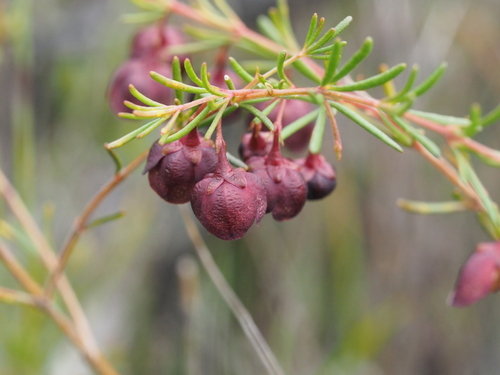
An evergreen shrub. It grows 1 m high and spreads 1 m wide. The stem is slender. The plant has a fine textured crown. The leaves are green and very fine. The flowers are brown and bell shaped.
How to Grow
Plants can be grown by seed or cuttings.
Propagation: Seed - Cuttings of half ripe wood.
Other Uses
An essential oil is obtained from the flowers. It is used in perfumery. The scent resembles violet and cassie.
Wikipedia
Source ↗Boronia megastigma, commonly known as brown boronia, sweet-scented boronia or scented boronia, is a plant in the citrus family Rutaceae and is endemic to the south-west of Western Australia. It is a slender, erect shrub with aromatic leaves and flowers, the leaves with three or five leaflets and the flowers cup-shaped, dark brown to purplish black on the outside and yellow inside.
Names & Synonyms
Scented boronia
References (7)
- Bodkin, F., 1991, Encyclopedia Botanica. Cornstalk publishing, p 157
- Facciola, S., 1998, Cornucopia 2: a Source Book of Edible Plants. Kampong Publications, p 213
- J. G. C. Lehmann, Pl. Preiss. 2:227. 1848
- Morton,
- Seidemann J., 2005, World Spice Plants. Economic Usage, Botany, Taxonomy. Springer. p 68
- Wiersema, J. H. & Leon, B., 2013, World Economic Plants. A Standard Reference CRC Press. 2nd Ed. p 107
- World Checklist of Useful Plant Species 2020. Royal Botanic Gardens, Kew