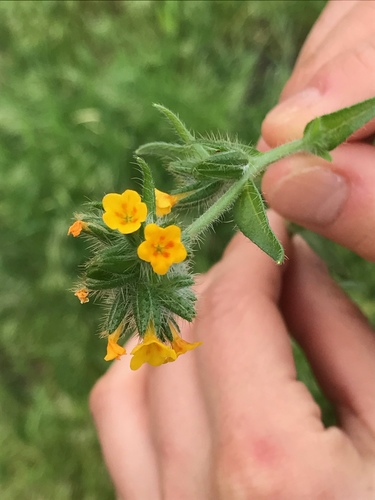
Borago trabutii
Maire
BoraginaceaeLeaves
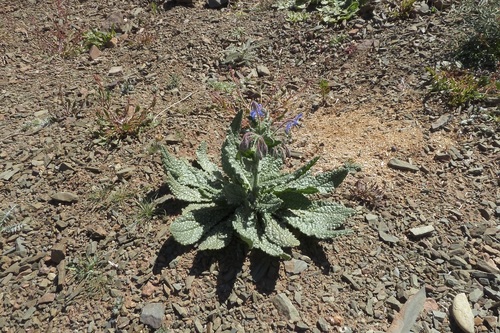
iNaturalist · cc-by-nc
(c) coqwallon, some rights reserved (CC BY-NC), uploaded by coqwallon
(c) coqwallon, some rights reserved (CC BY-NC), uploaded by coqwallon
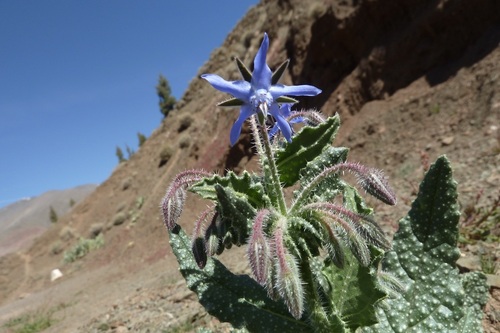
iNaturalist · cc-by-nc
(c) coqwallon, some rights reserved (CC BY-NC)
(c) coqwallon, some rights reserved (CC BY-NC)
What to Eat
Edible parts: Leaves
Borago officinalis is used medicinally, in companion planting, in cooking, and as an oilseed. Cooked stalks are sometimes eaten as a vegetable. The large, hairy leaves taste mildly of cucumber, and star-shaped purple-blue flowers are prized for their flavour. The leaves are often added to teas and salads, and the flowers have been added to wine (Borage has had a reputation to give one courage since Roman times). The flowers are highly attractive to bees. The hairs covering the plant are said to repel herbivores.
Where to Find It
It is a Mediterranean climate plant.
Africa, Mediterranean, North Africa, Tunisia,
Countries: Albania, Angola, Bosnia & Herzegovina, Burkina Faso, Burundi, Benin, Botswana, Congo (DRC), Central African Republic, Congo (Republic), Cote d'Ivoire, Cameroon, Cape Verde, Cyprus, Djibouti, Algeria, Egypt, Eritrea, Spain, Ethiopia, France, Gabon, Ghana, Gambia, Guinea, Equatorial Guinea, Greece, Guinea-Bissau, Croatia, Israel, Italy, Kenya, Comoros, Lebanon, Liberia, Lesotho, Libya, Morocco, Monaco, Montenegro, Madagascar, Mali, Mauritania, Malta, Mauritius, Malawi, Mozambique, Namibia, Niger, Nigeria, Rwanda, Seychelles, Sudan, Slovenia, Sierra Leone, Senegal, Somalia, South Sudan, Sao Tome & Principe, Syria, Eswatini, Chad, Togo, Tunisia, Turkey, Tanzania, Uganda, South Africa, Zambia, Zimbabwe
How to Identify
A Mediterranean climate herb in the Boraginaceae family, used as a famine food.
Other Information
It is a famine food.
Notes
There are 3 Borago species.
References (2)
- BOUQUET
- Freedman, R., Famine Foods.