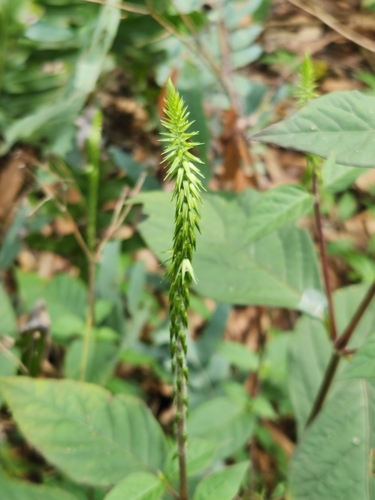
Chamissoa altissima
(Jacq.) Kunth
False chaff flower, Haitian basket vine
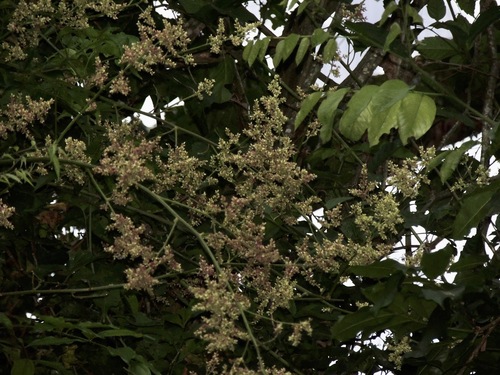
(c) Liu Idárraga Orozco, some rights reserved (CC BY-NC)
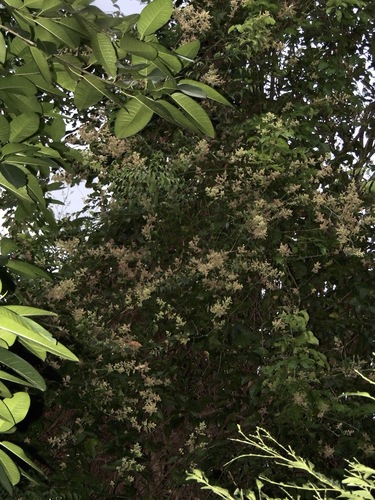
(c) Liu Idárraga Orozco, some rights reserved (CC BY-NC)

(c) ignaciogarcia55, some rights reserved (CC BY-NC)
What to Eat
Edible parts: Leaves
The young leaves are cooked and eaten, though they can be bitter.
Where to Find It
It is a tropical plant. In Argentina it grows from sea level to 1,000 m above sea level. ECHO
Argentina, Brazil, Central America*, Cuba, Dominican Republic, Guianas, Guyana, Haiti, Jamaica, Lesser Antilles, Mexico, North America, Puerto Rico*, South America, Suriname, USA, Venezuela, Virgin Islands, West Indies,*,
How to Identify
A vine or climbing plant. The stem is thick and woody. The stems are 2-3 m or more long. The branches hang down. The leaves are alternate. The leaves are oval or sword shaped. They are 8-14 cm long by 3-7 cm wide. The edges are wavy. The flowers are in groups at the ends of the branches. These are 4-16 cm long. The fruit is an oval capsule. It is 3-4 mm long. The seeds are brown and shiny with a white covering.
Wikipedia
Source ↗Chamissoa altissima, or false chaff flower, is native to North and South America. In Brazil it grows in the Cerrado vegetation.
Names & Synonyms
Akw'aalil palats, Beju co pedorro, Erva-das-pombas, Quaniqueque
References (8)
- Acevedo-Rodriguez, P., 2005, Vine and Climbing Plants of Puerto Rico and the Virgin islands. Contributions to the United States National Herbarium. Volume 51:1-483 p 53
- Ekman Herbarium records Haiti
- F. W. H. A. von Humboldt et al., Nov. gen. sp. 2:158[folio]; 2:197[quarto]. 1818; t. 125. 1817
- INFOODSUpdatedFGU-list.xls
- Kermath, B. M., et al, 2014, Food Plants in the Americas: A survey of the domesticated, cultivated and wild plants used for Human food in North, Central and South America and the Caribbean. On line draft. p 210
- Kinupp, V. F., 2007, Plantas alimenticias nao-convencionais da regiao metropolitana de Porto Alegre, RS, Brazil p 57
- Kinupp, V. F. & Bergman, I., 2008, Protein and minerals of native species, potential vegetables and fruits. Cienc.Tecnol. Aliment. Vol. 28 No. 4 Campinas Oct/Dec.
- Plants of Haiti Smithsonian Institute http://botany.si.edu