Lecythis chartacea
O. Berg.
Parchment like monkeypot tree
(c) Hervé GALLIFFET, some rights reserved (CC BY-NC), uploaded by Hervé GALLIFFET
(c) Hervé GALLIFFET, some rights reserved (CC BY-NC), uploaded by Hervé GALLIFFET
(c) Hervé GALLIFFET, some rights reserved (CC BY-NC), uploaded by Hervé GALLIFFET
What to Eat
Edible parts: Seeds, Nuts
The seeds are eaten raw after removing the shell.
Known Hazards
Where to Find It
A tropical plant. It grows in dryland forest in the Amazon in Brazil.
Amazon, Brazil, Colombia, French Guiana, Guianas, Guyana, Peru, South America, Suriname, Venezuela,
How to Identify
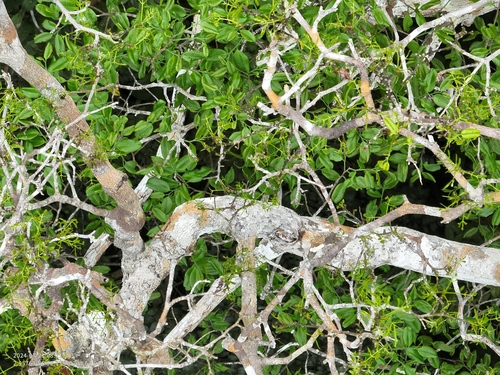
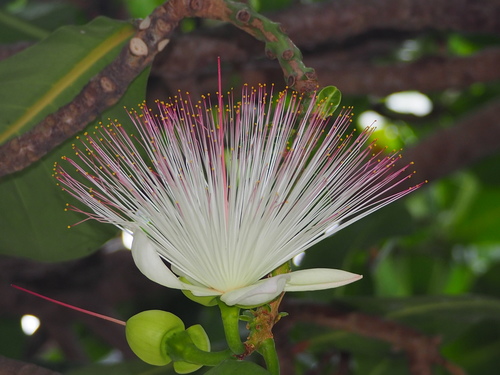
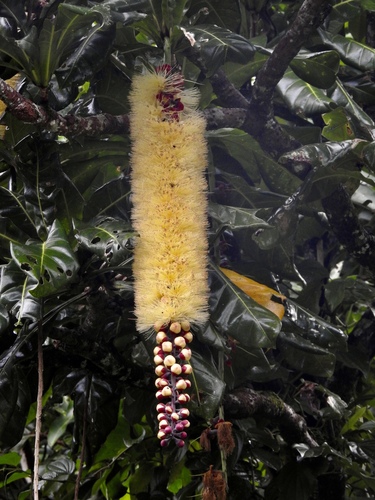
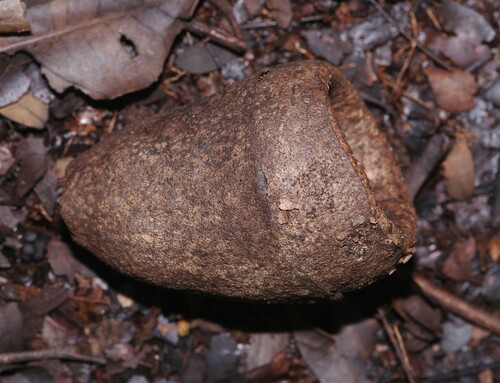
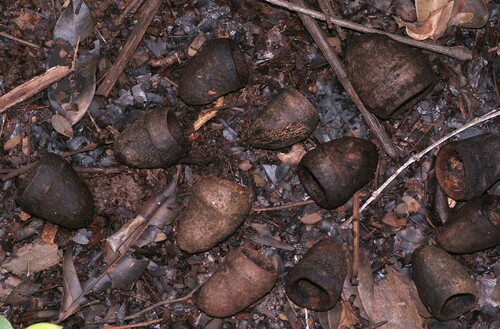
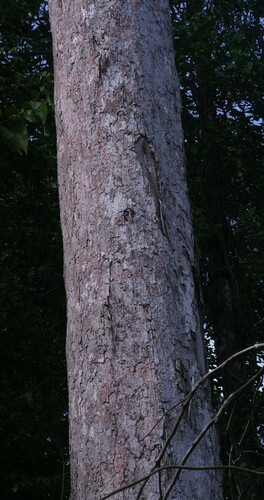
A tree. It grows 8-30 m tall. The crown is round. The trunk is upright and 70-80 cm across. The bark is thick and has cracks along it. It breaks off in rectangular plates. The leaves are simple and alternate. They are 7-11 cm long by 2-6 cm wide. The leaf stalks are 6-12 mm long and hairy. There are 9-14 pairs of side veins. The flowers are in groups at the ends of branches. The flowers are white and have a scent. The fruit is hard with an opening lid. It is 4-4.5 cm long. It has a few seeds.
How to Grow
Plants are grown from seed. The ripe fruit are harvested and put in the sun to fully open. The fresh seed are planted and germinate in 4-7 weeks.
Propagation: Seed - best sown as soon as it is ripe in a partially shaded position in individual containers. A low germination rate can be expected, with the seed sprouting within 28 - 35 days.
Other Uses
The wood is of uniform texture, moderately heavy, moderately hard, with good mechanical properties but not very durable when exposed to the elements. It is used in construction for purposes such as beams, scantlings and laths; and for making furniture. We have no more specific information on the wood of this species. A general description of the wood from this genus is as follows:- The heartwood is light to dark salmon; the sapwood is creamy-yellow. The texture is medium fine and uniform; the grain fairly straight or slightly interlocked; lustre is mostly low but high in some species; there is no distinctive odour or taste. the wood is reported to be very durable upon exposure to both a white-rot and a brown-rot fungus confirming its reputation for high resistance to decay; it is also highly resistant to dry-wood termites and is reported to be moderately resistant to marine borer attack. It is rated as easy to moderately difficult to air season, depending on species; a slow to rapid drying rate is reported; warp and checking ranged from slight to moderate. The wood is moderately difficult to work because of its high density; however, surfaces obtained in planing, boring, sawing, and shaping were smooth and rated as good to excellent. Silica content varies with species and dulling of cutters is also variable. The wood is used for purposes such as heavy construction, ship keels and beams, railroad crossties, industrial flooring and other uses requiring high impact resistance (wagon wheels, tool handles), turnery.
Names & Synonyms
Booka, Cachimbo, Carguero, Coco de mono, Corbina, Doidir, Engosso, Guacharaco amarillo, Guacharaco blanco, Hiraroo kakaralli, Ingipipa, Jarana-mirim, Kouatapatou, Kumeche, Matamata, Niarana, Marana, Matamata, Meli, Onapuin, Sneki-bita, Toko, Totaiduc-ke, Tutuma de mono, Vela de muerto, Weti lobi
References (5)
- Fouqué, A. 1972. Espèces fruitières d'Amérique tropicale. Institut français de recherches fruitierès outre-mer
- Grandtner, M. M. & Chevrette, J., 2013, Dictionary of Trees, Volume 2: South America: Nomenclature, Taxonomy and Ecology. Academic Press p 344
- Lorenzi, H., 2002, Brazilian Trees. A Guide to the Identification and Cultivation of Brazilian Native Trees. Vol. 02 Nova Odessa, SP, Instituto Plantarum p 153
- Mori, S. A. & G. T. Prance. 1990. Lecythidaceae - Part II. The zygomorphic-flowered New World genera (Couroupita, Corythophora, Bertholletia, Couratari, Eschweilera, & Lecythis). In: Organization for Flora Neotropica, ed., Fl. Neotrop. Monogr. 21(2):320–323.
- Roa, J. A. G. & Boada, D. S. G., 2018, Fundación para el Fortalecimiento de la Fruticultura y Plantas Alimenticias no Convencionales en Colombia.